Banff photography itinerary: chasing the light
Most Banff itineraries are built around a driving loop: hit the lakes in whatever order keeps the odometer low. This one is built around something else entirely — the hour of day each location actually looks its best. A photographer chasing reflections and turquoise water cares less about the shortest route between Moraine Lake and Peyto Lake than about being at the right spot when the light is right, even if that means backtracking. Four days gives enough room to do that properly, with a spare morning built in for the weather or the shuttle booking not cooperating.
Why light, not distance, sets the schedule here
Two things decide whether a shot works in Banff: whether the water is still glassy, and whether the sun is high enough to light the turquoise from above rather than skimming across it sideways. Reflections on Two Jack Lake and the Vermilion Lakes are usually intact at first light and gone within an hour or two once any wind picks up — Mount Rundle mirrored in still water is a sunrise-only shot, not an all-day one.
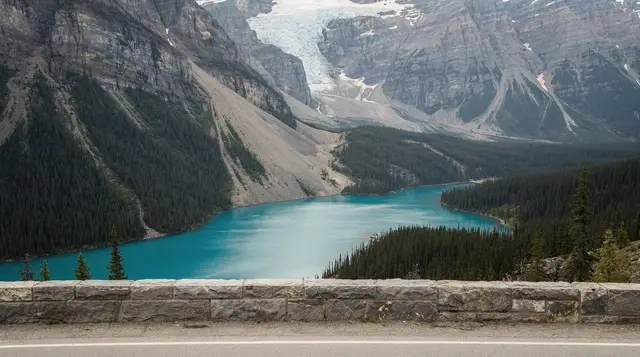
Peyto Lake works the other way around: its colour reads best under fairly direct, overhead sun, which makes midday the actual golden hour for that particular viewpoint. Tunnel Mountain flips again, facing west over the Bow Valley for a sunset that a sunrise visit simply doesn’t offer. None of this lines up neatly with a single driving loop, which is exactly the point of planning by light first.
One date matters more than any of the others: this itinerary only works from about mid-June through September. Both Lake Louise and Moraine Lake stay frozen well into June, and the turquoise colour itself only shows up once the ice is out and glacial rock flour is suspended in the water again — read why the lakes turn that colour before assuming a spring trip will produce the same shots.
Day 1: Arrival and an easy first evening
Land at Calgary International Airport (YYC) and drive the roughly 128 kilometres to Banff, about 1 hour 30 minutes on the Trans-Canada Highway. Don’t schedule anything demanding for the first evening — use it to scout rather than shoot. Walk down Banff Avenue toward Cascade Mountain in the late afternoon light, then drive out to the Vermilion Lakes for a first look at the Mount Rundle reflection without the pressure of a sunrise deadline. If skies are clear, finish with a short sunset climb up Tunnel Mountain — 4.3 kilometres return with about 300 metres of climbing, manageable after a travel day, and it sets up the view over the Bow Valley you’ll want again later in the trip.
This is also the evening to lock in tomorrow’s logistics rather than improvise them. Moraine Lake Road has been closed to personal vehicles year-round since 2023; access is only by the Parks Canada shuttle, Roam Transit, a commercial tour, or bicycle, and shuttle seats need to be booked in advance. Confirm the first departure time for the morning you actually want a sunrise shot, because it changes by season and isn’t guaranteed to land before first light.
Day 2: Dawn reflections without the shuttle gamble
Start before sunrise at Two Jack Lake, a short drive from town along the Lake Minnewanka Scenic Drive and one of the easiest reflection shots in the park — Mount Rundle mirrored in calm water, usually with almost nobody else there. If the wind is already up, the Vermilion Lakes a few minutes back toward town are a solid backup, oriented for the same Rundle reflection from a different angle. Neither location requires a shuttle booking or an early departure gamble, which makes this the reliable sunrise of the trip — useful to have banked before attempting the less certain one at Moraine Lake.
Spend the middle of the day driving out to Lake Louise village, about 58 kilometres and 45 minutes from Banff, to scout parking and shuttle stops for tomorrow. Lakeside parking at Lake Louise itself is limited, paid, and needs reserving; there’s a park-and-ride at the Lake Louise Ski Resort if the lakeside lot is full. In the evening, drive back toward Banff and use the last light for a second pass at whichever reflection location — Two Jack Lake or the Vermilion — looked best that morning, since evening calm can sometimes outperform the dawn version of the same shot.
Day 3: Moraine Lake at first light, Peyto Lake at noon
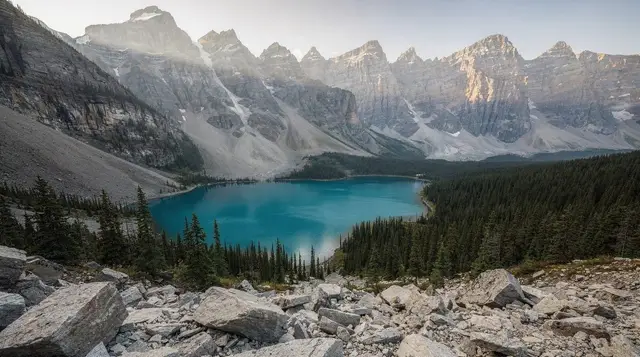
This is the day the whole itinerary is built around, and it’s the one to get right. A genuine sunrise at Moraine Lake usually means staying in Lake Louise village the night before rather than driving out from Banff in the dark, since neither the Parks Canada shuttle nor Roam Transit reliably runs early enough from Banff itself to land before first light.
A guided Moraine Lake sunrise tour removes the guesswork by building the whole outing around the correct departure time — worth booking ahead rather than hoping a general shuttle happens to line up. Whichever way you get there, verify the actual first-departure time for your dates before promising yourself the shot; it is not guaranteed, and a cloudy morning or a fully booked early shuttle is the most common way this day goes sideways.
Once the Valley of the Ten Peaks light has flattened out, mid-morning is a reasonable window to add Lake Louise itself, a short shuttle or drive away, before the crowds peak. From there, continue up the Icefields Parkway to Bow Summit and Peyto Lake, timed to arrive close to midday — the viewpoint looks down onto the water from height, and that angle wants fairly direct, high-angle sun to make the turquoise read properly, which is exactly the light most other Banff stops are trying to avoid.
A guided lake tour covering Moraine, Bow, Emerald and Peyto is a practical way to string these together without driving and parking yourself at each stop. Head back to Banff or Lake Louise for the evening; there’s no strong sunset location on this leg of the parkway, so treat the drive back as recovery time rather than another shoot.
Day 4: A flexible morning, then Tunnel Mountain again for sunset
Use this day as the slack the rest of the trip needed. If day 2’s dawn reflection or day 3’s sunrise didn’t work out — cloud, wind, a sold-out shuttle — this is the morning to try again at Two Jack Lake or the Vermilion Lakes rather than leaving with a gap in the set. If both already worked, use the morning instead for a guided Moraine Lake and Lake Louise tour at a slower, less schedule-driven pace than day 3 allowed, or simply revisit whichever spot produced the weakest shot the first time.
Save the last evening for Tunnel Mountain again, this time deliberately rather than as a first-night improvisation. The trail is short enough — 4.3 kilometres, 300 metres of climbing — to fit in after a full day, and the view west over the Bow Valley toward the Fairholme Range makes a natural closing shot for the trip before an early departure the next morning. Fly out of Calgary the following day, or extend toward Jasper or Yoho if time allows; either way, build in the drive back to YYC with margin, since it’s the same 128 kilometres and 1 hour 30 minutes you arrived on.
Light schedule at a glance
| Time of day | Best location | Why it works then |
|---|---|---|
| Sunrise | Two Jack Lake | Calm water, few crowds, no shuttle needed |
| Sunrise | Vermilion Lakes | Backup Rundle reflection, easy access from town |
| Sunrise (advance booking) | Moraine Lake | Shuttle timing must be verified, not assumed |
| Midday | Peyto Lake | High sun lights the turquoise from above |
| Sunset | Tunnel Mountain | West-facing view over the Bow Valley |
Making this itinerary work: common questions
Why plan a Banff photography trip around light instead of a driving route?
Because the two things that make or break a shot here — reflections and colour saturation — are tied to the hour, not the odometer. Reflections on Two Jack Lake or the Vermilion Lakes are usually gone by mid-morning once wind picks up, and Peyto Lake’s turquoise reads flat under a low or side-angled sun. Grouping stops by the light they need, even if it means backtracking, produces better frames than a route planned purely by distance.
Can you actually catch sunrise at Moraine Lake?
Only if you plan the shuttle timing carefully, and it’s worth verifying rather than assuming. The Parks Canada shuttle and Roam Transit don’t run before dawn on a fixed early schedule, so a genuine sunrise photo usually means staying in Lake Louise village the night before and catching the first available departure, or booking a tour that is built around the sunrise timing specifically. Check current shuttle and tour start times before you build a morning around this.
When does this itinerary actually work during the year?
From about mid-June through September. Lake Louise typically thaws around mid-June and Moraine Lake a little later, so the turquoise reflections this whole plan depends on simply aren’t there earlier in the season — you’d be photographing ice and grey meltwater, not the colour these lakes are known for.
Do you need a car for this itinerary?
A car helps for Peyto Lake and for reaching Two Jack Lake and the Vermilion Lakes at odd hours, since Roam Transit doesn’t run before sunrise or after late evening. Moraine Lake itself is the exception: its road has been closed to personal vehicles year-round since 2023, so that leg is always by shuttle, tour, or bicycle regardless of whether you’re driving the rest of the trip.
Is Peyto Lake worth visiting at midday, when most itineraries suggest golden hour instead?
For this specific lake, yes — Peyto Lake’s viewpoint above Bow Summit looks down onto the water from a height, and that turquoise reads best under fairly direct, high-angle sun rather than the long shadows of early morning or evening. It’s one of the few stops here where midday light outperforms golden hour.
What’s the biggest mistake photographers make on this kind of trip?
Promising themselves a Moraine Lake sunrise without checking whether the first shuttle or tour departure actually lands before first light. It often doesn’t, especially outside peak summer. Treat the sunrise shot as something to verify locally, not something to guarantee in advance, and have a solid backup morning at Two Jack Lake or the Vermilion Lakes ready either way.
How many days does a light-focused itinerary like this really need?
Four days gives enough slack to lose a morning to weather or a fully booked shuttle without losing the whole trip. Three days works if conditions cooperate every time, but cloud cover or a sold-out Moraine Lake shuttle on day one, with no spare day to retry, is the most common way this kind of trip falls short.
If this pace feels tighter than you’d like, the three-day classic Banff itinerary covers similar ground on a more relaxed schedule, and parking and shuttle rules across Banff and Lake Louise are worth a read before your first morning either way.
Photography tours on GetYourGuide
Verified deep-linked GetYourGuide tours. Book through these links and we earn a small commission at no cost to you.
GetYourGuide does not provide a product photo for this activity — the image shows the meeting point, photographed by us.