Two Jack Lake is the small lake you pass on the way to Lake Minnewanka, and it’s worth a stop in its own right rather than just a blur out the car window. It sits at a lower, quieter pull-off on the same road, with a shoreline that opens onto one of the more reliable views of Mount Rundle in the park, and a public campground on its far shore that’s popular enough to need booking ahead. It is not a substitute for Lake Minnewanka up the road — the two are different in size, in what there is to do, and in how busy they get — but as a five-minute stop or an overnight base, it earns its place on a Banff itinerary.
| Where | Lake Minnewanka Road, about 12 km / 12 minutes from Banff townsite |
| Cost to visit | Free (Parks Canada pass required to enter the park) |
| Time needed | 30–60 minutes for a stop; overnight if camping |
| Getting there | Self-drive or Roam Transit Route 6 toward Lake Minnewanka |
| Best for | Photos, picnics, a short shoreline walk, lakeside camping |
| Not for | Swimming, boat rentals, a long day out (that’s Minnewanka) |
Two Jack Lake vs Lake Minnewanka: don’t mix them up
These two lakes sit on the same road, a few minutes apart, and it’s easy to conflate them — plenty of trip photos online are mislabelled one for the other. They’re not interchangeable stops.
| Two Jack Lake | Lake Minnewanka | |
|---|---|---|
| Size | Small, a few hundred metres across | 21 km long, the largest lake in the park |
| What’s there | Shoreline pull-offs, picnic tables, a public campground | Boat cruise dock, marina, restaurant, longer trails |
| Typical visit | 30–60 minutes | Half a day if you take the cruise |
| Crowds | Moderate, quieter than Minnewanka | Busiest single stop on this road, especially midday |
| Swimming | Not recommended (see below) | Not recommended; boating and fishing are the water activities |
| Best known for | Mount Rundle reflection, quiet camping | Boat cruise, longest lake in the Rockies |
If you only have time for one stop on this road and want the bigger attraction with a boat cruise and services, that’s Lake Minnewanka. If you want a quieter five-minute pull-off with a good photo and, ideally, a campsite booked, that’s Two Jack Lake. Many visitors do both in the same short drive, since they sit on the same loop.
The view: Mount Rundle from the shore
The reason Two Jack Lake shows up in so many Banff photo collections is a specific angle: standing on the north shore looking south, Mount Rundle’s long sloped ridge rises directly across the water, and on a still morning the mountain doubles in the reflection. This works best in the first couple of hours after sunrise, before wind picks up and breaks the surface, and again in the last light of evening. Midday sun flattens the scene and the wind is more likely to be up.
The lake sits at a lower elevation pocket off the main road, so there are a few pull-offs and short paths down to the water rather than one single formal viewpoint — walk a little along the shore if the first spot you find has other photographers already set up. None of the walking here involves elevation gain; this is a flat, short-access lake, unlike Lake Agnes or the Plain of Six Glaciers further along the Icefields side of the park.
Swimming and the water: manage expectations
The lake looks calm and inviting on a warm July afternoon, and people do wade in, but this is glacially fed water even at a relatively low, accessible spot — expect single-digit Celsius temperatures through most of the season, with only the shallow margins warming up meaningfully by late summer. There’s no lifeguard, no designated swimming area, and no facility set up for it. Treat a dip as a very brief, very cold novelty rather than a planned swim, and don’t expect the kind of swimming lake you’d find at a provincial park further from the mountains. Bringing kids in for a splash at the shoreline in the shallows on a hot afternoon is common enough and generally fine; a swim across the lake is not something the conditions support.
Two Jack Lakeside Campground
The public campground on the lake’s north shore, Two Jack Lakeside, is one of the more popular Parks Canada-run sites in the Banff area, specifically because of its lake frontage and the Mount Rundle view from several sites. It operates seasonally (roughly late spring through early fall, weather dependent) and takes reservations through the Parks Canada reservation system.
Book ahead. This is not a campground you can reliably show up to and get a spot at in July or August — sites for the peak weeks are typically claimed within minutes of the booking window opening months in advance. If Two Jack Lakeside is full, the same road has a second, more basic overflow-style campground (Two Jack Main) a short distance away, and Tunnel Mountain has larger campground options closer to the townsite.
Facilities are simple: vault toilets, potable water taps, fire pits and picnic tables at most sites, no showers. Bring your own firewood or buy it at the campground kiosk — collecting wood in the park is not permitted. Bear-proof food storage is required and enforced; this is active bear country and food left out is a real problem, not a formality.
Guided boat cruise on Lake Minnewanka, a few minutes past Two Jack Lake
Getting there
Two Jack Lake is reached by the Lake Minnewanka Road (also called Lake Minnewanka Scenic Drive), which branches off the Trans-Canada Highway just east of the Banff townsite interchange. By car, it’s about 12 km and 12 minutes from central Banff, and the lake appears before you reach Lake Minnewanka itself. Roam Transit’s Route 6 runs this corridor in season, stopping near the lake and continuing to the Minnewanka dock; check current schedules before relying on it for an early sunrise visit, since the first departures may run later than the best light.
Parking is at small pull-offs and a couple of short access roads rather than one large lot — arrive early on summer weekends if you want the closest spot, though the walk in from any of the pull-offs is short.
A Parks Canada pass is required to be in Banff National Park, including for a stop this brief; see the Parks Canada pass guide for current rates. This is the same pass that covers Lake Minnewanka, Bow Valley Parkway and the rest of the park — no separate fee applies to Two Jack Lake itself.
When to visit
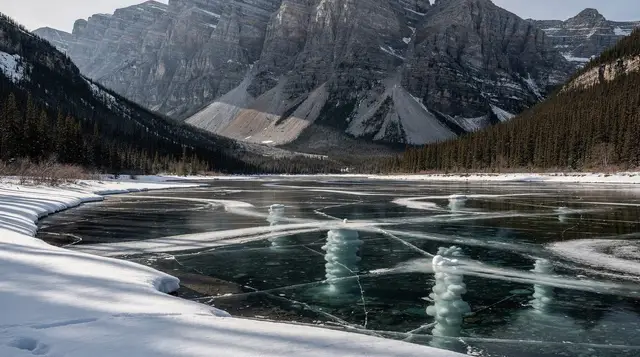
The lake is frozen for a large part of the year and doesn’t take on its clear look until the ice has fully cleared, generally by June. July and August bring the warmest air and water temperatures (relatively speaking) and the longest daylight for an early start, but also the most people at the popular shoreline spots and the tightest campground competition. September brings cooler mornings, thinner crowds, and often calmer water for the reflection shot, though the campground season is winding down by then.
Winter access is possible by car along the plowed section of the road, and the frozen lake with a snow-dusted Mount Rundle backdrop has its own quiet appeal, but there’s no camping and no water activity at that time of year — see the Banff month-by-month guide for what each season actually delivers here versus elsewhere in the park.
Wildlife on this road
The Lake Minnewanka Road corridor, including the stretch past Two Jack Lake, sees regular wildlife activity — elk, bighorn sheep and occasionally bears use this area, and it’s close enough to the townsite that animals move through fairly often. Keep the standard distances (100 m from bears and wolves, 30 m from other wildlife), never approach for a photo, and treat any roadside animal jam as a reason to slow down, not stop in the traffic lane. September and October add the elk rut to the mix, when bull elk are more unpredictable and best viewed from well back, even along a road this close to town.
Combining Two Jack Lake with the rest of the Minnewanka loop
The efficient way to see this corridor is as one loop rather than a series of separate trips: leave Banff, stop at Two Jack Lake for the Mount Rundle view and a short walk, continue a few minutes to Lake Minnewanka for the boat cruise or a longer shoreline walk, and loop back past Bow Falls or through town. The whole loop, without the boat cruise, comfortably fits into two to three hours; add another hour or two if you take the cruise or eat at the Minnewanka day-use area.
Guided Banff day trip covering nearby viewpoints and short walksFor visitors staying in Banff without a car, combining this loop with a guided day tour or a Roam Transit pass is usually more practical than trying to time a rental car around a short stop like this one. If your main interest is Mount Rundle photography specifically, the Vermilion Lakes on the opposite side of town offer a comparable sunset angle on the same mountain and are reachable on foot from the townsite, worth weighing against a drive out here if you’re short on time.
What to bring
Nothing elaborate is required for a stop this short, but a few things make the visit better. A light jacket, even in summer — the water keeps the air noticeably cooler than in town. Bear spray if you plan to walk any distance along the shore away from the pull-offs (it can’t be carried on a flight, so buy or rent it locally rather than packing it). A thermos and a blanket if you’re aiming for the sunrise reflection shot, since you may be waiting around in cool morning air. If camping, standard car-camping gear plus a bear-proof cooler or the campground’s provided storage, and enough drinking water, since taps may be shut off outside the main season.
Two Jack Lake in a wider Banff itinerary
As a standalone stop, Two Jack Lake fits naturally into a first full day exploring Banff’s immediate surroundings, alongside Lake Minnewanka, Johnston Canyon or a walk along the Bow Valley Parkway. It doesn’t need its own dedicated day, and treating it as one would be overkill for what’s here. See the Banff lakes guide for how it stacks up against the park’s bigger, more famous lakes, and the one day in Banff itinerary for how a stop like this slots into a tighter schedule.
Frequently asked questions about Two Jack Lake
Is Two Jack Lake the same as Lake Minnewanka?
No. They’re on the same road a few minutes apart, but Two Jack Lake is much smaller, has no boat cruise or marina, and is known mainly for its Mount Rundle view and lakeside campground. Lake Minnewanka is the park’s largest lake, with a dock, cruise boats and more facilities. They’re often visited together but are distinct stops.
Can you swim in Two Jack Lake?
Wading at the shoreline happens, but the water is glacially fed and stays cold through most of the season, there’s no lifeguard or designated swim area, and it isn’t set up or recommended as a swimming lake. Treat it as a brief, cold dip at most, not a planned swim.
How do you book Two Jack Lakeside Campground?
Through the Parks Canada reservation system, well in advance. Peak-season sites, especially the lakefront ones with a Mount Rundle view, are typically booked within minutes of the reservation window opening. Arriving without a reservation in July or August is unlikely to get you a site.
How far is Two Jack Lake from Banff?
About 12 km, roughly a 12-minute drive from the Banff townsite along the Lake Minnewanka Road, which branches off the Trans-Canada Highway just east of town.
Is there an entrance fee for Two Jack Lake?
No separate fee, but a Parks Canada pass is required to be inside Banff National Park at all, including for a short stop here. The same pass covers Lake Minnewanka, the Bow Valley Parkway and the rest of the park.
What’s the best time of day to photograph Two Jack Lake?
Early morning, shortly after sunrise, when the water is most likely to be calm and the light hits Mount Rundle directly across the lake. Evening light works too; midday sun tends to flatten the scene and wind is more likely to break up the reflection.
Is Two Jack Lake worth visiting if I’m short on time?
As a five-to-thirty-minute stop combined with Lake Minnewanka on the same drive, yes. As a dedicated half-day or full-day destination on its own, no — save that time budget for Lake Minnewanka’s boat cruise or one of the park’s larger lakes instead.