Lake Minnewanka boat tour: Banff's biggest lake, minutes from town
What is there to do at Lake Minnewanka, and how do you get there?
Lake Minnewanka is Banff's largest lake, about 6 kilometres and a 10-minute drive from downtown Banff, or a ride on Roam Transit's Route 6. Most visitors take the roughly one-hour commentated cruise, which passes over a village flooded by a 1941 dam; free-paddling here is a minority activity compared with Lake Louise or Moraine Lake.
The lake you can reach without leaving town
Most of Banff’s famous lakes take planning: a shuttle reservation for Moraine Lake, 45 minutes on the road for Lake Louise, or a half-day commitment to the Icefields Parkway for Peyto Lake and Bow Lake. Lake Minnewanka is the exception.
It’s about 6 kilometres from Banff townsite, roughly a 10-minute drive along the Lake Minnewanka Scenic Drive, or a ride on Roam Transit’s Route 6, which runs directly to the lake in summer. If your time in Banff National Park is short, this is one of the few iconic-lake experiences that doesn’t eat a full day.
At 21 kilometres long, Minnewanka is also the largest lake in the park by a wide margin, and one of the deepest. That size and proximity combine to make it Banff’s default answer for travellers who want a proper lake outing — cruise, viewpoint, picnic, short walk — without the logistics that come with Moraine Lake’s shuttle-only access or the drive time to the Parkway lakes.
What actually happens here: the boat cruise
The signature activity at Lake Minnewanka is a commentated scenic cruise, not free paddling, and that distinction matters because it’s easy to assume every glacial lake in the Rockies works the way Lake Louise or Moraine Lake do, with canoe rentals as the main event. Here it’s reversed. The cruise boats run roughly one-hour sightseeing routes up the lake, with a guide narrating the geology, the dam history, and the wildlife you’re likely to see along the shoreline — bighorn sheep are a regular sighting on the cliffs near the dock.
Tickets are generally in the order of 60 to 80 CAD for an adult, with lower rates for children, though you should treat that as a planning range rather than a quote — cruise pricing and schedules shift year to year, so check the current season’s rates before you commit. Cruises typically operate from May to October, with the most frequent departures in July and August; outside that window the dock isn’t staffed and the lake itself is often still carrying ice into late spring.
One of the more efficient ways to fit the cruise into a Banff day is as part of a combined tour that also covers the Banff Gondola or Johnston Canyon, since all three sit within a short drive of each other.
If you’d rather not self-drive the loop and coordinate cruise timing yourself, a day tour bundling Lake Minnewanka with Banff’s other core stops handles the routing and the ticket. Travellers chasing better light for photos sometimes prefer a gondola-and-lake outing timed for golden hour, which avoids the harsher midday glare on the water.
The village that’s still down there
Lake Minnewanka’s name comes from a Stoney Nakoda (Îyârhe Nakoda) phrase usually translated as “Lake of the Spirits” or “Water of the Spirits,” reflecting the lake’s long-standing significance to the Stoney Nakoda before the area became a national park. The lake itself is natural, but its modern shoreline is not: a series of dams raised the water level through the early twentieth century, and the final raise, completed in 1941 for hydroelectric power, submerged what remained of a small lakeside resort settlement called Minnewanka Landing.
That settlement had its own boardwalk and cabins dating to 1888, part of the same tourism boom that built up Banff Avenue and the Fairmont Banff Springs in the same decades. Today, building foundations, a bridge, and other structural remains sit on the lake bed, and they’re a known destination for certified divers — cold-water, low-visibility diving that’s a niche pursuit, not something you can arrange on a whim from the shore. For everyone else, the story is best appreciated from the cruise commentary or from a display at the day-use area, not from anything visible at the surface.
Getting there and getting around once you’re there
Driving from Banff townsite, follow the Lake Minnewanka Scenic Drive northeast off the Trans-Canada Highway; it’s a well-marked, paved loop that also passes Two Jack Lake, a smaller, quieter neighbour with its own picnic areas covered in a separate guide. Parking at the main Minnewanka day-use area fills up on midsummer afternoons but rarely to the point of turning people away the way Moraine Lake or Lake Louise do — this is one of the few Banff lakes where you’re not competing with a shuttle-only access system.
If you’re without a car, Roam Transit’s Route 6 runs from the Banff townsite to the lake in the warmer months, which makes this one of the more transit-friendly lake outings in the park; other Roam routes cover Canmore, Sulphur Mountain, Tunnel Mountain, and Lake Louise if you’re building out a car-free itinerary around town.
A Parks Canada day pass is required here, as it is anywhere inside Banff, Jasper, Yoho, or Kootenay — budget roughly 11 CAD per adult per day or about 22 CAD per vehicle, or look at an annual Discovery Pass if you’re covering multiple parks. Full current pricing is on the official Parks Canada site; treat the figures above as planning ballparks.
| Getting there | Approximate time from Banff |
|---|---|
| By car (Lake Minnewanka Scenic Drive) | ~10 minutes |
| Roam Transit Route 6 | ~15–25 minutes |
| Lake Louise, by comparison | ~45 minutes |
| Peyto Lake / Icefields Parkway stops, by comparison | 1.5+ hours |
Fishing, motorized boats, and why paddling isn’t the main event
Lake Minnewanka is unusual among Banff’s lakes in that motorized boats are permitted, and there’s a boat launch near the day-use area for private craft. Lake trout fishing is allowed with a valid Parks Canada fishing permit, and the lake’s depth and size make it one of the more serious fishing destinations inside the park, distinct from the shallow, catch-restricted waters elsewhere.
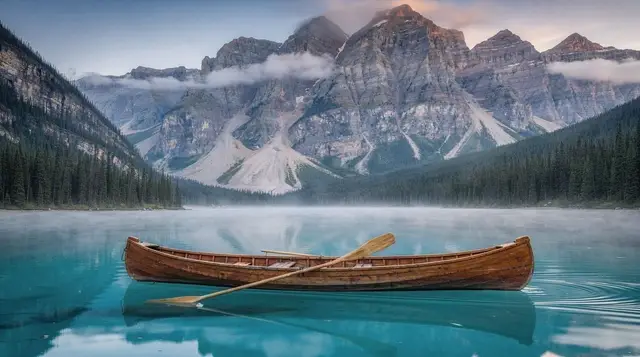
Canoe and kayak rentals do exist at the day-use dock in the warmer months, so self-directed paddling isn’t impossible here. But it’s genuinely a secondary activity relative to the guided cruise, and travellers specifically looking for a paddling-focused lake day are usually better served at Lake Louise or Moraine Lake, where rental canoes and calm, sheltered water are the main draw and the mountain backdrop is the point of the outing. Coming to Minnewanka expecting that same paddling scene, rather than a cruise-and-shoreline visit, is the most common mismatch in expectations here.
Wildlife and the shoreline walk
Bighorn sheep are a regular sighting on the rocky slopes near the dam and the eastern shoreline, and the cruise route is one of the more reliable, low-effort ways to see them without a dedicated hike. As with any wildlife encounter in the park, keep at least 30 metres from sheep and other non-predator animals, and never feed them — habituated sheep along this stretch of road are a known hazard for both animals and drivers.
Beyond the boat, there’s an easy interpretive walk along part of the shoreline near the day-use area, plenty of picnic tables, and views back toward the dam. It’s an easy add-on to a Johnston Canyon or gondola morning rather than a destination that needs a half-day on its own — most visitors budget one to two hours here including the cruise, longer if you’re fishing or lingering over a picnic.
A combined outing that pairs the Banff Gondola, Johnston Canyon, and Lake Minnewanka in one day is a common and efficient way to see all three without excessive driving; a day tour covering the gondola, Johnston Canyon, and the lake together is built around exactly that route, and a Calgary-departure tour bundling the gondola with a lake cruise works if you’re staying in the city rather than in Banff itself.
Season and what to expect month to month
Ice typically holds on Lake Minnewanka into late spring, later than some of the park’s lower-elevation waters, so a May visit can still mean partial ice and no cruise operating yet. June through September is the reliable window for both open water and a running cruise schedule, with July and August bringing the heaviest crowds and the widest range of departure times. By October, cruises wind down and some services close for the season; by winter the lake is a popular but informal spot for local ice walks and, in the right conditions, wild skating, though neither is a maintained or serviced activity the way the rink at Lake Louise is.
Weather here follows the same pattern as the rest of the Banff townsite area — expect 20 to 25°C summer days, cooler mornings on the water, and the possibility of wind picking up across the open lake surface even on a calm-feeling day in town. A light layer is worth having on the boat even in August.
How Lake Minnewanka fits into a Banff itinerary
Because it’s so close to town, Lake Minnewanka slots easily into a one-day Banff itinerary alongside the gondola and Johnston Canyon. It also fits naturally into a broader iconic lakes itinerary as the low-effort, high-payoff stop that doesn’t compete for a shuttle seat the way Moraine Lake does.
If you’re deciding where to spend limited lake time, the practical split is this: come to Minnewanka for the cruise, the dam history, and an easy, close-to-town outing; go to Lake Louise or Moraine Lake for the postcard turquoise-water-and-canoe scene; and save Vermilion Lakes for a quiet sunset walk that needs no ticket and no reservation at all. Treating all three as the same kind of stop is the easiest way to end up disappointed at one of them.
Is Lake Minnewanka worth the stop?
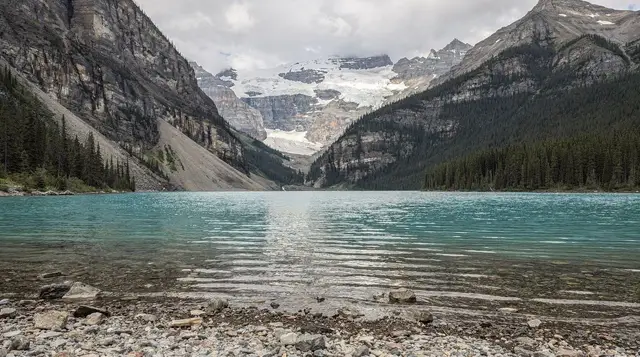
Judged against Banff’s headline lakes, Minnewanka isn’t competing on colour — its water reads a darker, deeper blue-green than the milky turquoise of Lake Louise or Moraine Lake, because it carries less suspended glacial rock flour. What it offers instead is convenience and a genuinely different kind of story: a cruise, a dam, a drowned village, and reliable wildlife sightings, all inside a 10-minute drive of your hotel.
For a traveller with a single free morning in Banff and no interest in a 6 a.m. shuttle queue, that trade-off is usually a good one. For someone whose whole trip is built around the postcard shot, it’s a secondary stop, not the main event — plan it as an add-on to a gondola or canyon day rather than the reason you came to Banff.
Where it’s worth being blunt: this is not the lake to visit if you want to paddle. The rental concession is modest, the emphasis is squarely on the cruise, and travellers who show up expecting a Moraine Lake-style canoe scene tend to leave underwhelmed. Come for the boat, the history, and the sheep on the cliffs, and the visit tends to land well.
Lake Minnewanka cruise and visit: questions answered
How far is Lake Minnewanka from Banff townsite?
About 6 kilometres, roughly a 10-minute drive along the Lake Minnewanka Scenic Drive, or 15 to 25 minutes on Roam Transit’s Route 6 depending on stops. It’s one of the closest lake destinations to town, unlike Lake Louise (about 45 minutes) or the lakes along the Icefields Parkway.
Is there really a village underwater at Lake Minnewanka?
Yes. A small resort settlement called Minnewanka Landing, with a boardwalk dating to 1888, sat at the lake’s original shoreline before a series of dams raised the water level, with the final raise in 1941 submerging what remained of the site. Building foundations and a bridge are still visible to certified divers in cold, low-visibility conditions.
Do you need a boat tour, or can you paddle Lake Minnewanka on your own?
A guided cruise is the dominant way people experience this lake, not self-directed paddling. Canoe and kayak rentals exist at the day-use dock in summer, but most travellers looking for a paddling day trip go to Lake Louise or Moraine Lake instead, where canoeing is the main draw.
How long is the Lake Minnewanka boat cruise and what does it cost?
The standard scenic cruise runs roughly one hour with recorded or live commentary, generally priced in the order of 60 to 80 CAD for an adult ticket, with reduced rates for children. Treat this as a ballpark: confirm the current schedule and price before you go, since the season and departures change year to year.
When does the Lake Minnewanka cruise operate?
Cruises typically run from May to October, weather and ice permitting, with more frequent departures in July and August. Outside that window the lake is often icebound or the dock isn’t staffed, and there’s no winter cruise option.
Do you need a Parks Canada pass to visit Lake Minnewanka?
Yes. Lake Minnewanka is inside Banff National Park, so the same Parks Canada day pass or Discovery Pass required at Banff’s other sites applies here too, whether you’re driving in for the cruise or just stopping at the day-use area.
Can you fish at Lake Minnewanka?
Yes, lake trout fishing is permitted with a valid Parks Canada fishing permit, and there’s a boat launch near the day-use area. Lake Minnewanka is also one of the few lakes in Banff National Park where motorized boats are allowed, which sets it apart from most of the park’s other lakes.
Lake cruises, canoeing & rafting on GetYourGuide
Verified deep-linked GetYourGuide tours. Book through these links and we earn a small commission at no cost to you.
GetYourGuide does not provide a product photo for this activity — the image shows the meeting point, photographed by us.