Banff's iconic lakes in three days
Banff’s reputation rests almost entirely on a handful of lakes, and this page is built around them and nothing else — no townsite logistics, no hot springs, no gondola rides. If you want a fuller first-time plan that still includes these lakes alongside the rest of Banff, start with the two-day Lake Louise itinerary or the three-day classic Banff plan. This one assumes you already know you’re here for the water and want three days used well.
The one fact that ruins more trips than any other
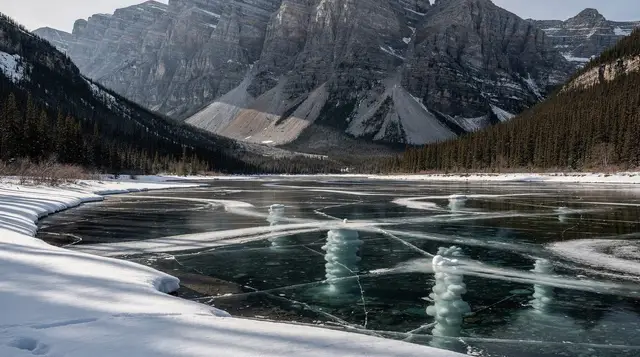
Every lake on this list gets its colour from glacial rock flour — fine sediment ground off bedrock by moving ice, then carried into the lake by meltwater, where it stays suspended and scatters light into that turquoise-green tone. No rock flour in the water, no colour. And rock flour only shows up once the ice is out, which means these lakes are frozen or partly frozen well into June. Lake Louise typically opens up around mid-June; Moraine Lake sits higher and shaded, and usually follows a week or two later.
A photo of a turquoise Moraine Lake taken in May does not exist — if you see one online, it’s either archived from a different year or it’s Lake Louise mislabelled elsewhere on this same lake circuit. Plan a late-June-through-September visit if the colour itself is the point. For more on why the water looks the way it does, it’s worth reading before you build expectations around a spring trip.
Day 1: Moraine Lake and Lake Louise, the two icons
Start with the lake that has the least room for error in planning: Moraine Lake Road has been closed to all personal vehicles, year-round, since 2023. There’s no parking lot to gamble on arriving early for — it doesn’t exist for private cars anymore. Access is only through the Parks Canada shuttle (booked ahead through Parks Canada’s own reservation system, released in blocks in spring and then on a rolling 48-hour window), Roam Transit, a commercial coach, or by bicycle. Read the shuttle access rules before you go, because showing up without a reservation and expecting to walk in is the single most common way to lose a morning here.
For sunrise, book ahead rather than hoping to catch the first shuttle. A Moraine Lake sunrise experience handles the timing for you, which matters because the rockpile viewpoint above the Valley of the Ten Peaks is small and every visitor is funnelled through the same shuttle schedule. Once the ice is out, this is the view that used to appear on Canada’s twenty-dollar bill, and it earns the reputation — the crowding is the actual cost of seeing it, not a myth.
From Moraine Lake, most visitors continue on to Lake Louise, 1,750 metres up, with the Victoria Glacier at the far end and the Fairmont Château Lake Louise anchoring the near shore. Parking at Lake Louise is paid, limited, and best reserved ahead, or reached by Roam Transit routes 8X and 8S from Banff.
If you’d rather not coordinate two separate shuttle systems and a parking reservation in one day, a guided tour covering both Moraine Lake and Lake Louise removes that planning entirely and typically includes a driver who already knows the shuttle timing. Canoe rental at the boathouse runs by the half-hour, and the crowds thin out noticeably once you walk even a short way along the shoreline path.
If Moraine Lake versus Lake Louise is a genuine either-or for your trip, pick Moraine Lake for the classic rockpile photo and Lake Louise for easier access and the Château on the shore — this three-day plan covers both, so you don’t have to choose.
Day 2: Lake Agnes Tea House, then Banff’s front-range lakes
Day 2 starts uphill. The trail to Lake Agnes climbs 3.4 kilometres and 400 metres from the Lake Louise lakeshore to a small alpine lake and a wooden tea house that has been serving hikers since 1901. It’s genuinely worth the climb, but two things trip people up: the tea house is seasonal, generally open from early June to early October, and it doesn’t reliably take cards — bring cash for tea and baked goods at the top. The full route and timing are covered in the Lake Agnes Tea House hike guide; budget half a day round trip including time at the top.
By early afternoon, head back toward Banff for a very different kind of lake day — three stops that need no reservation, no shuttle, and barely any hiking. Lake Minnewanka is the largest lake in the park at 21 kilometres long, with a scenic boat cruise running from May to October; it’s a good option if you want to be on the water rather than beside it.
A short drive further, Two Jack Lake is smaller, quieter, and better for a picnic with Mount Rundle in the background than for a boat trip. Save Vermilion Lakes for late in the day — the still water reflects Mount Rundle particularly well at sunrise or sunset, and it’s one of the least crowded classic views this close to downtown Banff.
| Lake | Distance from Banff | Best for | Reservation needed |
|---|---|---|---|
| Lake Agnes | 3.4 km hike from Lake Louise | Tea house, alpine view | No, but seasonal hours |
| Lake Minnewanka | ~9 km (15 min) | Boat cruise, longest shoreline | Cruise tickets in peak season |
| Two Jack Lake | ~12 km (15 min) | Picnic, quiet paddling | No |
| Vermilion Lakes | ~5 km (10 min) | Sunset, Mount Rundle reflection | No |
None of these three front-range lakes require the level of planning that Moraine Lake does, which makes Day 2’s second half a useful reset if the shuttle logistics of Day 1 wore you out. For quieter timing at any of them, aim for a weekday morning rather than a weekend afternoon — the difference in how many other cars share the pullout is significant.
Day 3: Peyto Lake and Bow Lake, out on the Icefields Parkway
The last two lakes on this list sit north of Lake Louise on the Icefields Parkway (Highway 93), so Day 3 means driving rather than staying in the Banff-Lake Louise corridor. Bow Lake comes first, with Crowfoot Glacier visible across the water and a short, flat walk from the highway pullout — one of the easiest lake views on this whole list.
A little further on, the road climbs to Bow Summit at 2,088 metres, the highest point on the parkway, where a paved path leads to the overlook above Peyto Lake. Its wolf-head shape and intense colour make it one of the most photographed lakes in the Rockies, and unlike Moraine Lake, there’s no shuttle requirement — just a parking area that fills up by mid-morning in summer.
If you’d rather not drive the parkway yourself, a guided four-lake tour covering Louise, Moraine, Bow and Peyto packages this whole lake circuit into one day with a driver who knows the pullout timing. For a version that also works the Columbia Icefield into the same day, a Columbia Icefield tour that adds Bow Lake and Peyto Lake is the option to book, though it makes for a long day if lakes are your main interest rather than the glacier.
Both lakes on this stretch are colder and slower to lose their ice than Moraine Lake, since they sit higher in elevation — expect meaningful ice cover into June most years. There’s no fuel between Lake Louise and Saskatchewan River Crossing, and mobile coverage on this stretch is patchy at best, so fill up and download offline maps before you leave Lake Louise.
Practical notes before you go
A Parks Canada pass is required for every lake on this list, since all eight sit inside Banff National Park — budget roughly 11 CAD per adult per day, or about 22 CAD per vehicle, and check the current rate before travelling since it’s adjusted periodically. Bring bear spray (it can’t be carried in checked or carry-on luggage on a flight, so buy or rent it locally) and keep a minimum 100-metre distance from any bears or wolves you encounter along these shorelines.
| Lake | Colour visible from | Personal vehicle access |
|---|---|---|
| Lake Louise | Mid-June onward | Yes, paid parking, reserve ahead |
| Moraine Lake | Late June onward | No — shuttle, transit, or tour only |
| Lake Agnes | Mid-June onward | Hike-in only |
| Lake Minnewanka | Late May onward | Yes |
| Vermilion Lakes | Late May onward | Yes |
| Two Jack Lake | Late May onward | Yes |
| Bow Lake | Mid-June onward | Yes |
| Peyto Lake | Mid-June onward | Yes |
Driving conditions along this stretch change fast with elevation and season, so treat the parkway as a full day out rather than a quick add-on to a Lake Louise afternoon, and fill your tank before you leave Lake Louise since there’s no fuel until Saskatchewan River Crossing.
Frequently asked questions about Banff’s iconic lakes
Why are Banff’s lakes turquoise, and is it always that colour?
The colour comes from glacial rock flour — fine sediment ground up by moving glaciers — suspended in the meltwater, which scatters light and produces the blue-green tone. It only appears once a lake is ice-free, so winter and early spring views show grey or white ice, not turquoise water.
When do Lake Louise and Moraine Lake actually turn turquoise?
Lake Louise typically opens up around mid-June, and Moraine Lake usually follows a couple of weeks later, since it sits higher and stays shaded longer. Exact dates shift year to year with snowpack, so a photo advertising a turquoise Moraine Lake in May is not showing a real early-season scene.
Can you drive to Moraine Lake?
No. Moraine Lake Road has been closed to personal vehicles year-round since 2023. Access is only by the Parks Canada shuttle, Roam Transit, a commercial tour, or bicycle, and shuttle seats need to be booked ahead through Parks Canada’s own reservation system.
Is the Lake Agnes Tea House open all year?
No, it’s seasonal, generally running from early June to early October depending on snow conditions. It also doesn’t always take cards, so carry cash for tea and baked goods at the top of the 3.4-kilometre, 400-metre climb.
Which lake is best for a sunrise photo without crowds?
Moraine Lake draws the heaviest sunrise crowds by far, since its rockpile viewpoint is small and every visitor arrives on the same shuttle schedule. Vermilion Lakes and Two Jack Lake are far quieter sunrise or sunset options right in the Banff area, with Mount Rundle reflections and no shuttle required.
Do you need a Parks Canada pass to visit these lakes?
Yes, all of these lakes sit inside Banff National Park, so the standard park entry fee applies — roughly 11 CAD per adult per day, or about 22 CAD per vehicle. Confirm the current rate before you go, since Parks Canada adjusts it periodically.
Can you fit all eight lakes into three days?
Yes, but it’s a lake-focused three days rather than a full Banff itinerary — this plan doesn’t cover the townsite, hot springs, or gondola in any depth. For a broader first visit that still includes Lake Louise and Moraine Lake, see the 2-day and 3-day classic Banff itineraries instead.
Lake Louise & Moraine Lake tours on GetYourGuide
Verified deep-linked GetYourGuide tours. Book through these links and we earn a small commission at no cost to you.
GetYourGuide does not provide a product photo for this activity — the image shows the meeting point, photographed by us.