Lake Agnes is the hike most first-time visitors to Lake Louise end up doing, and for a reasonable reason: it starts right at the lakeshore, climbs just enough to feel like an accomplishment, and ends at both a genuine alpine lake and a tea house that’s been serving hikers since 1901. None of that requires a car beyond getting to Lake Louise itself, a shuttle booking, or a full day of your trip.
It also gets confused with its next-door neighbour more often than any other pairing in the park. Two popular trails leave from the exact same spot near the Fairmont Chateau Lake Louise, both climb to a seasonal tea house, and both get recommended in the same breath by guidebooks and hotel concierges alike. Lake Agnes and Plain of Six Glaciers are not the same hike, do not lead to the same place, and split apart within the first kilometre. This page covers Lake Agnes only — the shorter, steeper option that ends at a lake in a hanging valley above Lake Louise, not the longer lakeshore route toward the Victoria Glacier.
The trail at a glance
| Detail | Lake Agnes |
|---|---|
| Distance (round trip) | 3.4 km |
| Elevation gain | About 400 m |
| Typical time | 2.5 to 4 hours |
| Difficulty | Moderate |
| Trailhead | Lakeshore path, near the Chateau |
| Season | Late June to early October |
| Tea house | Seasonal, cash preferred |
The number that matters most for planning is the elevation gain relative to the distance: 400 m over 1.7 km one way is a genuinely steady, sustained climb, not a flat walk with a hill at the end. Anyone reasonably fit and used to hiking at altitude will manage it without technical difficulty, but it isn’t a stroll, and hikers who arrive expecting an easy lakeshore ramble are consistently surprised by how much climbing is involved.
Starting point: the Lake Louise lakeshore
The trail begins on the well-used lakeshore path in front of the Fairmont Chateau Lake Louise, the same wide gravel path that thousands of day visitors walk each morning simply to photograph the lake. Follow the lakeshore trail along the near shore for a short distance before the Lake Agnes trail branches off and begins climbing into the trees, away from the water.
This is the point of confusion worth flagging clearly: the lakeshore path serves as the shared starting point for both the Lake Agnes trail and the separate Plain of Six Glaciers trail, which continues along the lake’s far shore in the opposite direction. They are not two names for the same hike, and they do not reconnect. If your plan is specifically Lake Agnes and the tea house above it, watch for the junction sign and take the uphill fork away from the lakeshore, not the trail that continues hugging the water toward the glacier at the far end.
Because parking at Lake Louise is limited, often full by mid-morning in summer, and increasingly managed through paid reservations, arriving early or arranging transport in advance matters more here than the hike itself. A private minivan transfer straight to Lake Louise removes the parking question entirely and is worth considering if you’re travelling from Calgary or don’t want to gamble on trailhead parking on a summer morning.
Climbing through the forest
From the junction, the trail switches away from lakeshore crowds almost immediately and settles into a steady forested climb. The path is well-maintained and easy to follow, alternating between dirt switchbacks and sections of exposed rock, with occasional glimpses of Lake Louise and the Victoria Glacier opening up through the trees behind you as you gain height.
Partway up, the trail passes a viewpoint over Mirror Lake, a small pond that reflects the cliffs above it on calm mornings, and continues past a waterfall fed by Lake Agnes itself before the final push to the lake. This stretch is the steepest section of the whole route, and it’s also where the trail narrows and traffic can bottleneck on busy midsummer days, particularly where hikers heading up meet hikers coming back down from the tea house.
Lake Agnes and the tea house
The trail levels out at Lake Agnes, a small, steep-sided lake set in a hanging valley well above Lake Louise, backed by cliffs and fed by snowmelt from the slopes above. It’s a genuinely different kind of view from the wide, hotel-fronted panorama at Lake Louise below: quieter, more enclosed, and with none of the crowds that gather at the lakeshore each morning.
The Lake Agnes Tea House sits directly on the lakeshore, a wooden building dating to 1901, one of a small handful of historic backcountry tea houses built to give early Rockies visitors a reason to hike. It serves tea, coffee, soup, sandwiches, and baked goods, all carried in by staff who hike or use helicopter resupply, which explains both the modest menu and the pricing.
Two things trip up first-time visitors here: the tea house is seasonal, typically open from around mid-June through early October and closed the rest of the year, and it does not reliably accept cards. Bring Canadian cash. A working card reader at altitude, on solar or generator power, is not something to count on, and running out of cash at the counter after the climb up is a common and avoidable disappointment.
Seating is limited, first-come, and often shared with a line during peak midsummer hours between about 11 a.m. and 2 p.m. Arriving earlier in the morning, or timing your visit for after the late-morning rush, generally means a shorter wait for a table.
Don’t confuse the two Rockies tea houses
Lake Louise is unusual in having two historic tea houses reachable on foot, both from the same lakeshore trailhead, and travellers regularly assume they’re describing the same hike when they’re not.
| Lake Agnes | Plain of Six Glaciers | |
|---|---|---|
| Distance (round trip) | 3.4 km | 5.5 km |
| Elevation gain | About 400 m | Similar overall, more gradual |
| Direction from trailhead | Uphill, away from the lake | Along the lake’s far shore |
| Destination | A hanging-valley lake | Viewpoint near the Victoria Glacier |
| Tea house | 1901, on Lake Agnes | Later addition, near the glacier viewpoint |
Both share the exact same starting point on the Lake Louise lakeshore and split at a junction not far past the trailhead. If someone recommends “the tea house hike at Lake Louise” without specifying which one, ask, because the two trails lead to genuinely different places with different views, and picking the wrong fork wastes time you may not have budgeted for. For the full details on the other trail, see the separate Plain of Six Glaciers guide.
It’s also worth separating Lake Agnes from Larch Valley, a third popular subalpine hike that gets grouped into the same conversation. Larch Valley starts from Moraine Lake, not Lake Louise, and Moraine Lake is a separate destination 72 km from Banff reachable only by shuttle, not by the lakeshore path in front of the Chateau. If your itinerary includes both Lake Agnes and Larch Valley, treat them as two separate outings on two separate days, or at least two separate legs of a longer day, not a single combined hike.
When to hike it
The trail and tea house both run on the same rough calendar as most subalpine hikes around Lake Louise: late June through early October. Snow lingers in the upper switchbacks well into June most years, and the tea house itself doesn’t open until the trail and its own supply logistics are workable, typically settling in by mid-to-late June. By early October, the tea house closes for the season and the trail can see its first snowfall, though the hike itself often remains passable later into the fall for well-prepared hikers.
Late September brings a specific reward: the larch trees on the upper slopes near Lake Agnes turn a deep gold for roughly the last two weeks of the month, drawing a noticeable spike in hikers on top of the trail’s already busy midsummer traffic. This is a smaller-scale version of the golden larch season better known at Larch Valley, and it means late September mornings on this trail can be genuinely crowded despite cooler weather.
For quieter conditions, aim for a weekday start before 8 a.m. in July or August, or shift your visit to early or mid-June and accept a real chance of snow patches on the upper trail, or to late September on a weekday rather than a weekend.
Wildlife and trail safety
This is active bear country, and Parks Canada periodically restricts travel on trails around Lake Louise, including this one, to hiking groups of four or more people when bear activity is elevated, particularly during the late-summer berry season. Check the current trail status at the Lake Louise visitor centre or on the park’s trail report before you start, carry bear spray you know how to deploy, and make noise through blind, brushy sections of switchback.
Keep at least 100 m from any bear or wolf, and never approach wildlife for a closer photo. For the fuller picture on group requirements and what triggers them, see why Parks Canada sometimes requires groups of four and the general bear safety guide for what to actually carry.
Afternoon thunderstorms build quickly over the Bow Valley in summer, and there’s minimal shelter above the treeline near the lake itself. Starting early avoids both the midday crowds and the higher chance of afternoon weather.
What to bring
Sturdy footwear with real tread matters more here than on flat lakeshore walking; the trail includes loose rock and can be muddy or lightly snow-patched even in July on shaded switchbacks. Layers are worth it too, since the temperature at the lake, in the shade of the surrounding cliffs, runs noticeably cooler than the sunny lakeshore you started from. A packed lunch or snacks cover you if the tea house line is long or if you’d rather save the cash for tea and a treat instead of a full meal. And bring that cash: small denominations for tea, soup, or a slice of something baked, since a maxed-out debit machine at 2,135 m is not a hill worth dying on for a hot drink.
Consult the full packing list if you’re building out gear for more than this one hike, and the best time to visit tool if you’re still deciding when in the season to schedule your Lake Louise days.
Extending the hike: the Big Beehive
Hikers with energy left after the tea house can continue on a steeper, less-maintained spur trail to the Big Beehive, a rocky outcrop directly above Lake Louise with a well-known viewpoint gazebo looking down over the lake, the Chateau, and the valley beyond. The add-on brings roughly 3 km and 150 m of extra elevation gain round trip on top of the Lake Agnes numbers above, turning a half-day outing into a longer one. It’s a worthwhile extension for fit hikers who still have gas in the tank, but it’s an optional add-on, not a required part of visiting Lake Agnes, and the lake and tea house stand on their own as a complete half-day hike.
Combining Lake Agnes with the rest of your Lake Louise day
Because the trailhead sits right at the lakeshore, Lake Agnes pairs naturally with time spent at Lake Louise itself before or after the climb — a walk along the lakeshore, a coffee at the Chateau, or simply photographing the lake in the calmer light of early morning before the crowds and the wind pick up. If your schedule allows a fuller day in the area, a guided outing such as this day tour covering Lake Louise, Emerald Lake, and Johnston Canyon bundles several stops together and removes the logistics of driving between them yourself, though it won’t include time on the Lake Agnes trail specifically since it’s a hiking route rather than a scenic stop.
For a broader look at pacing a Lake Louise day around a hike like this one, see the Lake Louise visitor guide, the two-day Banff and Lake Louise itinerary, or the wider roundup of Banff’s best day hikes by difficulty if you’re weighing this trail against others in the park. A general sense of Banff hiking options and the hiking and walks category can help place Lake Agnes among the park’s other trails if you’re still building out your itinerary.
Visiting outside hiking season
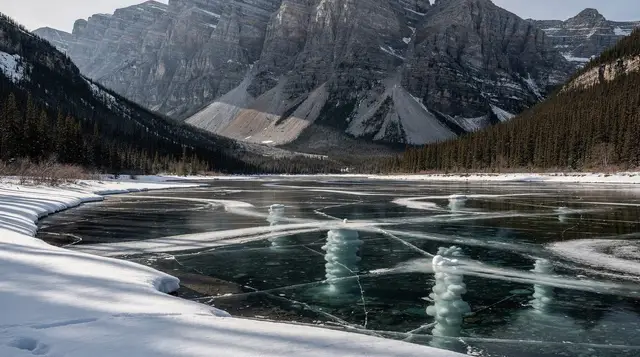
Once the tea house closes and the trail moves out of its late-June-to-early-October window, Lake Louise itself doesn’t shut down; it shifts into winter mode instead, with the frozen lake, an outdoor skating surface, and a different set of guided activities. A guided winter tour of the Lake Louise area is a reasonable way to see the lake and its surroundings outside the hiking season, though it’s a walking and sightseeing experience on the frozen lakeshore, not a substitute for the Lake Agnes trail, which is genuinely closed to casual hiking under winter snow.
The bottom line
Lake Agnes delivers a real payoff for a modest, well-defined effort: 3.4 km, about 400 m of climbing, a genuinely different alpine lake from the one you started at, and a century-old tea house that’s earned its reputation on setting rather than service speed. Get the logistics right — cash for the tea house, an early start, the correct fork at the first junction — and it’s one of the most reliably satisfying half-days available from Lake Louise. Get it confused with Plain of Six Glaciers or Larch Valley, and you’ll end up somewhere different from what you planned, so double-check which trail you’re on before you commit to the climb.
Common questions about the Lake Agnes hike and tea house
How long is the Lake Agnes hike from Lake Louise?
The round trip is about 3.4 kilometres with roughly 400 metres of elevation gain, starting and ending at the lakeshore near the Chateau. Most hikers take 2.5 to 4 hours including a stop at the tea house, longer if the trail is busy or you linger at the lake.
Does the Lake Agnes Tea House take credit or debit cards?
Not reliably. The tea house is a small, seasonal operation supplied by helicopter and staff who hike in, and card readers and connectivity can fail at that elevation. Bring Canadian cash for tea, soup, or baked goods, and treat a working card machine as a bonus rather than something to plan around.
Is Lake Agnes the same hike as Plain of Six Glaciers?
No, and this is the single most common mix-up at Lake Louise. Both trails share the same lakeshore trailhead near the Chateau and both end at a seasonal tea house, but they split after the first junction and lead to two different destinations: Lake Agnes sits in a hanging valley above Lake Louise, while Plain of Six Glaciers heads along the lake’s far shore toward the Victoria Glacier. Confirm your junction before you commit to one direction.
Is Lake Agnes the same as Larch Valley?
No. Larch Valley starts from Moraine Lake, 72 km from Banff and a separate shuttle-only access point, not from Lake Louise. The two trails are in different valleys with different trailheads, and neither substitutes for the other, even though both are popular subalpine hikes in the same general area.
When does the Lake Agnes Tea House open for the season?
Typically from around mid-June through early October, weather and staffing dependent, with no fixed calendar date published in advance. Outside that window the building is closed and the trail itself may still be under snow, so check current seasonal status before planning a trip specifically around the tea house.
Do I need to worry about bears on the Lake Agnes trail?
Yes. This is active grizzly and black bear habitat, and Parks Canada periodically restricts the trail to hiking parties of four or more, particularly in late summer when berry activity is high. Carry bear spray you know how to use, make noise on blind corners, and check the trail report at the Lake Louise visitor centre before you start.
Can I extend the Lake Agnes hike further?
Yes. A steeper, rougher spur trail continues past the lake and tea house to the Big Beehive, a viewpoint over Lake Louise, adding roughly 3 km and 150 m of additional gain round trip. It’s a reasonable add-on for hikers with energy left, but it turns a half-day outing into a longer one and isn’t necessary to enjoy Lake Agnes itself.