Two days: Banff and Lake Louise
Why 2 days works for Banff and Lake Louise, but not much more
Two days is enough to get a genuine first impression of Banff and Lake Louise without feeling rushed, provided you accept the trade-off up front: this pace doesn’t stretch to the Icefields Parkway or Jasper, both of which need a full day or more on their own. Trying to squeeze the parkway’s 232 kilometres of one-way driving into a day that already includes Lake Louise and Moraine Lake usually means seeing neither properly. This itinerary keeps things realistic: one day in the town of Banff itself, one day at the two lakes everyone comes for.
The other thing to accept early is that Moraine Lake can no longer be reached by personal vehicle. Moraine Lake Road has been closed to all private cars year-round since 2023, full stop, regardless of season or time of day. Every visitor — with or without a rental car — gets there the same way: the Parks Canada shuttle, Roam Transit, a commercial coach, or a bicycle. Anyone telling you to just drive up and park is working from outdated information.
You’ll need a Parks Canada pass for both days, since it covers entry to Banff National Park regardless of how you arrive — budget roughly 11 CAD per adult per day, or around 75 CAD for an annual Discovery Pass if you’re visiting more than a week’s worth of days total. Check the current official rate before you go.
Day 1: Town of Banff, the gondola, and Bow Falls
Morning: settle in and walk Banff Avenue
Spend the morning on foot in the town of Banff itself, which sits inside the national park at 1,383 metres — the highest town in Canada. Walk Banff Avenue with Cascade Mountain framing the north end of the street, and take in the fact that this is a working town with a capped population, not a resort built for tourists: strict federal rules on commercial development and a “need to reside” requirement for residency keep it that size on purpose. Grab coffee, browse a few shops, and get oriented before the day gets busier.
If you have half an hour, detour to the Cave and Basin National Historic Site, the actual birthplace of Canada’s national park system — the hot springs discovered here by railway workers in 1883 led directly to the park’s creation in 1885, and the site is also home to an endemic snail found nowhere else on Earth.
Midday: Banff Gondola up Sulphur Mountain
Ride the Banff Gondola up Sulphur Mountain — the trip takes about 8 minutes each way and lifts you to 2,281 metres, well above the treeline, with a boardwalk continuing to the historic weather station at Sanson’s Peak. On a clear day the views stretch across the Bow Valley to the Fairmont Banff Springs and beyond. If you’d rather earn it, the hiking trail up covers 5.5 kilometres and 655 metres of elevation gain one way, though most 2-day itineraries are better served taking the gondola and saving legs for tomorrow’s lakes.
Budget 2 to 3 hours here including the ride, the boardwalk, and lunch at the summit café, which is convenient but not cheap.
Afternoon: Bow Falls, Surprise Corner, and the Fairmont
Back in town, walk or drive the short distance to Bow Falls, a wide, low set of rapids on the Bow River that’s an easy 20-minute round trip from downtown. From there, follow the path up to Surprise Corner for the classic postcard view of the Fairmont Banff Springs, the 1888 “castle in the Rockies” that’s worth seeing from outside even if you’re not staying there. The hoodoos trail continues from this same area if you have energy left, though it’s easy to skip without missing much.
Evening: dinner in town
Banff’s restaurant scene is aimed squarely at visitors, so prices run higher than in Calgary — expect 25 to 40 CAD for a casual main course, more at anywhere with a view. Check where to eat on a budget if cost matters, and don’t expect miracles from anywhere directly on Banff Avenue at peak dinner hour; a short walk off the main strip usually means a shorter wait.
Day 2: Lake Louise and Moraine Lake by shuttle
Morning: get to Lake Louise early
Lake Louise sits 58 kilometres from Banff, about 45 minutes by road, with the glacier-fed lake at 1,750 metres backed by Victoria Glacier and the Fairmont Château Lake Louise on its shore. Start early — both the lake itself and the shuttle system to Moraine Lake fill up fast, and the light on the water is better before the midday crowds and haze roll in.
The parking trap here is real and worth planning around: the lakeshore lot at Lake Louise is small, charges a fee, and is frequently full by mid-morning through the summer. The more dependable option is to park at the Lake Louise Ski Resort park-and-ride lot and take the shuttle up, which removes the stress of circling for a spot that may not exist.
| Getting to the lakes | Access method | Booking needed |
|---|---|---|
| Lake Louise lakeshore | Drive + paid parking, OR shuttle from ski resort park-and-ride | Parking not guaranteed; shuttle recommended |
| Moraine Lake | Parks Canada shuttle or Roam Transit only | Yes — book ahead, no personal vehicles permitted |
| Both lakes together | Roam Transit routes 8X/8S, or a guided tour | Recommended in peak season |
Midday: Moraine Lake, reached the only way that’s allowed
This is the piece of the day that catches first-time visitors off guard: Moraine Lake, at 1,884 metres in the Valley of the Ten Peaks, cannot be reached by personal vehicle at any time of year. The road has been closed to private cars since 2023, permanently, not seasonally. Access is by the Parks Canada shuttle, by Roam Transit, by a commercial coach or guided tour, or by bicycle. Shuttle seats are released in blocks in spring and then on a rolling 48-hour booking window through the season — reserve ahead rather than showing up and hoping.
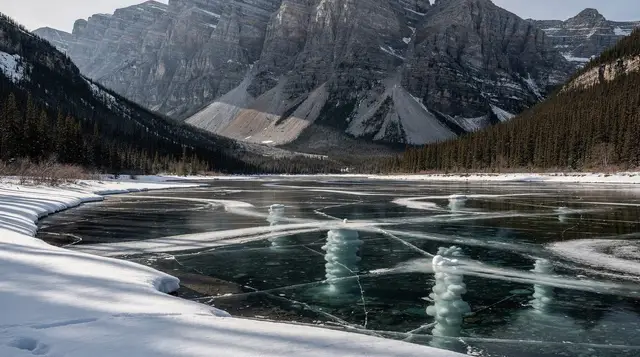
The colour in both lakes comes from rock flour — fine glacial sediment suspended in the meltwater that scatters light — and it’s worth knowing that neither lake looks like its postcard photos before mid-June. Both stay frozen well into spring; Lake Louise typically opens up around mid-June and Moraine Lake somewhat later. A turquoise lake photo from May doesn’t exist, so don’t plan an early-season trip expecting one.
a guided tour that handles the shuttle logistics for both lakes in one outing removes the booking stress entirely if you’d rather not manage shuttle reservations yourself, and it’s a reasonable trade-off given how tight the shuttle windows can get in July and August.
For sunrise specifically, an early-departure sunrise tour to Moraine Lake is the more dependable way to see the lake before the crowds arrive, since self-arranged shuttles at that hour can be harder to time correctly.
Afternoon: back to Lake Louise, maybe a short hike
Back at Lake Louise, if legs and time allow, the walk toward Lake Agnes Tea House (3.4 kilometres, 400 metres of gain) or partway along the Plain of Six Glaciers trail (5.5 kilometres) gives a different angle on the lake and glacier above it. Both tea houses are seasonal and don’t always accept cards, so carry cash if you’re planning to stop. Given this is day two of a two-day trip, a shorter version of either hike — or simply walking the lakeshore path — is a fair compromise against fatigue.
If you’d rather cover Lake Louise plus nearby Emerald and Peyto Lakes in one guided outing instead of self-driving between them, a combined Lake Louise, Emerald Lake, and Peyto Lake tour bundles several viewpoints without the logistics of switching between shuttle systems.
Late afternoon: Johnston Canyon, if the timing allows
On the drive back toward Banff, Johnston Canyon sits conveniently along the route and makes a worthwhile stop — but only if the day hasn’t already run long. The lower falls are an easy 1.1-kilometre walk along a catwalk bolted to the canyon wall, manageable even with tired legs from the morning. The upper falls extend the walk to 2.7 kilometres, and the Ink Pots add another few kilometres beyond that for anyone with real energy left.
Treat this stop as optional rather than fixed. If the Moraine Lake shuttle ran late, or Lake Louise took longer than planned, skip Johnston Canyon without guilt — it’s a strong candidate for a future trip, not a piece this itinerary depends on. For a guided version that removes the timing pressure entirely, a guided hike to Johnston Canyon and the Ink Pots handles transport and pacing for you.
Why the Icefields Parkway and Jasper don’t fit
It’s worth repeating plainly: the Icefields Parkway is 232 kilometres one way between Lake Louise and Jasper, roughly 3 hours 30 minutes of driving without stops and a full day with them, and there’s no fuel available for long stretches of it outside a seasonal stop at Saskatchewan River Crossing. Jasper itself sits 288 kilometres from Banff. Neither belongs bolted onto a 2-day Banff and Lake Louise trip — both need their own dedicated day or days, ideally as a 4-day Banff, Jasper, and Icefields itinerary instead.
Practical notes for this 2-day trip
- Park pass: buy or confirm your Parks Canada day pass before day one; it covers both days and every stop listed here.
- Shuttle bookings: reserve the Moraine Lake shuttle as early as your trip dates allow — don’t leave it for the morning of.
- Cash for tea houses: the Lake Agnes and Plain of Six Glaciers tea houses are seasonal and don’t reliably take cards.
- Footwear: bring real walking shoes for the gondola boardwalk, Bow Falls path, and any lakeside or canyon walking.
- Timing flexibility: build Johnston Canyon in as a maybe, not a must, so a slow shuttle day doesn’t wreck the schedule.
For a longer version of this same route with the Icefields Parkway added, see the 4-day Banff, Jasper, and Icefields itinerary, or compare against a 3-day classic Banff itinerary if you can add just one more day.
FAQ: two days in Banff and Lake Louise
Can you drive to Moraine Lake yourself?
No. Moraine Lake Road has been closed to all personal vehicles year-round since 2023. The only ways in are the Parks Canada shuttle, Roam Transit, a commercial tour or coach, or arriving by bicycle, and shuttle seats should be booked in advance rather than assumed on the day.
Is parking at Lake Louise itself difficult?
Yes. The lakeshore lot is small, payable, and often full by mid-morning in summer. The more reliable option is the park-and-ride lot at the Lake Louise Ski Resort, which runs a shuttle up to the lake and takes the guesswork out of arrival timing.
Can you fit the Icefields Parkway or Jasper into this 2-day trip?
No, not realistically. The Icefields Parkway alone runs 232 kilometres one way and takes a full day with stops, and Jasper is 288 kilometres from Banff. Both belong in a longer itinerary, not appended to a Banff and Lake Louise weekend.
Is Johnston Canyon worth adding on the way back from Lake Louise?
It’s worth a stop if time allows, particularly the lower falls at 1.1 kilometres round trip, but treat it as a bonus rather than a fixed plan. If Lake Louise and Moraine Lake run long, or the shuttle timing doesn’t cooperate, skip it without regret.
Do you need a rental car for this 2-day itinerary?
A car is useful for reaching Banff and for flexibility around Johnston Canyon, but it isn’t required at Lake Louise or Moraine Lake, since personal vehicles can’t reach Moraine Lake anyway and Lake Louise parking is limited. Roam Transit and the Parks Canada shuttle cover both lakes.
What time should the Lake Louise and Moraine Lake day start?
Early. Shuttle and parking capacity fill up fast in summer, and both lakes photograph better before the midday crowds and haze build up. Aim to be on the first available shuttle or at the ski resort park-and-ride shortly after it opens.
Is 2 days too short to avoid crowds at Moraine Lake?
It reduces crowding but doesn’t eliminate it. Moraine Lake sees heavy midday traffic regardless of season, so an early shuttle booking still matters even on a tight 2-day schedule.
Lake Louise & Moraine Lake tours on GetYourGuide
Verified deep-linked GetYourGuide tours. Book through these links and we earn a small commission at no cost to you.
GetYourGuide does not provide a product photo for this activity — the image shows the meeting point, photographed by us.