Lake Louise visitor guide
What do I actually need to know before visiting Lake Louise?
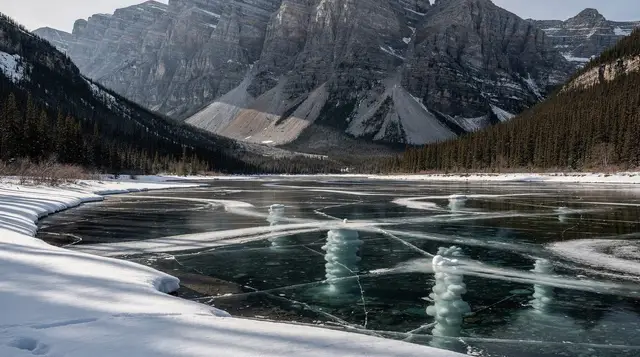
Lake Louise sits 58 kilometres (about 45 minutes) from Banff, at 1,750 metres, with the Victoria Glacier and the Fairmont Chateau Lake Louise at the far end. Lakeside parking is paid, limited and fills before 7 a.m. in summer; most visitors park at the Lake Louise Ski Resort and ride the shuttle in instead. The lake is frozen or partly frozen until mid-June, so the turquoise colour most photos show doesn't exist in spring.
Why everyone stops here first
Lake Louise is the lake most people picture when they think of the Canadian Rockies, and it earns the reputation honestly: a turquoise-in-summer lake at 1,750 metres, backed by the Victoria Glacier and framed by the Fairmont Chateau Lake Louise on the near shore. It’s also the single most photographed, most congested, and most misunderstood spot in Banff National Park. This guide covers what’s actually true about getting there, parking, and what you’ll see depending on when you show up — not the version implied by a June postcard shot on an April itinerary.
Two things trip up more visitors than anything else: the lakeside parking lot fills before most people are awake, and the lake itself is frozen solid for a good chunk of the year most travellers assume it’s open water. Both are covered in detail below, along with the practical stuff nobody puts on the postcard — where the washrooms are, what a realistic amount of time on-site looks like, and how the lake differs from the village that shares its name.
It’s worth separating two things that get conflated constantly: Lake Louise the lake, sitting up the hill with the Chateau and the lakeshore path, and Lake Louise the village, down on the valley floor along the Trans-Canada Highway, with the gas station, grocery store, a handful of restaurants, and the train station. They’re roughly a 10-minute drive apart, and a lot of trip-planning confusion (and more than a few missed reservations) comes from assuming they’re the same stop.
Distance and access from Banff
Lake Louise sits 58 kilometres from Banff, a drive of about 45 minutes on the Trans-Canada Highway (Highway 1), followed by a short climb on Lake Louise Drive to the lake itself. It’s one of the most straightforward day trips in the park — no shuttle reservation required to simply get to the village or the ski resort, though the lake access itself has its own logistics (below).
| From | Distance | Drive time |
|---|---|---|
| Banff townsite | 58 km | ~45 min |
| Calgary (YYC) | ~185 km | ~2 h |
| Moraine Lake | 14 km (shuttle only) | ~15–20 min by bus |
| Jasper | ~230 km | ~3 h (via the Icefields Parkway) |
Roam Transit’s 8X and 8S routes connect Banff to Lake Louise without a car, and several guided day tours run the same route with hotel pickup in Banff or Calgary included. If you’re mapping out a wider loop through the region, the two-day Banff and Lake Louise itinerary lays out a realistic pace for both stops.
The drive itself is straightforward and well-signed, but it’s still mountain driving: expect slower traffic behind RVs in summer, occasional wildlife on the shoulder near dawn and dusk, and reduced visibility in early-morning fog along the valley bottom. Winter tires aren’t legally required on this stretch of Alberta highway the way they are across the border in British Columbia, but with overnight temperatures well below freezing from November through April, they’re a genuinely good idea rather than a formality.
Parking at Lake Louise: what actually happens
This is where most Lake Louise visits go wrong. The parking lot directly at the lakeshore is small, it’s paid, and in July and August it is functionally full by 7 a.m. Parks Canada has said as much publicly for several summers running — arrive after breakfast expecting an open spot and you’ll likely be turned away or sent to overflow parking well down the hill.
There are three realistic ways to deal with this:
- Arrive very early or very late. Before sunrise (which in midsummer means before 6 a.m.) or after about 5 p.m., the lakeside lot usually has space. This also happens to be when the light and the crowds are both at their best.
- Use the park-and-ride at the Lake Louise Ski Resort. There’s a large day-use lot at the ski resort base, a few minutes from Lake Louise village, with a shuttle bus running up to the lake. This is the option Parks Canada actively steers people toward, and it’s usually the least stressful choice for a mid-morning or afternoon visit.
- Skip driving to the lake entirely. Roam Transit buses from Banff, or a guided tour, remove the parking question altogether.
Note that this is a different shuttle system from the one serving Moraine Lake, which has been closed to private vehicles year-round since 2023 and requires its own separate Parks Canada shuttle, Roam bus, or tour booking — worth reading in the Moraine Lake shuttle guide if you’re combining both lakes in one day, which most visitors do. The general playbook for both lots is covered together in the Banff and Lake Louise parking guide.
A Parks Canada day pass (about 11 CAD per adult, or roughly 22 CAD per vehicle) is required regardless of which lot you use, since Lake Louise sits inside Banff National Park. Details and current pricing are in the Parks Canada pass guide.
RVs and larger vehicles face the tightest squeeze: the lakeside lot has limited RV-length spaces, and most RV travellers are better off using the ski resort park-and-ride by default rather than attempting the lakeside lot at all. There’s no overnight parking or camping at the lakeshore lot itself — it’s day-use only, gated and monitored, and vehicles left overnight are subject to towing.
None of this is unique to Lake Louise; the same paid, capacity-limited pattern applies across most of the park’s marquee stops in peak season. But because Lake Louise sits at the very top of most itineraries, it’s the place where an unplanned parking search costs the most — arriving to find the lot full at 9 a.m. after a 45-minute drive stings more than it does at a smaller pullout.
What you’re looking at
The lake’s colour comes from glacial flour — extremely fine rock particles ground by the Victoria Glacier and carried into the lake by meltwater, which scatter light and produce the blue-green colour visible in summer. The full explanation, including why it shifts through the season, is in why the lakes are turquoise.
The glacier itself, Victoria Glacier, is the ice field visible at the head of the lake, below Mount Victoria, which straddles the Alberta–British Columbia boundary. Like most glaciers in the Canadian Rockies, Victoria Glacier has been retreating for decades, though it remains large enough to feed the lake’s meltwater and colour through the summer.
On the near shore sits the Fairmont Chateau Lake Louise, built originally by the Canadian Pacific Railway as a small chalet in 1890 and rebuilt and expanded repeatedly since, including after a fire in 1924. The lobby, lakeside terrace, and several of its restaurants are open to non-guests, though seating fills quickly in peak season and parking directly at the hotel is limited to guests and diners with a reservation. The lake itself was named for Princess Louise Caroline Alberta, a daughter of Queen Victoria, after whom the province of Alberta is also named — a detail that surprises more visitors than you’d expect.
A paved lakeshore path runs along the north side of the lake for roughly 2 kilometres one-way, flat and easy, and is the section nearly every visitor walks regardless of what else is on the day’s plan. Washrooms are available near the Chateau and at the main parking areas, but not along the trail itself once you’re past the first few hundred metres — worth knowing before setting off with kids.
When to go: the ice problem
This is the single biggest gap between expectation and reality at Lake Louise. The lake is frozen, or partially frozen, until roughly mid-June most years. If your trip falls in April, May, or even the first half of June, expect a white or grey ice sheet, not the turquoise water shown in nearly every photo used to market the destination. The ice doesn’t go out gradually and photogenically — it breaks up over a period of days to weeks, and the water underneath often carries a milky, still-clouded look for a while after that before the full colour develops.
The month-by-month reality, including when full colour typically arrives, is covered in when the lakes thaw. If turquoise water in your photos matters to your trip planning, don’t book a spring visit expecting it.
Crowds follow a predictable pattern too: July and August are the peak, with the lakeshore path genuinely elbow-to-elbow by mid-morning, and the lakeside parking lot problem described above at its worst. Shoulder season — September, and June once the ice clears — is markedly quieter on the path itself, though parking pressure eases more slowly than the crowds do, since the ski resort shuttle keeps running regardless of season.
Photographing the lake without the crowd in every frame
Early morning remains the most reliable window for a clean shot of the water and the Chateau together, partly because the light is better and partly because it’s simply before most day-trippers arrive. A phone camera handles the wide lakeshore view perfectly well in good light; where it struggles is the glacier itself, which reads as a flat white smudge without a longer lens. The trade-offs between phone and camera gear for shots like this — and for the similar lighting problem at Moraine Lake and Peyto Lake — are covered in photographing lakes: phone versus camera.
Hikes that start from the lakeshore
Two of the park’s best-known teahouse hikes begin right at the Lake Louise lakeshore, and both deserve their own planning rather than being squeezed into a parking-lot stop. The Lake Agnes Tea House hike is 3.4 kilometres one-way with about 400 metres of elevation gain, ending at a rustic teahouse that’s cash-and-card-uncertain (it’s seasonal, and payment options can be limited) — full details in the Lake Agnes Tea House hike guide.
The longer Plain of Six Glaciers hike runs about 5.5 kilometres one-way to a second teahouse with a view of, as the name suggests, six glaciers — covered in the Plain of Six Glaciers hike guide. If a guided version with lunch included appeals more than routefinding solo, a hiking day here can be booked directly:
a guided hike to the Lake Agnes Tea House with lunch includedNeither hike is something to attempt as an afterthought after a long drive and a parking search — budget a genuine half-day if either is on the list, and check the teahouse’s seasonal opening dates before counting on it as a lunch stop.
Lake Louise in winter
The lake most visitors see in July looks nothing like the lake in January. Once fully frozen, a groomed section of Lake Louise becomes a maintained outdoor skating rink, complete with the same Chateau backdrop, and often a rink-side warming setup in the coldest months. It’s a genuinely different experience from the summer lakeshore walk, and worth building into a winter itinerary rather than assuming Lake Louise is a summer-only stop — see ice skating on Lake Louise for what to expect and what to bring. Temperatures at this elevation regularly sit well below what Banff itself reports on the same day, so dressing for several degrees colder than the townsite forecast is the safer assumption.
Canoeing, and what this guide doesn’t cover
The lake’s canoe dock, run seasonally near the Chateau, is one of the most photographed activities in the park and deserves its own detailed page rather than a paragraph here — see canoeing at Lake Louise and Moraine Lake for rental costs, hours, and whether it’s worth the wait. Likewise, the mechanics of when exactly the ice clears each year are covered fully in the thaw guide linked above rather than repeated here.
Beyond the lakeshore: pairing Lake Louise with other stops
Most visitors don’t treat Lake Louise as a standalone destination — it’s usually paired with Moraine Lake in the same day, shuttle logistics permitting, or used as a launch point further up the valley. A guided day that covers both of the region’s signature lakes without the shuttle-booking headache is a common shortcut:
a guided day covering both Moraine Lake and Lake Louise from BanffFor a different vantage point on the same valley, the Lake Louise Ski Resort runs its gondola through the summer months, climbing above the treeline for a wide view back toward the lake and the surrounding peaks — often combined with a meal at the top:
the Lake Louise gondola ride, with an optional meal at the summitIf you’re weighing whether to split your itinerary between here and Moraine Lake or treat it as one combined stop, the tour comparison above is usually the deciding factor — most guided options bundle the two anyway, given how close they sit on the map despite the separate shuttle rules.
Lake Louise at a glance
| Detail | Fact |
|---|---|
| Elevation | 1,750 metres |
| Distance from Banff | 58 km, ~45 min |
| Distance from Calgary | ~185 km, ~2 h |
| Lakeside parking | Paid, limited, typically full by 7 a.m. in summer |
| Alternative parking | Lake Louise Ski Resort day lot + shuttle |
| Frozen until | Roughly mid-June |
| Peak crowd months | July–August |
| Quieter months | June (post-thaw) and September |
| Parks Canada pass required | Yes (~11 CAD/adult day pass) |
Lake Louise FAQ: parking, ice and access
How far is Lake Louise from Banff?
58 kilometres, about 45 minutes by car on the Trans-Canada Highway (Highway 1), then a short climb up Lake Louise Drive. Roam Transit’s 8X and 8S routes cover the same distance by bus from Banff and Lake Louise village.
Can I park right at the lake?
Yes, but the lakeside lot is small, paid, and reaches capacity most summer mornings before 7 a.m. Parks Canada now recommends arriving before sunrise or after 5 p.m., or skipping the lakeside lot entirely in favour of the park-and-ride.
Is there a shuttle to Lake Louise?
There’s a park-and-ride at the Lake Louise Ski Resort day lot, roughly 5 minutes from the village, with a shuttle bus running to the lake. It’s separate from the Moraine Lake and Lake Louise Parks Canada shuttle system that departs from the Lake Louise Park & Ride further out on Highway 1.
Is Lake Louise frozen in spring?
Yes. Lake Louise typically stays frozen or partly frozen until around mid-June. A photo showing turquoise open water taken in April or May is not Lake Louise as it actually looks that week — expect a white or grey ice sheet instead.
Do I need a Parks Canada pass to visit Lake Louise?
Yes. Lake Louise is inside Banff National Park, so the standard Parks Canada day pass (roughly 11 CAD per adult) or an annual Discovery Pass applies, on top of any parking fee.
Can I see Lake Louise without a car?
Yes. Roam Transit buses run from Banff, and multiple guided day tours from Banff or Calgary include Lake Louise, often paired with Moraine Lake or Emerald Lake, with hotel pickup included.
Is the Fairmont Chateau Lake Louise open to non-guests?
Yes, the lobby, lakeside terrace and some restaurants are open to the public, though seating and parking at the hotel itself are limited and often reserved for guests.
Lake Louise & Moraine Lake tours on GetYourGuide
Verified deep-linked GetYourGuide tours. Book through these links and we earn a small commission at no cost to you.
GetYourGuide does not provide a product photo for this activity — the image shows the meeting point, photographed by us.