A town rebuilding, not a stopover on the parkway
Jasper is easy to mislabel as the far end of the Icefields Parkway, the town you reach after the long drive from Banff and leave the next morning. That undersells it. Jasper National Park is the largest national park in the Canadian Rockies at roughly 11,000 square kilometres, more than half again the size of Banff National Park, and the town at its centre has its own pace, its own dark-sky designation, and its own recovery story after the wildfire of July 2024. Treating it as a single overnight between Banff and the drive home skips most of what it’s actually good at.
The town itself is small, about 4,700 people, built around a rail station that still sees Via Rail’s transcontinental service and a compact grid of streets a few minutes’ walk in any direction. Where Banff feels busy and commercial by mid-morning in summer, Jasper still feels like a mountain town first and a tourist destination second, even with the crowds that come through in July and August.
The 2024 wildfire, honestly
In July 2024, a wildfire swept into the Jasper townsite and destroyed roughly a third of its buildings, including homes, businesses, and sections of the municipality’s infrastructure. It was one of the more significant losses to a Rockies community in decades, and it’s not something to gloss over when planning a visit.
Jasper has since rebuilt. The townsite is open, hotels and restaurants are operating, and the visitor economy that the town depends on is functioning again. That said, some residential areas still show the scars of the fire, construction and rebuilding continue in places, and a handful of trails and backcountry areas near town were affected and have reopened only in stages as the park assessed damage. None of this should discourage a visit, but arriving with the expectation of a town in recovery, rather than one that looks untouched, is the honest way to plan.
For travellers who want to understand what happened and see the recovery firsthand, a guided walk through the affected area with a local guide is a more useful way to learn the story than reading about it online. The guided wildfire hike with lunch covers this ground directly, with context from someone who lived through it.
Beyond curiosity, there’s a practical case for visiting now rather than waiting. Jasper’s economy runs almost entirely on tourism, and a normal flow of visitors booking rooms, eating at local restaurants, and hiring local guides is part of how the town keeps rebuilding. Skipping it out of an outdated sense that it’s still closed does the town no favours, and it isn’t accurate either.
The town: layout and atmosphere
Jasper’s commercial core runs along Connaught Drive and Patricia Street, a few blocks near the Via Rail station that hold most of the restaurants, outfitters, and shops. It’s walkable in a way Banff Avenue also is, but with noticeably less foot traffic outside of peak summer weeks. The mountain backdrop is immediate: Whistlers Mountain rises directly behind town, home to the Jasper SkyTram, and the Athabasca River runs along the townsite’s edge.
Lodging in Jasper skews toward mid-range hotels, cabins, and a scattering of larger resort properties outside the core, rather than the concentration of luxury hotels found in Banff. Dining is more limited in absolute numbers than Banff, but the quality holds up, and reservations at popular spots in July and August are still worth making ahead.
Practical services are all here too: grocery stores for self-catering, an outfitter or two for renting hiking and winter gear, and shops that sell or rent bear spray, which is worth remembering since it can’t travel in checked or carry-on luggage and has to be sourced locally at either end of a trip. Banks and ATMs are concentrated on the same few blocks as everything else, so there’s rarely a reason to go looking far for basic services.
Getting to Jasper and around
There’s no direct highway from Calgary that skips Banff; most visitors arrive via Calgary and the Icefields Parkway, a 288 km, roughly 3.5-hour drive from Banff that most people spread across a full day with stops. Via Rail also serves Jasper on its transcontinental route, a genuine passenger rail option that doesn’t exist in Banff.
| Route | Distance | Typical time |
|---|---|---|
| Banff to Jasper (Icefields Parkway) | 288 km | 3.5 hours driving, a full day with stops |
| Calgary to Jasper (via Banff) | about 410 km | 5 to 6 hours |
| Jasper townsite to Maligne Lake | about 48 km | 45 to 60 minutes |
If you don’t want to drive the parkway yourself, or you’re doing a one-way trip and don’t want to double back for a rental car, a guided coach tour is the practical alternative. The Columbia Icefields parkway tour to Banff runs the route one-way with stops at the main viewpoints, which solves the logistics of a one-way trip between the two towns. Fuel up before setting out either way: there’s no service between Saskatchewan River Crossing and Jasper, and mobile coverage along the route is patchy at best, a detail worth reading up on in the gas and cell coverage guide before you leave.
Within the park, Jasper doesn’t have the equivalent of Roam Transit’s network, so a car, a tour, or a rental bike covers most of the outlying sights.
Jasper as a gateway: what’s nearby, not covered here
Jasper’s real strength is as a base for the sights spread across the northern half of the Icefields region. Each of these has its own detailed page; this one sticks to the town itself.
- Maligne Lake and Maligne Canyon, the best-known day trips from town
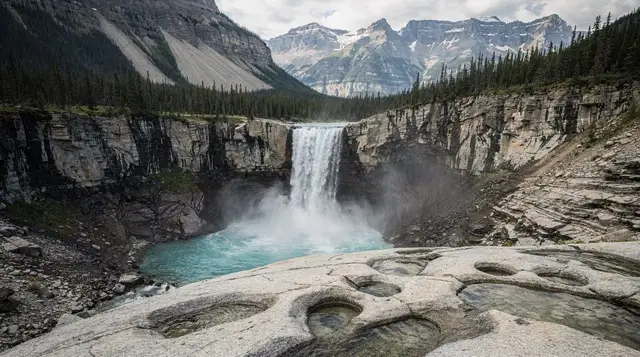
- Athabasca Falls and Sunwapta Falls, both short stops off the parkway
- The Jasper SkyTram, the highest guided cable car in Canada, right at the edge of town
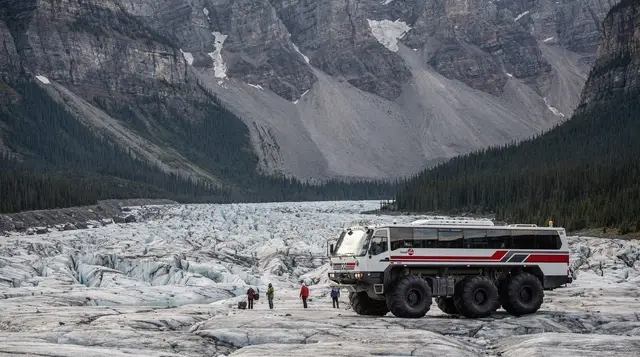
- The Columbia Icefield area, roughly 105 km south along the parkway toward Banff
For Maligne Lake and Canyon together, the canyon and Medicine Lake tour from Jasper covers both stops in a single guided day, useful if you’d rather not manage the driving and timing yourself. For the SkyTram, a straightforward roundtrip flight ticket is the standard way to book ahead and skip a slow ticket line at the base station.
Wildlife sightings around Jasper are common, elk and bighorn sheep in particular show up close to town, and a guided sightseeing outing that pairs a lakeshore walk with wildlife spotting is a reasonable way to cover ground with someone who knows where animals tend to be that week. As anywhere in the Rockies, keep 100 metres from bears and wolves and 30 metres from other wildlife, and never approach or feed an animal for a photo.
Dark skies and the October festival
Jasper National Park holds one of the largest Dark Sky Preserve designations in the world, and the town leans into it. Light pollution controls within the park keep the night sky genuinely dark away from the townsite’s own lights, and on a clear night the Milky Way is visible without any special equipment.
The town’s Dark Sky Festival runs in October, with public stargazing sessions, talks, and family programming through the townsite and park. October nights are cold, often near freezing, so a proper layer plan matters more than for a summer visit. For a deeper look at conditions and viewing spots, see the dark sky preserve guide.
Even outside the festival, the payoff is available most clear nights: step a few minutes outside the townsite lights, away from Connaught Drive, and Whistlers Mountain’s silhouette against a genuinely dark sky is available without booking anything at all. It’s one of the few things about Jasper that doesn’t depend on the season being right.
When to go
| Season | Conditions | Notes |
|---|---|---|
| June to August | Warm days, all services open | Peak crowds, book lodging well ahead |
| September | Cooler, fewer visitors | Good hiking weather, some early snow at elevation |
| October | Cold nights, Dark Sky Festival | Festival programming, layer for near-freezing temperatures |
| November to April | Winter conditions | Reduced services, ideal for a quieter, snow-focused visit |
Snow at higher elevations is possible in any month, and shoulder-season visitors should expect a colder edge to mornings even in a summer month like June.
Planning a Jasper stay
Two to three nights is a realistic minimum if you want to see the town, Maligne Lake, and at least one of the icefield-area sights without treating it as a single rushed day. A one-night stop between a longer Banff stay and a flight home is common, but it means seeing very little of what the area offers; the one-day-in-Jasper guide goes into why that’s a compromise rather than an efficient plan.
Daily budgets run somewhat below Banff’s, roughly 150 to 280 CAD per person before lodging, mostly because dining and activity pricing is a touch lower and the town is smaller overall.
| Category | Typical range (per person, per day) |
|---|---|
| Meals | 50 to 100 CAD |
| One guided tour or attraction | 60 to 150 CAD |
| Local transport and incidentals | 20 to 40 CAD |
| Lodging (per room, per night) | 180 to 400 CAD, higher in July and August |
Alberta’s 5 percent GST applies with no separate provincial sales tax, though the municipal accommodation tax adds a few percent on top of quoted room rates, so treat posted prices as before tax.
For a longer trip that pairs Jasper properly with Banff and the parkway between them, the four-day Banff, Jasper, and icefields itinerary and the six-day full loop itinerary both build in enough time to treat Jasper as a stop worth its own nights, not an afterthought. For a side-by-side comparison of the two towns, see Banff vs. Jasper.
The short version: don’t let the drive in decide how long you stay. The Icefields Parkway is worth every hour it takes, but Jasper on the other end isn’t a reward stop to tick off before turning around. Budget the nights, let the town itself set the pace for a day or two, and use the surrounding sights as the reason to stay rather than a single afternoon detour.
Common questions about visiting Jasper
Is Jasper safe to visit after the 2024 wildfire?
Yes. The townsite has been rebuilt and is fully open, with hotels, restaurants, and services operating on a normal schedule. A number of residential blocks were lost and some trails and viewpoints in the immediate area are still recovering, but there’s no reason to avoid visiting.
How do I get from Banff to Jasper without a car?
The most practical option without your own vehicle is a guided coach tour that runs the length of the Icefields Parkway one-way, stopping at the main viewpoints along the route. Scheduled shuttle services also connect the two towns, though they run less frequently than in Banff or Lake Louise.
Is Jasper worth visiting if I’ve already seen Banff?
Yes, and it’s a mistake to treat it as a smaller copy of Banff. Jasper sits inside a larger, quieter national park, has its own dark-sky designation, and has a slower, less commercial townsite feel that a lot of travellers prefer after a few days in Banff’s crowds.
How many nights do I need in Jasper?
Two to three nights is the practical minimum if you want to see Maligne Lake, the Columbia Icefield area, and the town itself without rushing. Treating Jasper as a single overnight on a Banff-to-Jasper loop undersells what the area offers.
What is the Jasper Dark Sky Festival?
It’s an annual October event tied to Jasper’s designation as one of the world’s largest Dark Sky Preserves, with stargazing sessions, talks, and family programming spread across the townsite and park. Cold nights are normal that late in the season, so pack accordingly.
Can I visit the Columbia Icefield from Jasper without a car?
Yes. Guided tours run from Jasper to the icefield area and combine transport with entry to the glacier and skywalk attractions, which is useful since there’s no public transit link and the drive covers a stretch of highway with no fuel stops.
Is Jasper cheaper than Banff?
Lodging and dining prices are broadly similar between the two towns, though Jasper’s smaller size means fewer high-end options and, at times, fewer choices overall. The bigger cost difference usually comes from how you get there, since Jasper is farther from the Calgary airport.
What happened to the trails and viewpoints near Jasper after the fire?
Some trails close to the townsite were affected by the 2024 fire and access has been managed in phases as the park assessed damage and rebuilt infrastructure. Conditions change from season to season, so it’s worth checking current trail status before setting out rather than assuming everything is open.