Jasper after the 2024 wildfire: what's open now
Is Jasper open to visitors after the 2024 wildfire?
Yes. Jasper townsite and Jasper National Park reopened to visitors in the months following the July 2024 fire, which destroyed roughly a third of the town's buildings but left most of the park's major attractions and the surrounding wilderness untouched. Some accommodation, businesses, and a handful of trails remain closed or under repair, so it's worth checking current status before booking rather than assuming everything listed here is unchanged.
What happened, and what it means for a visit today
In July 2024, a wildfire burned into Jasper townsite and destroyed roughly a third of its buildings, a mix of homes, staff housing, and a number of commercial properties, along with stretches of forest in the surrounding national park. It was a serious event for the town’s roughly 4,700 residents, many of whom lost homes or workplaces, and it triggered a full evacuation of the park that summer.
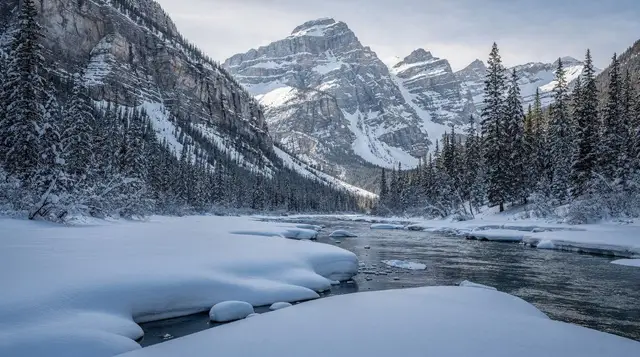
It was not, however, a fire that reached the park’s signature attractions: Maligne Lake, the Columbia Icefield, and the Jasper SkyTram all sit well outside the burned area and were never at risk in the same way the townsite was.
That combination, real damage to the town itself alongside an intact park around it, is the part that’s easy to get wrong in either direction. Coverage that implies Jasper “burned down” overstates it; the townsite core, the highway in, and most of the park’s terrain came through untouched. Coverage that skips the fire entirely undersells what residents and business owners actually went through, and what a visitor will still notice on the ground: rebuilding work, some closed storefronts, and sections of blackened forest visible from the highway on the approach to town.
This guide is about giving a straight answer to the question most visitors actually have: what’s open, what’s still recovering, and what to check before locking in a booking. It does not cover Maligne Lake, Maligne Canyon, Athabasca Falls, or Sunwapta Falls in detail; those have their own dedicated nature guides and were not affected by the fire in any case. It also doesn’t go deep on the SkyTram itself, which is covered alongside the park’s other gondolas in our comparison guide.
The state of the townsite
Jasper’s townsite is small, walkable, and built around a handful of streets a short block or two from the train station, and the fire’s damage was concentrated in residential and staff-housing areas rather than wiping out the commercial core in one stroke. Since the fire, rebuilding has proceeded steadily: some destroyed properties have been replaced, others remain construction sites, and a number of businesses that closed in 2024 have since reopened under the same or new ownership. Visitors arriving today should expect an active construction zone in parts of town, not a ghost town and not a townsite indistinguishable from before the fire.
The practical effect for a trip is mostly about accommodation and dining capacity rather than sightseeing. A meaningful share of Jasper’s hotel rooms and staff housing was lost, which tightened availability and pushed some prices up in the seasons immediately following the fire; that picture keeps shifting as new capacity comes online, so checking current listings rather than assuming pre-2024 room counts is the safer approach. The same applies to restaurants: some familiar names are back, some locations have changed hands, and it’s worth checking a specific place is actually open before building an evening around it, rather than assuming a listing from before 2024 is still current.
Camping and RV sites in and around the park followed a similar pattern: some campgrounds close to the burned area saw temporary closures during cleanup, while others across the wider park operated with only a shortened season during 2024’s evacuation and have run as normal since. Anyone planning a self-drive trip that includes camping should check reservation availability directly with Parks Canada rather than relying on a booking pattern from before the fire, since site counts and reopening dates have shifted campground by campground.
For a lower-effort way to see the town’s food and business scene as it stands now, a guided walk through downtown covers what’s currently operating without a visitor needing to research it storefront by storefront: a downtown food tour in Jasper works through several of the town’s restaurants and cafés in one outing, guided by someone who knows which of them reopened and what changed.
What’s unaffected: the park around the town
It’s worth restating this plainly, because it’s the part most likely to get lost in a headline about a town burning: the vast majority of Jasper National Park, roughly 11,000 square kilometres, the largest of the Canadian Rockies parks, sits outside the area the fire touched. The drive in along the Icefields Parkway is unchanged, and its stops, from Bow Lake and Peyto Lake near the Banff side through to the Columbia Icefield and Glacier Skywalk closer to Jasper, were not affected.
The same goes for the park’s other major draws. Maligne Lake and its Spirit Island boat cruise, Maligne Canyon, Athabasca Falls, and Sunwapta Falls all operate as they did before, and none of them fall inside the burned perimeter. Visitors who built a trip around any of these before 2024 can generally still expect the same experience; the fire’s footprint was the townsite and adjacent forest, not the park’s headline nature stops.
| Attraction | Affected by the fire? | Notes |
|---|---|---|
| Jasper townsite core | Partially | Roughly a third of buildings destroyed; rebuilding ongoing |
| Jasper SkyTram | No | Outside the burned area |
| Maligne Lake | No | Outside the burned area |
| Maligne Canyon | No | Outside the burned area |
| Columbia Icefield / Glacier Skywalk | No | Well outside the burned area, near the Banff side of the parkway |
| Athabasca and Sunwapta Falls | No | Outside the burned area |
| Some townsite trails and forest sections | Yes | Status varies; check current Parks Canada closures |
Wildlife, the Dark Sky Festival, and a burned landscape close up
Two things worth understanding about wildfire in a mountain park: burned forest is not dead forest in the ecological sense, and it’s a landscape wildlife returns to fairly quickly once the smoke clears. Fireweed and other pioneer plants move in within a season or two, and elk, deer, and smaller mammals use recovering burn areas for forage.
Visitors curious about how the ecosystem is actually recovering, rather than just how the town looks, can see it directly on a guided outing: a guided hike through the burn area with lunch included covers the ecology of wildfire recovery with someone trained to explain it, which is a more useful way to process the landscape than driving past blackened trees on the highway without context.
Wildlife viewing in general around Jasper continues as it did before the fire, and evenings are still the most reliable time to spot elk, deer, and the occasional bear from a vehicle on quieter roads; a three-hour evening wildlife search with a local guide covers the areas currently most active without a visitor needing to guess where animals have relocated since 2024. Our wildlife viewing map and timing guide covers the broader picture across the Rockies.
Jasper’s Dark Sky Preserve status, among the largest in the world, was never in question because of the fire; it’s a designation tied to the park’s size and the townsite’s lighting standards, not to any building. The Jasper Dark Sky Festival continues to run in October, and it’s arguably the clearest example of an attraction the fire didn’t touch at all. A dark sky package bundles stargazing-focused activities for anyone building an autumn trip around it; our dedicated Dark Sky Preserve guide has the detail on viewpoints and festival timing.
Anyone weighing an overnight in Jasper against a longer stay should also see our take on why one day in Jasper is usually too short, a point that holds regardless of the fire; the drive alone from Banff, close to 288 kilometres and three and a half hours along the parkway, was never well suited to a same-day round trip.
Trails, closures, and the one thing not to assume
This is the part where honesty matters more than optimism. Some trails within and around the townsite, particularly those that pass through burned forest, have been closed at various points since 2024 because standing dead trees can fall without warning, a hazard that persists for years after a fire, not weeks. Which specific trails are open changes as Parks Canada completes hazard assessments and clears sections, and that status is genuinely not something to take from any single article, this one included, as current at the moment of travel.
The same caution applies to specific accommodation and business listings throughout this guide and elsewhere. A hotel that had reopened by early 2026 could be full, sold, or under renovation again by the time a reader books a trip; a restaurant back in operation this season may have changed hours or ownership by next. The responsible approach is to treat any specific named business or trail status as a starting point to verify, through Parks Canada’s current trail report and direct contact with accommodation providers, rather than as a fixed fact.
What has not changed, and is safe to plan around without that caveat, is the geography: the drive in, the surrounding peaks, the Icefields Parkway, and the park’s major nature attractions. It’s the townsite’s building stock and the immediately surrounding forest where verification before travel actually matters.
Comparing Jasper to Banff right now
Visitors deciding how to split time between the two townsites in a single Rockies trip should know that Banff was entirely unaffected by the 2024 fire; it sits within its own national park roughly 288 kilometres south and saw no fire impact of any kind. That makes Banff the more predictable base for accommodation availability in the near term, while Jasper offers a quieter townsite, less crowding at its attractions, and the Dark Sky Festival as a genuine point of difference. Our Banff versus Jasper comparison covers the broader trade-offs beyond the fire’s effects, from drive times to the character of each town.
How long full recovery takes is genuinely an open question, and it’s not one this guide can answer with a date. Municipal and Parks Canada rebuilding timelines have shifted more than once since 2024, shaped by construction capacity, insurance processes, and decisions still being worked out about which damaged lots get rebuilt versus repurposed. What’s realistic for a visitor to expect is a townsite that looks more finished every season rather than one that flips to fully restored on a single date, and a trip planned around current listings rather than a projected finish line.
None of this should discourage a Jasper visit. The park’s defining attractions, its dark skies, its wildlife, and the drive along the Icefields Parkway are intact, and the town itself, however visibly under repair in places, remains a functioning base with fuel, food, and lodging. The honest version of “is Jasper worth visiting after the fire” is: yes, with a bit more homework on specific bookings than would have been necessary before 2024.
Jasper’s recovery, questions worth asking before you book
What actually burned in the July 2024 Jasper wildfire?
The fire burned into Jasper townsite itself, destroying roughly a third of its buildings, a mix of homes, staff accommodation, and some commercial properties, along with sections of surrounding forest in the park. It was not a fire that swept through the park’s major attractions; Maligne Lake, the Columbia Icefield, and the Jasper SkyTram all sit well outside the area that burned.
Is it disrespectful to visit Jasper for a vacation right now?
No, and local business owners have said the opposite: tourism revenue is central to the town’s recovery, since Jasper’s economy runs almost entirely on visitor spending. The more useful question is a practical one, whether the specific hotel, restaurant, or trail a visitor has in mind is actually open, not whether visiting itself is appropriate.
Did the fire reach Maligne Lake, the Columbia Icefield, or the Jasper SkyTram?
No. All three sit outside the burned area and were not directly affected by the fire. Maligne Lake and Maligne Canyon are covered in our dedicated nature guides, and the SkyTram is covered alongside the park’s other gondolas in our comparison guide; none of that content changed because of the fire.
How many hotel rooms in Jasper were lost?
A meaningful share of the townsite’s accommodation stock was damaged or destroyed, though the exact current count shifts as rebuilding continues and is best checked against current listings rather than a fixed figure, since availability has been changing month to month since the fire.
Are hiking trails around Jasper townsite safe to use?
Many are open, but burned terrain carries its own hazards, standing dead trees that can fall without warning being the main one, and Parks Canada has kept some trails and areas closed for exactly that reason. Check the current Parks Canada trail report for Jasper before setting out, rather than assuming a trail’s pre-2024 status still applies.
Is the Jasper Dark Sky Festival still happening?
Yes, the festival continues to run in October, and Jasper’s Dark Sky Preserve designation was never affected by the fire; the reduced light pollution that earned the designation is a property of the townsite’s lighting policy and the park’s size, not of any single building.
Should I still drive the Icefields Parkway to Jasper?
Yes. The parkway itself and its stops were not affected by the fire, and Jasper townsite remains the natural endpoint of that drive with functioning fuel, food, and lodging, even if some individual businesses have changed since 2024.
Where can I find official, current information on Jasper’s recovery?
Parks Canada and the Municipality of Jasper both publish updates on rebuilding progress, trail closures, and business reopenings, and those sources are more current than any guidebook, this one included, given how much has changed month to month since July 2024.
Best day trips from Banff on GetYourGuide
Verified deep-linked GetYourGuide tours. Book through these links and we earn a small commission at no cost to you.
GetYourGuide does not provide a product photo for this activity — the image shows the meeting point, photographed by us.