What to pack for Banff: summer and winter checklists
What should I pack for a trip to Banff?
Pack in layers regardless of season: a moisture-wicking base, an insulating mid-layer and a wind- or waterproof shell, since mountain weather shifts fast and snow is possible at higher elevations in any month. Summer adds sturdy walking shoes and a water bottle; winter adds insulated boots, ice cleats and face protection for temperatures that can drop to -25 C or lower. Buy or rent bear spray locally in Banff rather than trying to bring it — it can't travel by air, in checked or carry-on luggage.
Banff sits at 1,383 m in the middle of the Canadian Rockies, and the elevation matters more for your packing list than the calendar does. A warm July afternoon on Banff Avenue can turn into a cold, wet evening by the time you’re back from Lake Minnewanka, and a bluebird January morning at -20 C can shift with a chinook wind by lunchtime. The single most useful packing habit for this destination is layering, in every season, because the mountains change conditions faster than most travellers expect.
This guide splits the list by season — summer and winter — with a shoulder-season note at the end, and a separate section on bear spray, which trips up more first-time visitors than almost anything else on a Banff packing list.
The layering principle that applies year-round
Whatever season you’re travelling in, the same three-layer logic holds:
- Base layer — a moisture-wicking t-shirt or long-sleeve top against your skin. Cotton is the wrong choice here in any season, since it holds sweat and dries slowly, which turns cold fast once you stop moving on a trail.
- Mid layer — a fleece or light insulating layer that traps warmth. In summer this might be a single packable layer for cool mornings and evenings; in winter it’s a proper insulated piece, sometimes two.
- Outer layer — a windproof and waterproof shell. Rockies weather produces sudden wind and rain in summer and blowing snow in winter, and a shell is the difference between a manageable afternoon and a miserable one.
Pack layers you can add and remove through the day rather than one heavy garment, since temperature swings of 15 to 20 degrees between morning and midafternoon are normal here, not exceptional.
Summer packing list (roughly June to September)
Summer in Banff runs warm during the day — typically 20 C to 25 C — with cool nights and the ever-present chance of snow at higher elevations like Bow Lake and Peyto Lake, both near the 2,088 m high point of the Icefields Parkway. Don’t let a warm forecast in town talk you out of a real jacket.
| Category | Items | Why it matters |
|---|---|---|
| Layers | Moisture-wicking t-shirts, a fleece or light insulating layer, a packable rain shell | Evenings drop quickly even after a hot day; a shell handles sudden mountain showers |
| Footwear | Broken-in walking shoes or light hiking boots, plus sandals for the hotel or town | Trails like Tunnel Mountain and Johnston Canyon have uneven, sometimes wet footing |
| Accessories | Sunglasses, a wide-brim hat, sunscreen (SPF 30+), a reusable water bottle | UV exposure is stronger at altitude, and there are few places to refill on longer drives |
| Extras | A daypack, a light beanie and gloves for early sunrise outings, insect repellent for June | Sunrise viewpoints and lakeside walks can be genuinely cold before the sun clears the ridgeline |
| Rain gear | A proper waterproof shell, not just a windbreaker | Afternoon thunderstorms are common through July and August |
If your trip includes any hiking beyond short paved paths — the Lake Agnes Tea House trail or Plain of Six Glaciers, for example — waterproof hiking boots with ankle support are worth the extra bag space over simple sneakers. Both teahouses along those routes are seasonal and don’t always take cards, which is a packing note in its own right: carry small bills.
A note on the Icefields Parkway specifically: the drive from Lake Louise to Jasper passes the Columbia Icefield, where summer temperatures near the glacier are noticeably colder than in the valley. Bring the fleece and shell even on a day that starts warm in Banff, and don’t assume July guarantees short sleeves once you’re standing on ice.
Winter packing list (roughly November to April)
Winter is where packing mistakes get uncomfortable fast rather than just inconvenient. Daytime temperatures in Banff commonly sit between -15 C and -25 C, with occasional colder snaps below -30 C. Chinook winds can push temperatures up sharply for a day or two in the middle of winter, but pack for the cold end of the range rather than betting on a warm spell.
| Category | Items | Why it matters |
|---|---|---|
| Base and mid layers | Thermal base layers (top and bottom), a heavier fleece or down mid-layer | Two insulating layers, not one, handle the -15 C to -25 C range better than a single thick sweater |
| Outer layer | An insulated, windproof and waterproof winter parka rated for genuine cold | A summer-weight rain shell alone is not enough insulation for Banff winter days |
| Legs | Insulated or fleece-lined pants, or thermal leggings under regular pants | Wind cuts through jeans quickly at these temperatures |
| Footwear | Insulated, waterproof winter boots rated to at least -30 C, plus wool or thermal socks | Standard sneakers or fashion boots are genuinely dangerous for extended time outside |
| Traction | Ice cleats or crampons that strap onto boots | Packed snow and ice are the normal walking surface on Banff sidewalks and on trails like Johnston Canyon’s ice walk |
| Face and hands | A insulated hat covering the ears, a neck gaiter or balaclava, insulated mittens (warmer than gloves) | Exposed skin is the main frostbite risk on cold, windy days |
| Extras | Hand and toe warmers, a headlamp for early sunsets, lip balm and moisturizer | Winter days are short, and cold, dry air is hard on skin |
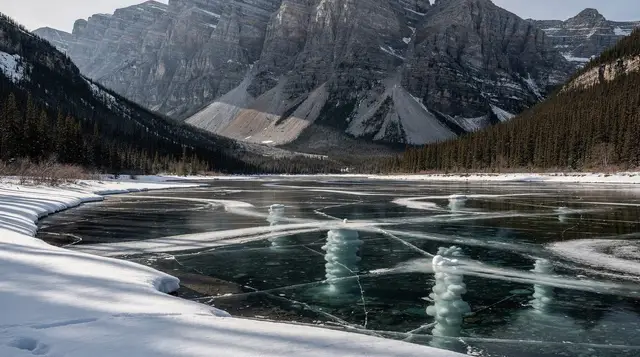
Ice cleats deserve more attention than most packing lists give them. Around Lake Louise and on the frozen surface of Lake Minnewanka, and on the ice-walk sections of Johnston Canyon and Maligne Canyon, footing is genuinely slick. Some organized ice-walk tours supply crampons as part of the trip, but if you’re exploring independently, bring your own.
If skiing or snowboarding is part of your plans at Banff Sunshine, Lake Louise Ski Resort or Mount Norquay, ski-specific clothing and equipment are usually rented locally rather than packed from home, which keeps luggage manageable. Ski rental and lesson logistics are covered in a separate guide.
For a full sense of what a guided winter outing covers gear-wise, a trip like Lake Louise’s Winterland tour includes a stop at the frozen lake and gives a useful preview of how cold the exposed lakeshore feels compared to a sheltered street in town — worth factoring in before you decide how many layers to bring on your own excursions.
Shoulder season (roughly May and October)
Shoulder season is the hardest to pack for because a single week can swing from mild, sunny afternoons to an unexpected snowfall. Bring the full summer base-layer kit, add a warmer mid-layer and real waterproof outerwear, and pack at least light winter footwear rather than assuming spring or fall means summer gear will do. Checking the forecast a few days ahead of specific outings — rather than packing purely by month — pays off more in May and October than in any other stretch of the year.
Trails at higher elevation, including approaches toward Larch Valley and Bow Valley Parkway viewpoints, can still be snow-covered in late May and again by early October, even when Banff itself looks like spring or fall in the valley.
Bear spray: buy or rent it here, don’t try to bring it
This is the packing mistake worth flagging on its own, separate from the clothing lists above: bear spray cannot travel by air, in checked luggage or in carry-on. It’s a pressurized canister of concentrated capsaicin, and it’s treated the same as any other prohibited pressurized irritant by airline and airport security rules — there’s no exception for wildlife safety use, and no way to declare it through.
If bear encounters are a real concern for your trip — hiking in the backcountry, or during the September–October elk rut and grizzly season around Larch Valley — buy or rent bear spray once you’ve arrived in Banff or Canmore. Outdoor shops in both towns stock it, and some outfitters rent canisters for the length of a specific hike. Plan to use it up, return a rental, or otherwise properly dispose of it before your return flight, for the same reason you couldn’t bring it in.
This guide covers what to physically pack. It doesn’t get into how to use bear spray, minimum safe distances from wildlife, or broader trail safety — that’s covered in the dedicated bear safety guide — and it doesn’t address mobility or physical accessibility needs, which have their own separate page.
A few general packing habits that help in any season
A handful of small items make the actual packing easier, regardless of when you’re visiting. Packing cubes or compression sacks keep bulky winter layers or a rolled-up rain shell from taking over the whole bag, which matters more here than on a typical city trip since you’re likely carrying both a warm layer and a shell even in July. Canada uses type A/B electrical plugs at 120 V, the same standard as the United States, so travellers from most of Europe, the UK, Australia or Asia need a plug adapter, not a voltage converter.
A refillable water bottle is worth the space in every season: tap water throughout Banff and the surrounding towns is safe to drink, and refilling beats buying bottled water at trailhead kiosks or gas stations along the Icefields Parkway, where prices run high and options are limited. A small day pack that can hold layers as you shed them through the day — rather than one bag you leave at the hotel — gets more use on an active Banff itinerary than most travellers expect before they arrive.
Finally, leave some flexibility in your bag rather than packing it completely full. Layers get added and removed constantly here, and a bag with a little spare room makes it far easier to stuff a damp rain shell or a bulky parka in and out throughout the day.
A quick reference: what changes between seasons
| Item | Summer | Winter |
|---|---|---|
| Outer layer | Packable rain shell | Insulated winter parka |
| Footwear | Walking shoes or light hikers | Insulated boots rated to -30 C |
| Traction | Not usually needed | Ice cleats or crampons |
| Headwear | Sun hat | Insulated hat plus neck gaiter |
| Hands | Optional light gloves for early mornings | Insulated mittens |
| Bear spray | Buy or rent locally if hiking | Less commonly needed; bears typically hibernate |
For trip-length planning that pairs with this list — how many days to budget, and what a single day realistically costs — see the guides on how many days in Banff and the Banff daily budget. If winter activities are the focus of your trip, the month-by-month winter guide and a tour like a guided winter canyons and lakes outing both give a clearer sense of how much time you’ll actually spend outdoors in the cold, which helps calibrate exactly how many layers to throw in the bag.
For a shorter, more active winter day that still gets you outside on ice and snow without a multi-day commitment, a tour such as Canmore’s 2.5-hour canyon ice adventure is a reasonable gauge of how much gear you’ll need for a half-day outdoors versus a full one. And if your Banff visit is bundled with a broader summer sightseeing day, a two-day Banff bucket-list itinerary is worth checking against this list, since it mixes short walks, viewpoints and longer stops that each call for slightly different footwear.
Frequently asked questions about packing for Banff
Do I need a heavy winter coat for Banff in summer?
You don’t need a heavy coat, but you do need a real windproof or rain shell layer. Nights in Banff stay cool even in July and August, and snow at higher elevations like Bow Summit or the upper slopes above Lake Louise is possible in any month of the year, not just winter.
How cold does it actually get in Banff in winter, and what does that mean for packing?
Daytime winter temperatures commonly run from about -15 C to -25 C, with occasional colder snaps below -30 C, though mild chinook winds can push temperatures up sharply for a day or two. Pack for the cold end of that range with true insulated layers rather than assuming a chinook will bail you out.
Can I bring bear spray with me on the plane to Calgary?
No. Bear spray is a pressurized irritant canister and it’s prohibited in both checked and carry-on luggage on commercial flights, with no exception for outdoor use. Buy or rent it in Banff or Canmore once you land, and dispose of or return it before you fly home.
Do I need special traction devices for winter walking in Banff?
Yes, for anything beyond a cleared hotel sidewalk. Ice cleats or crampons that strap onto regular boots make a real difference on packed snow and ice, which is the normal walking surface around Banff and on trails like Johnston Canyon through winter.
What footwear works best for a Banff trip in summer?
A broken-in pair of sturdy walking or light hiking shoes with real tread covers most summer activity, from Banff Avenue to short interpretive trails. If you’re planning longer hikes such as Lake Agnes or Larch Valley, waterproof hiking boots are worth the extra weight in your bag.
Is one packing list enough if I’m visiting during shoulder season, like May or October?
Shoulder season is the trickiest to pack for, since a single week can swing from summer-like afternoons to a snowstorm. Bring the summer layering base plus a warmer mid-layer, waterproof outerwear and at least light winter footwear, and check the forecast a few days out rather than packing purely by calendar month.
Do I need special gear for high altitude in Banff?
Banff itself sits at 1,383 m, which is high enough that sun exposure is stronger than at sea level, so sunglasses and sunscreen belong in the bag in any season. This guide covers clothing and gear rather than physical accessibility considerations, which are covered separately.
Snowshoeing, ice walks & winter tours on GetYourGuide
Verified deep-linked GetYourGuide tours. Book through these links and we earn a small commission at no cost to you.
GetYourGuide does not provide a product photo for this activity — the image shows the meeting point, photographed by us.