The Icefields Parkway in winter: what's open and what's closed
Does the Icefields Parkway close in winter?
No, Highway 93 North between Lake Louise and Jasper stays open all winter and is plowed like any other Alberta highway, though conditions are genuinely wintry. What closes is the Columbia Icefield's Ice Explorer and Glacier Skywalk, both of which shut down from roughly October through April or May. The road remains a through route; the attraction at its midpoint does not.
Two different things close, and the road isn’t one of them
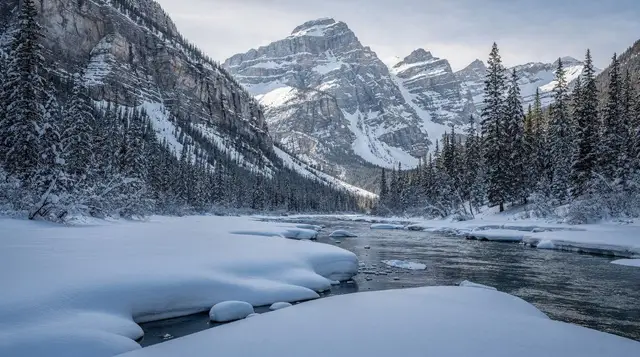
Every winter, some version of the same wrong idea circulates: that the Icefields Parkway shuts down between Lake Louise and Jasper once the snow arrives. It doesn’t. Highway 93 North is a public highway maintained by Alberta and Parks Canada crews through the winter, plowed and sanded like any other mountain road in the region, and it stays open to through traffic all year.
What actually closes is a specific set of paid attractions at one stop partway along it: the Columbia Icefield Discovery Centre, the Ice Explorer tours onto the Athabasca Glacier, and the Glacier Skywalk. Those shut down for the season, typically somewhere in October, and don’t reopen until April or May depending on the year.
That distinction matters for anyone planning a winter trip. You can still drive the full 232 kilometres from Lake Louise to Jasper in January. You can still pull over at most of the same viewpoints. What you can’t do is buy a ticket for the glacier walk or the Skywalk, because both are closed for the season along with the visitor centre that sells them. If a page or a forum post tells you the parkway itself is impassable in winter, that’s simply not accurate; if it tells you the Icefield tours run year-round, that isn’t accurate either. The road stays open. The ticketed stop in the middle of it does not.
What’s actually different about winter driving here
None of the road’s usual hazards go away in winter, and a few new ones show up. There is still no year-round gas station anywhere on this stretch; the one seasonal fuel stop at Saskatchewan River Crossing is typically closed for winter along with the rest of its facilities there, so the “no gas between Lake Louise and Jasper” rule is, if anything, more absolute in January than in July.
Cell coverage remains patchy to nonexistent for most of the drive regardless of season, which our gas and cell coverage guide covers in detail. What changes is the surface and the weather: snow-packed and icy pavement, reduced visibility in blowing snow, shorter daylight hours, and stretches where a plow hasn’t been through in a few hours after a fresh dump.
Highway 93 North lies entirely in Alberta, and Alberta doesn’t have British Columbia’s legal winter tire mandate that applies to mountain routes like Highway 93 South through Kootenay or Highway 95 near Golden. That’s a legal distinction, not a safety one: winter tires are strongly advised here regardless of what the law requires, and driving this road on worn all-seasons in January is a genuinely bad idea.
Our winter driving in the Rockies guide goes through tire choice, following distance, and what to do if you start to slide. Short, unpredictable closures do happen here in winter, usually for active snowfall or avalanche control work on the steeper sections north of Bow Summit, but these are hours-long pauses, not a season-long shutdown.
Daylight is the other real constraint. Winter days in the Rockies run short, and driving this route in darkness adds wildlife collisions to the list of things that can go wrong, on top of ice and glare. Plan to start early, finish before dusk, and treat the drive itself as the day’s main activity rather than something to squeeze in around other plans. Checking the forecast for both ends of the drive the morning you leave is worth the two minutes it takes, since conditions at Lake Louise and at Jasper can differ enough to change whether the trip makes sense that day at all.
a private full-day drive along the parkway with a local guide and vehicle takes the tire, timing, and route-finding decisions off your plate entirely, which is why it’s a common choice for visitors without winter driving experience of their own.
What still works: the stops that stay open
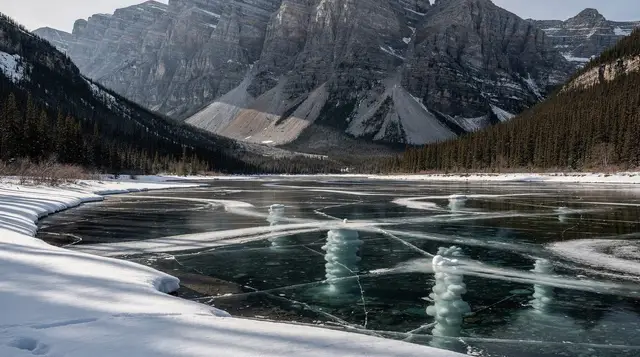
Most of the roadside stops that make the drive worthwhile in summer are still reachable in winter, because the plowed highway runs right past them. Herbert Lake, Crowfoot Glacier, and Bow Lake all sit close enough to the shoulder that a short, careful walk gets you the same view, just with snow on the ground and ice underfoot instead of gravel.
The pullout at Peyto Lake near Bow Summit, the highest point on the parkway at 2,088 metres, is one of the more dramatic winter stops precisely because the lake itself is frozen and snow-covered rather than turquoise; the short walk up to the viewing platform isn’t maintained the way it is in summer, so it can be packed snow or glare ice, and traction devices for your boots make a real difference.
Further north, Mistaya Canyon is still worth the stop, though the canyon floor and the footbridge can be icy in ways that aren’t obvious until you’re on them. The Weeping Wall, the cliff face partway up toward Sunwapta Pass, looks entirely different frozen than it does as a summer waterfall, and it’s visible from the same roadside pullout year-round. Saskatchewan River Crossing itself is worth noting for what it lacks in winter rather than what it offers: its seasonal fuel stop and services are typically closed, so treat the stop as a photo opportunity rather than a services break.
The Athabasca Falls and Sunwapta Falls stops, closer to the Jasper end of the drive, hold up reasonably well in winter too. Moving water rarely freezes completely even in deep cold, and the ice formations that build up around both falls are their own kind of striking, though the viewing platforms and stairs demand caution underfoot in a way they don’t in July. None of these stops require an entry fee beyond the standard Parks Canada pass that covers the whole parkway, winter included, so there’s no separate winter surcharge to plan around, only the closed Columbia Icefield tickets to leave out of the budget entirely.
What closes, and what gets dangerous
The Columbia Icefield’s paid attractions are the clearest, most complete winter closure on this route. The Ice Explorer buses that carry visitors onto the Athabasca Glacier, the Glacier Skywalk’s glass-floored platform, and the Discovery Centre that houses ticket sales, washrooms, and food service for both all shut down for the season, typically from some point in October through April or May.
You can still see the glacier’s tongue from the highway as you pass by, since the road itself stays open, but there’s no way to buy a ticket, use the facilities, or board a tour at the site itself outside that window. Our Columbia Icefield guide and our Ice Explorer guide both cover the operating season in more detail for anyone timing a summer or shoulder-season visit instead.
A handful of other things get genuinely riskier rather than simply closed. Any unmaintained trail or overlook set back from the highway, the kind that’s an easy five-minute stroll in August, can become a slip hazard in winter with no warning signage and no railing clearance under the snowpack.
Wildlife on or near the road, particularly at dawn and dusk when visibility is already reduced, is a real hazard through the winter months; slow down through open valley sections and don’t assume an animal on the shoulder will move before you reach it. And the Icefields Parkway in winter is, bluntly, a demanding drive for anyone without recent experience on snow and ice: it isn’t the place to build that experience for the first time, especially solo and without cell coverage as a backup.
Icefields Parkway: summer versus winter, stop by stop
| Stop | Summer status | Winter status |
|---|---|---|
| Bow Lake / Crowfoot Glacier | Open, roadside | Open, roadside, snow underfoot |
| Peyto Lake viewpoint | Open, maintained platform | Open; platform trail unmaintained, icy |
| Mistaya Canyon | Open, footbridge | Open; bridge and trail can ice over |
| Saskatchewan River Crossing | Seasonal fuel and services | Fuel and services typically closed |
| Columbia Icefield Discovery Centre | Open, roughly May-October | Closed, roughly October-April/May |
| Ice Explorer glacier tours | Operating | Closed for the season |
| Glacier Skywalk | Operating | Closed for the season |
| Athabasca / Sunwapta Falls | Open, maintained platforms | Open; icy stairs and platforms |
| Highway 93 North itself | Open | Open, plowed, weather-dependent |
Why some visitors book a guided winter drive instead
Given the mix of a road that stays open but drives hard, an attraction at the midpoint that’s fully closed, and no services along the way, a fair number of winter visitors decide the parkway is worth doing with someone else behind the wheel. A guided day trip along the parkway from Calgary or Banff covers the same stops with a driver who knows the current road conditions, and it removes the tire and fuel planning entirely.
For a smaller group or a more flexible pace, a private vehicle and guide for the day lets you linger at whichever pullouts photograph best in the winter light without worrying about a fixed schedule.
Winter light along this route, low sun angle, long shadows, and the frozen lakes and waterfalls looking nothing like their summer selves, draws a specific kind of visitor who wants the drive purely for photography. A photography-focused day trip along the parkway times stops around the light rather than a standard sightseeing schedule, which matters more in winter’s short days than it does in summer’s long ones.
None of this changes the basic shape of the trade-off: the road is open, the icefield’s ticketed attractions are not, and the drive between them is a genuinely different experience in January than it is in July. Anyone planning one day versus two on this route in winter should lean toward the more conservative option, since shorter daylight and slower driving eat into the schedule faster than a summer itinerary would suggest.
For a broader look at how the whole month affects a Rockies trip, our Icefields Parkway complete guide fills in the parts of winter planning this page doesn’t cover in depth, and anyone continuing on to Jasper itself should also read up on the town’s recovery before finalizing plans at that end of the drive.
Icefields Parkway in winter: common questions
Is the Icefields Parkway open in winter?
Yes. Highway 93 North stays open year-round between Lake Louise and Jasper and gets plowed like any other highway in the region. It can close briefly during heavy snowfall or for avalanche control work, but there’s no seasonal shutdown of the road itself, unlike the Columbia Icefield attractions partway along it.
What closes on the Icefields Parkway in winter?
The Columbia Icefield Discovery Centre, the Ice Explorer glacier tours, and the Glacier Skywalk all close for the season, typically from some point in October through April or May depending on the year. The parking area and viewpoint at the icefield may still be reachable by road, but the ticketed attractions and visitor facilities are shut, along with their washrooms and food service.
Can you still see the Columbia Icefield in winter?
You can still see the Athabasca Glacier from the highway pullout as you pass, since the road itself doesn’t close. What you can’t do is ride the Ice Explorer onto the ice or walk the Glacier Skywalk, since both operations shut down for the season along with the Discovery Centre that sells their tickets.
Is it safe to drive the Icefields Parkway in winter?
It’s driveable, but it demands real winter driving skill: snow-packed and icy sections, sudden whiteouts, wildlife on the road, and long stretches with no help nearby if something goes wrong. It isn’t a route to attempt in a summer-tire rental with no winter driving experience, and plenty of visitors book a guided tour instead of self-driving this stretch between November and April.
Are there gas stations on the Icefields Parkway in winter?
No. There’s no year-round fuel stop on the 232-kilometre route between Lake Louise and Jasper, and the one seasonal station at Saskatchewan River Crossing is typically closed for winter along with everything else there. Fill up completely before you leave either Lake Louise or Jasper; our gas and cell coverage guide covers this in more detail.
Do all the viewpoints on the Icefields Parkway work in winter?
Most roadside pullouts remain reachable since the plowed highway passes right by them, but short unmaintained trails and boardwalks, like the walk up to the Peyto Lake viewpoint, can be packed snow or glare ice with no railing clearance. Treat any short walk off the highway shoulder as a winter hike, not a stroll, and bring traction devices for your boots.
How long does the Icefields Parkway take to drive in winter?
The 232 kilometres between Lake Louise and Jasper take about 3.5 hours with no stops in good conditions, but winter driving is slower and less predictable than that number suggests. Budget extra time, drive in daylight, and don’t plan to link the drive with same-day plans on either end that leave no slack for snow or a closure.
Snowshoeing, ice walks & winter tours on GetYourGuide
Verified deep-linked GetYourGuide tours. Book through these links and we earn a small commission at no cost to you.
GetYourGuide does not provide a product photo for this activity — the image shows the meeting point, photographed by us.