Horse-drawn sleigh rides in Banff
Where do horse-drawn sleigh rides happen in Banff?
Sleigh rides run at two fixed spots: the Bow River flats behind the Fairmont Banff Springs, and the shoreline of the frozen Lake Louise. They operate roughly December through March, weather and ice conditions permitting, and last 30 to 45 minutes for around CAD 60 to 120 per adult.
A horse-drawn sleigh gliding along a snowy riverbank with a castle-like hotel in the background is one of the more reliable postcard images to come out of a Banff winter, and unlike a lot of postcard images, this one is genuinely easy to book and reasonably priced. The catch is that it happens in exactly two places, on a schedule that depends on snow, and it’s a much gentler experience than the dog sledding trip it often gets confused with. This guide covers where the rides actually run, what they cost, who they suit, and what to expect once you’re wrapped in a blanket and moving.
Where the sleighs actually run
Sleigh rides in the Banff National Park area are not a general-purpose activity you can pick up anywhere there’s snow. They run at two fixed locations, both tied to a specific hotel and a specific stretch of ground that operators have permits and horse-handling arrangements for.
The first is on the flats along the Bow River directly behind the Fairmont Banff Springs, inside the town of Banff itself. The sleigh loops through open riverside ground with the hotel’s stone turrets and Mount Rundle as a backdrop, a short walk from downtown Banff Avenue.
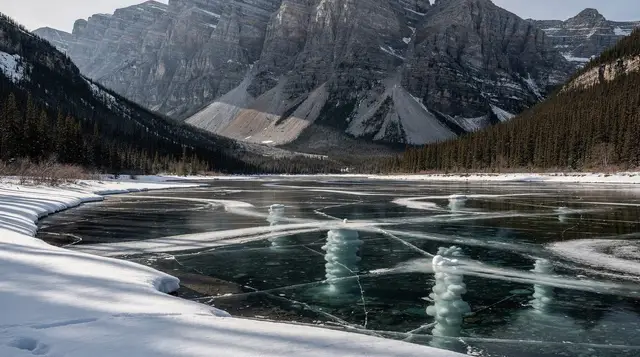
The second is along the shoreline of the frozen Lake Louise, in front of the Fairmont Chateau Lake Louise. Once the lake has frozen solid enough to support the route, sleighs run along the flat lakeside track with the Victoria Glacier framed at the far end of the lake — the same view everyone photographs from the shore in summer, minus the turquoise water, which is under a metre or more of ice by the time these rides start.
There is no sleigh ride operation at Moraine Lake, Emerald Lake, or anywhere along the Icefields Parkway. If a listing implies otherwise, treat it as inaccurate — these two locations are it.
a family-friendly sleigh ride near Banff is the standalone option most visitors book, running on the Banff side rather than at Lake Louise.
Sleigh ride vs dog sledding: different pace, different crowd
Banff-Trip covers dog sledding in its own guide, but the two get lumped together often enough that the distinction is worth spelling out here. Both involve animals pulling you across snow, and that’s roughly where the similarity ends.
| Horse-drawn sleigh ride | Dog sledding | |
|---|---|---|
| Pace | Slow, steady walk | Faster, more variable |
| Your role | Seated passenger throughout | Often can stand on the runners or help mush |
| Noise and energy | Quiet, calm | Loud at the start (dogs are vocal before a run) |
| Typical duration | 30–45 minutes | Often 1–2 hours including kennel time |
| Physical involvement | None | Some, especially in longer or “drive your own team” formats |
| Best suited to | Young kids, older travellers, anyone wanting a calm, scenic ride | Travellers wanting a more active, adventure-style outing |
| Where it runs | Fairmont Banff Springs flats, Lake Louise shoreline | Backcountry kennels and trails outside town |
If your group includes toddlers, grandparents, or anyone who’d rather not be jostled around on a working dog team, the sleigh ride is the easier choice. If you’re after something with more adrenaline, our dog sledding guide covers that side of winter transport by animal in detail — it is genuinely a different product, not a faster version of the same thing.
What it costs and how long it actually takes
A standalone sleigh ride is one of the more affordable structured activities in Banff during winter, largely because the ride itself is short.
| Format | Typical duration | Approximate price (adult, CAD) |
|---|---|---|
| Standalone Banff sleigh ride (Bow River flats) | 30–45 min on sleigh | 65–100 |
| Family sleigh ride with pickup/drop-off | 45–60 min total | 75–120 |
| Lake Louise lakeside sleigh ride | 30–40 min on sleigh | 70–110 |
| Combined day with skiing, hot springs, and a sleigh ride | Full day | 200–350+ |
Prices vary by operator and season and are usually quoted before tax; expect Alberta’s 5% GST and, if a hotel or tour bundles overnight stay, the 4% Alberta accommodation levy on top of the room portion. Children typically pay 50–70% of the adult rate, and toddlers often ride free on a parent’s lap.
For a day that’s built around more than just the sleigh, a combined package pairing Sunshine Village skiing, hot springs, and a sleigh ride (more on that below) stacks several winter activities into a single booking rather than arranging each separately — useful if you’re short on days and don’t want to coordinate three different pickup times.
Season: it runs on snow, and snow isn’t guaranteed on a calendar date
Sleigh rides depend on enough snow cover to protect the sleigh’s runners and, at Lake Louise, on ice thick enough to support the route along the shore. In a typical year that means the season opens in December, once there’s a reliable base, and runs through to some point in March. Some operators push into early April in a heavy-snow year; in a light one, they can shut down by mid-March.
This lines up with the broader pattern covered in our month-by-month winter guide: January and February are the safest bet for consistent snow and cold, dry conditions, while the edges of the season (early December, late March) are the months to double-check availability before you build a whole day around a sleigh ride. Operators will cancel or reroute a ride rather than run it on bare ground or thin ice — nobody is putting draft horses at risk to keep a booking.
Cold itself isn’t usually the deciding factor; the horses and drivers work through temperatures that would shut down some other outdoor activities. What matters is what’s under the runners. If you’re travelling in a low-snow stretch, it’s worth contacting the operator directly a day or two ahead rather than assuming the listed schedule is fixed.
Booking, timing, and getting there
Both locations sit inside Banff National Park, so the standard Parks Canada day pass applies to your vehicle if you’re driving in, independent of whatever you pay for the sleigh ride itself. The pass isn’t bundled into tour pricing as a rule, so budget for it separately if you’re not already covering it for another reason that day.
The Banff-side ride is close enough to downtown that many visitors walk or take a short shuttle to the meeting point near the Fairmont Banff Springs; if you’re driving into the region for the day, check our notes on winter driving in the Rockies before setting out, since black ice and reduced visibility are routine on the approach roads even when Banff itself looks clear.
The Lake Louise ride requires getting out to Lake Louise separately — about 45 minutes from Banff by road — so it tends to work best as part of a day that already includes Lake Louise for other reasons: the frozen lake itself, the skating rink maintained on the ice in front of the Chateau, or a stop at the ski resort. Book the sleigh ride time slot around whatever else you’re doing there rather than treating it as a separate trip out and back.
Slots fill up around peak weeks — Christmas/New Year and the February long weekend period especially — so booking a few days ahead is safer than assuming you can walk up. Confirm the meeting point exactly; “Banff sleigh ride” and “Lake Louise sleigh ride” are genuinely different products at different addresses, and operators occasionally offer both.
What to actually expect once you’re on the sleigh
The format is straightforward: you check in at a small booth or barn area, meet the horses (usually Belgian or Percheron draft horses, chosen for size and calm temperament around groups), and climb into an open sleigh seating anywhere from four to a dozen or more people depending on the operator. A driver handles the team from the front bench. Wool blankets are typically provided and go over your lap and legs, not around your shoulders, so dress for the parts a blanket won’t cover.
The route itself is flat and unhurried — this isn’t a scenic overlook tour with stops, it’s a loop or out-and-back at walking pace, with the driver often narrating a bit of local history or pointing out landmarks like Mount Rundle or the glacier at the head of Lake Louise. Some family packages add a stop at a fire pit or barn for hot chocolate, marshmallows, or a short visit with the horses afterward, which is where the extra time in a “family sleigh ride” booking usually goes.
It’s genuinely low-key. If your image of the activity involves speed, wind in your face, or an adrenaline hit, that’s the dog sledding trip, not this one. What you get here is closer to being driven slowly through a postcard.
Who this activity actually suits
Because there’s no walking involved beyond getting to and from the sleigh, this is one of the more accessible winter activities in the region, and one of the better fits for a family trip with young children. There’s no minimum fitness level, no ice-walking with crampons, and no risk of a toddler tiring out halfway through the way they might on a hiking trail. It also suits older travellers or anyone recovering from an injury who still wants a proper Banff winter experience without exertion.
It’s less of a fit if you’re after adventure-sport bragging rights, or if you specifically want an active outing — in which case snowshoeing or a guided ice walk will give you more to do per hour. It’s also worth being upfront with kids or first-timers that this is a short, calm ride rather than a long backcountry journey; managing that expectation ahead of time avoids the letdown of a 35-minute ride feeling too brief.
What to pack
Because you’re sitting still outdoors for the better part of an hour, cold sets in faster than it would while walking or skiing. Beyond the wool blanket most operators supply:
- Insulated, waterproof winter boots rather than sneakers or fashion boots
- A full winter parka rated for sustained cold, not just a shell jacket
- A hat that covers the ears, plus a neck warmer or scarf
- Mitts rather than thin gloves — they trap more heat for stationary hands
- Hand and toe warmers if you run cold, especially for late-morning or afternoon slots when temperatures haven’t climbed much
See our broader seasonal packing guide for the full list, and if you’re travelling in a serious cold snap, our note on what minus 25 actually feels like is worth reading before you assume a “quick ride” needs less gear than a full day outside.
Pairing a sleigh ride with the rest of your day
Because the ride itself only takes up part of a morning or afternoon, most visitors build it into a bigger winter day rather than treating it as a standalone outing. If skiing is on the agenda anyway, a combined day covering Sunshine Village, the hot springs, and a sleigh ride saves the hassle of separate bookings and transport.
For a day that mixes a sleigh ride with a wider look at winter Banff — an ice walk, a gondola, and a few of the town’s landmarks — a guided winter day trip covering hikes, gondolas, and the town’s main sights is a reasonable way to fill out the rest of the day around a shorter sleigh booking. If you’d rather split the day between a sleigh ride and a guided canyon walk instead, an evening ice walk through Johnston Canyon pairs a calmer daytime activity with something a bit more active after dark.
For planning the rest of a winter trip around Banff, our winter itinerary lays out how a sleigh ride, a day of skiing, and a couple of shorter walks fit together over several days without over-scheduling any one of them.
Horse-drawn sleigh rides in Banff: frequently asked questions
Where exactly do horse-drawn sleigh rides happen in Banff?
There are two regular locations, not a park-wide activity. One runs on the flats along the Bow River behind the Fairmont Banff Springs, with the hotel and Mount Rundle as backdrop. The other runs along the frozen shoreline at Lake Louise, in front of the Fairmont Chateau Lake Louise. A handful of tour operators also combine a Lake Louise sleigh ride with other activities, but the route itself stays on these two stretches.
How long does a horse-drawn sleigh ride last?
Most rides run 30 to 45 minutes on the sleigh itself. Family-oriented tours often pad the booking to an hour or more once you add pickup, a barn or paddock stop to meet the horses, and sometimes hot chocolate or a bannock snack at the end.
How much does a sleigh ride cost in Banff?
Budget roughly CAD 60 to 120 per adult for a standalone ride, with children usually discounted. Combination packages that bundle a sleigh ride with skiing, hot springs, or a Columbia Icefield day trip run considerably higher, since they cover a full day rather than a half-hour ride.
Is a horse-drawn sleigh ride the same as dog sledding?
No, and the two are aimed at different travellers. A sleigh ride is a slow, seated glide behind draft horses with a blanket over your knees; dog sledding is faster, louder, and more physically involved, and it usually runs at separate backcountry locations rather than beside a hotel. See our dedicated dog sledding guide for that comparison in more depth.
What’s the best time of year for a Banff sleigh ride?
January and February give the most reliable snow cover and the coldest, driest conditions that keep runners gliding smoothly. December can work once there’s enough base snow, and by late March operators start weighing in on whether there’s still enough cover to run at all.
Do I need a Parks Canada pass to go on a sleigh ride?
Yes, indirectly. Banff and Lake Louise both sit inside Banff National Park, so anyone driving in needs a Parks Canada day pass or Discovery Pass regardless of what activity they’re doing once they arrive. The pass is separate from the sleigh ride ticket and isn’t included in most tour prices.
Is a sleigh ride suitable for young kids, seniors, or anyone with limited mobility?
This is the activity’s main advantage over dog sledding or a guided ice walk. You sit the whole time, there’s no walking on ice or snow required beyond getting to and from the sleigh, and most operators welcome toddlers and older relatives without any fitness requirement.
What should I wear on a horse-drawn sleigh ride?
Dress as though you’ll be sitting outdoors and not moving for close to an hour, which feels colder than walking. Insulated boots, a proper winter parka, a hat that covers your ears, and mitts rather than thin gloves make more difference than anything else. Most operators supply a wool blanket, but it supplements your own layers rather than replacing them.
Snowshoeing, ice walks & winter tours on GetYourGuide
Verified deep-linked GetYourGuide tours. Book through these links and we earn a small commission at no cost to you.
GetYourGuide does not provide a product photo for this activity — the image shows the meeting point, photographed by us.