Banff with kids: what actually works for families
What are the best family activities in Banff with young kids?
The easiest wins are the Sulphur Mountain gondola, the taxidermy displays at the Banff Park Museum, short flat walks to Bow Falls, and a soak at the Banff Upper Hot Springs. Save mountain trails with real elevation gain, like Tunnel Mountain, for kids old enough to walk the full 4.3 kilometres, and keep bear and elk safety distances even inside town.
Banff gets marketed on glacier lakes and alpine passes, and most of that content assumes you can walk 10 kilometres with 500 metres of elevation gain before lunch. With young kids, that is not the trip. The good news is that Banff townsite itself has enough for two or three full days without touching a real mountain trail: a gondola that does the climbing for you, a small museum full of stuffed animals kids actually like, flat riverside walks, and a warm pool at the end of the day. This guide sticks to what holds up with a stroller or a tired six-year-old, and flags the few places where “family-friendly” needs an asterisk.
Start with what’s easy, not what’s iconic
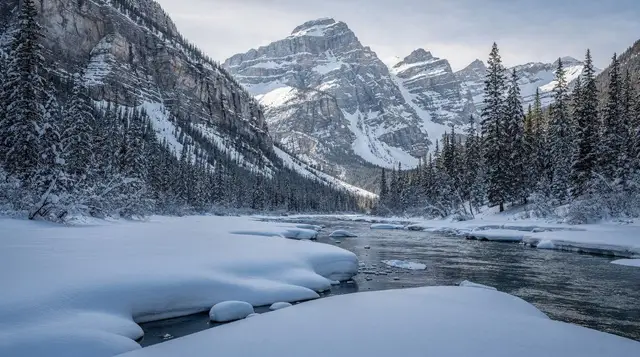
The postcard lakes, Lake Louise and Moraine Lake, are worth seeing, but treat them as a half-day add-on rather than the core of a trip with young kids. The viewpoints are short and flat, but getting there now means a Parks Canada shuttle, Roam Transit, or a tour bus, since Moraine Lake’s access road has been closed to personal vehicles year-round since 2023, and Lake Louise’s own lakeside parking is limited and reservable. Build the daily rhythm around the townsite instead, and treat the lakes as one outing, not the whole itinerary.
A few practical notes make the rest of this list work better. Banff townsite is walkable and served by Roam Transit, so you don’t need a rental car for anything covered here except the day trips at the end. Mornings before about 10 a.m. are consistently quieter at every stop below, which matters more with kids than any other single piece of timing advice. A jogging stroller handles the paved paths fine, but a soft carrier is the better call for the gondola boardwalk and the museum, where a stroller becomes one more thing to manage in a crowd. And pack layers regardless of season: even in July, Banff’s daytime highs sit around 20 to 25 degrees Celsius with cool evenings, and at 1,383 metres the weather can shift faster than it does at home.
The Sulphur Mountain gondola: the reliable option
Of everything in Banff, the Banff Gondola up Sulphur Mountain is the closest thing to a guaranteed win with kids. It is an eight-minute ride to 2,281 metres, no walking required, and the boardwalk at the top to Sanson’s Peak is wide, mostly flat, and hard to get lost on. There is a restaurant and gift shop at the upper station, which buys time if someone needs a break. We cover the ride itself, pricing, and how it compares with Jasper’s SkyTram in a dedicated gondola and skytram comparison, so we won’t repeat those details here — this page is about where it fits in a family day, which is: first thing in the morning, before the crowds and before anyone is tired.
If your family also wants an easier version of a mountain day without a car, a guided day trip that pairs the gondola with easier winter walks removes the logistics of parking and timing the ride yourself. Attempting the mountain on foot instead of by gondola is a different, harder proposition better suited to older kids, and not something to commit a young child to without checking the trail conditions first.
The Banff Park Museum: taxidermy that keeps kids interested
The Banff Park Museum is a small, old-fashioned natural history building on the Bow River, built in 1903, and it is one of the few indoor stops in Banff that genuinely holds a kid’s attention: cases of naturalized bears, elk, bighorn sheep, and birds, arranged the way museums looked a century ago, at a scale and pace that suits a short attention span. It pairs naturally with the Whyte Museum a few blocks away for a rainy morning. We go into the collections, hours, and admission for both in a separate Whyte Museum and Banff Park Museum guide; here it’s enough to say: budget 30 to 45 minutes, it’s indoors, and it works in any weather.
Flat walks that don’t feel like hikes
Not every outdoor stop in Banff requires a trailhead and hiking boots. Bow Falls is a short, flat, paved path a few minutes from the townsite, ending at a wide set of rapids on the Bow River rather than a single dramatic drop — kids tend to like the noise and the scale more than the view itself. It connects to the walk up to Surprise Corner for a look at the Fairmont Banff Springs across the canyon, still on paved or well-graded path.
For a slightly longer flat option without real elevation gain, the Vermilion Lakes road-side pullouts work well for a picnic and easy wildlife-watching for waterfowl, with Mount Rundle reflected in the water on calm mornings. If you want a fuller list of what counts as genuinely stroller-friendly around Banff rather than “easy” by a hiker’s definition, we’ve built that out separately in easy, accessible trails around Banff.
Tunnel Mountain: fine for some families, not for toddlers
Tunnel Mountain gets recommended constantly as Banff’s “easy” hike, and by adult standards it is: 4.3 kilometres round trip and about 300 metres of elevation gain, the shortest legitimate summit trail near the townsite. But that is still a real climb with a narrow, exposed switchback section partway up, not a stroller path, and it is a poor fit for toddlers or for kids who tire out on flat ground already.
If your children are strong walkers, comfortable with several hundred metres of climbing and a bit of a drop-off next to the trail, it’s a reasonable half-day outing with a genuine view over the townsite. If you’re not sure, treat it as a “maybe next trip” rather than forcing it — full trail notes and trailhead directions are in our Tunnel Mountain hike guide.
Warming up at the Banff Upper Hot Springs
At the end of a cool day, the Banff Upper Hot Springs is a genuinely useful family stop: a mineral pool kept around 37 to 40 degrees Celsius, at 1,585 metres, open in every season. It is not a water park — no slides, a single main pool, and lifeguards rather than dedicated kids’ programming — so plan on it as a warm soak and a change of pace rather than an activity in itself, and keep young children within arm’s reach.
We don’t repeat the pricing, hours, or crowd patterns here; that’s covered fully in our hot springs comparison against Radium in Kootenay, which is worth reading before you go since hours shift by season and the towel and locker rental adds up for a family of four.
Wildlife safety doesn’t stop at the town limits
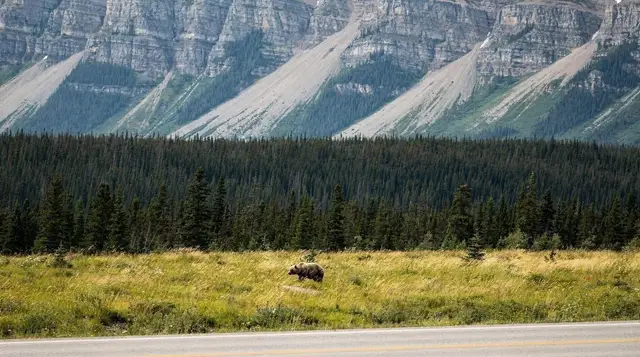
This is the part of a family trip to Banff that’s easy to get casually wrong. Elk graze on Banff Avenue and in front yards through the townsite, not just on remote trails, and the elk rut, in September and October, turns bulls genuinely aggressive toward anyone who gets close, including on sidewalks. Parks Canada’s standard is to stay at least 30 metres from elk, bighorn sheep, and other large mammals, and at least 100 metres from bears and wolves — a rule that applies exactly the same whether you’re on a backcountry trail or walking back from dinner.
Never let a child approach an animal for a photo, and never feed one. Our bear safety and etiquette guide and the elk rut warning cover this in more depth, and are worth a five-minute read before an autumn trip in particular.
A safer way to see a bear
If seeing a bear is a priority for your kids but you don’t want to bet a vacation day on a wild sighting near a highway pullout, a guided visit to a fenced grizzly bear refuge with lunch included is the more reliable option: a guaranteed sighting at a controlled distance, with an interpreter on hand to answer the questions kids actually ask. It removes both the safety risk of an unplanned close encounter and the disappointment of driving the Bow Valley Parkway and seeing nothing.
For a broader first day that covers several easy stops, including Lake Minnewanka, without any hiking involved, a guided loop covering seven of Banff’s easiest sightseeing stops is a low-effort way to see the highlights on day one before you commit to independent walks on your own schedule.
Rainy days and other backup plans
Banff gets its share of grey, drizzly days even in summer, and mountain weather can turn in an afternoon regardless of forecast. The Banff Park Museum and the Whyte Museum both hold up well indoors, the Upper Hot Springs stays open through light rain, and the Cave and Basin historic site works as a covered, low-key option for a couple of hours. Our full rainy day in Banff guide runs through the complete backup list, including which outdoor stops tolerate drizzle and which don’t.
Matching activities to ages
Not every stop above suits every age. This is a rough guide, not a hard rule — know your own kids’ stamina.
| Activity | Toddlers (0–4) | Young kids (5–9) | Older kids (10+) |
|---|---|---|---|
| Sulphur Mountain gondola | Good, stroller-friendly at top | Good | Good |
| Banff Park Museum | Short attention span, but works 20–30 min | Good | Good |
| Bow Falls / Vermilion Lakes walk | Good, flat and short | Good | Good, may want it longer |
| Tunnel Mountain hike | Not suitable | Only strong walkers | Good |
| Upper Hot Springs | With constant supervision | Good | Good |
| Grizzly refuge tour | Manageable, short stops | Good | Good |
| Wildlife on the Bow Valley Parkway (May 26–Feb 28) | Good from the car | Good | Good |
Planning the rest of the trip
None of this needs to fill every hour of a trip. Most families do well with three to four days based in Banff townsite, mixing the gondola, museum, and easy walks with one half-day out to the lakes and a weather backup in reserve — our guide to how many days to spend in Banff breaks this down by trip length, and the family-friendly Banff itinerary lays out a day-by-day version built around exactly this pace.
If dinosaurs are a bigger draw for your kids than glacial lakes, note that the Royal Tyrrell Museum in Drumheller is a genuine day trip from Calgary, not from Banff — a guided multi-day option like the Banff and Drumheller tour with a guide is one way to fit both into a single trip without doing the long drive yourself twice.
Family-friendly Banff: frequently asked questions
Is Lake Louise or Moraine Lake worth visiting with young kids?
The viewpoints themselves are stroller-friendly and take five minutes to reach from the parking or shuttle drop-off. Moraine Lake now requires Parks Canada shuttle, Roam Transit, or a tour, since the access road has been closed to personal vehicles year-round since 2023, so budget extra time and book ahead rather than expecting to just drive up.
Can toddlers ride the Sulphur Mountain gondola?
Yes. The gondola itself involves no walking, and the boardwalk to Sanson’s Peak at the top is flat and stroller-friendly for most of its length. It is the most reliable mountain-view activity in Banff for a family that does not want to hike.
Is the Tunnel Mountain hike suitable for young children?
Not for toddlers or reluctant walkers. It is a real trail, 4.3 kilometres round trip with about 300 metres of elevation gain and some exposed, uneven sections. It suits kids who are already comfortable walking that distance, not a family looking for a flat stroll.
Are the Banff Upper Hot Springs safe for young children?
The pool is shallow at the edges and kept around 37 to 40 degrees Celsius, and lifeguards are on duty, but it is a public mineral pool, not a splash pad, so young children need constant supervision. See our dedicated hot springs comparison for hours, pricing, and how it stacks up against Radium.
How close will we get to bears or elk right in Banff townsite?
Elk regularly graze on Banff Avenue and in residential yards, and the rut in September and October makes bulls genuinely dangerous even on sidewalks. Parks Canada asks visitors to stay at least 30 metres from elk and other large mammals and at least 100 metres from bears and wolves, in town or on trail, no exceptions for a good photo.
What do we do with kids on a rainy day in Banff?
The Banff Park Museum and the Whyte Museum both work well indoors, and the Upper Hot Springs stay open through steady rain. Our rainy day guide lists the full backup list, including which outdoor activities hold up reasonably well in light drizzle.
Is a grizzly bear refuge tour a better option than hoping to see one in the wild?
For most families, yes. A refuge visit guarantees a sighting at a safe distance without the risk or the disappointment of an empty trail, and it comes with an interpreter who can actually answer kids’ questions.
How many days should a family plan for Banff?
Three to four days covers the townsite basics, one lake, and a weather backup day without rushing preschoolers through car time. See our full guide on how many days to spend in Banff for options by trip length.
Family-friendly tours on GetYourGuide
Verified deep-linked GetYourGuide tours. Book through these links and we earn a small commission at no cost to you.
GetYourGuide does not provide a product photo for this activity — the image shows the meeting point, photographed by us.