Winter in Banff: skiing SkiBig3, hot springs and ice bubbles
Five days built around SkiBig3, not a rental car
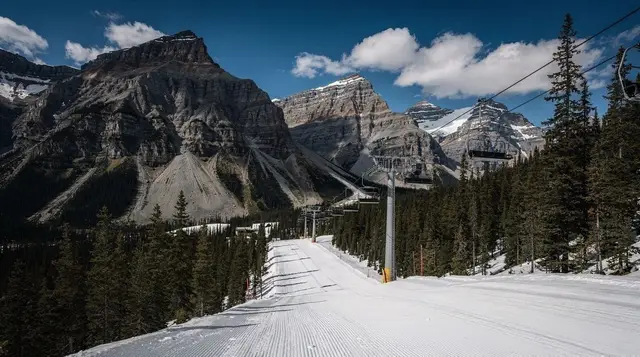
Banff’s winter case is a slightly odd one: the town markets itself on turquoise lakes that are frozen solid and largely inaccessible for most of the season, while the actual daytime activity — skiing — barely gets mentioned in the summer-heavy marketing. This itinerary flips that. It is built around SkiBig3, the marketing name for the three resorts that share a lift-ticket-and-shuttle ecosystem: Banff Sunshine, Lake Louise Ski Resort, and Mt Norquay.
None of them requires a car to reach, which is why withCar is false on this page — hotel shuttles cover all three base areas, and the one activity that does warrant a longer drive, the Abraham Lake ice bubbles, is better handled as a guided day tour than a self-drive trip on unfamiliar winter roads.
Expect daytime temperatures in the minus 15 to minus 25 Celsius range through the core of winter, with real cold snaps pushing below minus 30 and Chinook winds occasionally shoving the mercury back up for a day or two — see what minus 25 really means for how to dress for it rather than just how to read the number. Season length runs roughly November to May, though Sunshine’s higher elevation base often keeps it open into late May in a good snow year, well past the other two.
Day 1: Arrive in Banff and get oriented for a ski week
Calgary International Airport (YYC) is 128 kilometres from Banff, about an hour and a half by the Trans-Canada Highway, and there is no passenger train, subway, or tram covering that distance — see getting from Calgary Airport to Banff for the shuttle and transfer options. Since this itinerary skips a rental car, book a shared shuttle or a private transfer in advance rather than assuming you can arrange one on arrival.
A private minivan charter between Calgary and the Lake Louise/Banff area is worth pricing against a shared shuttle if you are travelling as a small group, since it can work out close in cost once you split it and it runs on your schedule rather than a fixed departure.
Once you are in town, spend the rest of the day getting oriented rather than skiing — lift lines and rental shops are calmer on your first afternoon than trying to cram everything into day one. Walk Banff Avenue with Cascade Mountain squarely in view at the north end, and confirm how Banff’s free shuttle network works before your first ski morning, since routes and hotel pickup points vary and you do not want to be figuring that out at 7 a.m. with skis over your shoulder.
Remember that Banff Sunshine, Lake Louise Ski Resort, and Mt Norquay all sit inside Banff National Park, so a Parks Canada day pass or annual Discovery pass is required on top of your lift ticket — it is easy to assume a shuttle-only day does not need one, but the pass covers presence in the park, not vehicle entry specifically.
Evening: Banff Upper Hot Springs. After a travel day, this is the easiest way to loosen up before three straight ski days. The Banff Upper Hot Springs sit above town with a mountain view from the pool deck, and the outdoor soak works particularly well on a cold evening, when the contrast between the hot water and the air is part of the appeal. It gets busy in the evening in ski season, so do not expect a quiet soak on a weekend night.
Day 2: Banff Sunshine, the longest season of the three
Banff Sunshine Village is the resort to prioritize if your dates fall late in the season, since it typically holds snow and stays open longer than Lake Louise or Norquay — sometimes into late May in a strong year, well after the other two have closed for the season. Access is by gondola from the parking and shuttle drop-off area rather than driving up to the village itself, and Sunshine Meadows, the alpine terrain above the resort, is summer-only territory that has no bearing on your ski day.
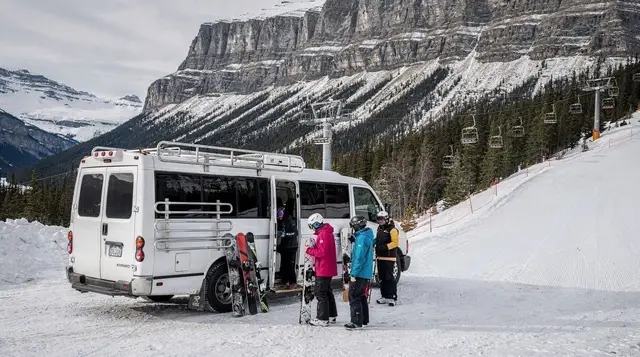
Free shuttles run from most Banff and Canmore hotels directly to the Sunshine gondola base — check your hotel’s posted schedule the night before, since departure times and pickup points are not identical across properties. If you need rental skis, boots, or a refresher lesson, sort it out the day before rather than the morning of, since rental shop lines in town add up quickly on a peak-season morning; see ski rental and lessons in Banff for what to expect on pricing and availability.
A rough sense of what a ski day costs, in Canadian dollars and before tax, across all three resorts:
| Cost item | Approximate range (CAD) | Notes |
|---|---|---|
| Adult day lift ticket | 130–170 | Varies by resort and by how far in advance you book |
| Parks Canada day pass | ~11/adult, ~22/vehicle | Required in addition to the lift ticket at all three resorts |
| Full rental package (skis, boots, poles) | 60–90/day | Book ahead in peak weeks; walk-in stock runs out |
| Group lesson (half day) | 90–140 | Private lessons run considerably higher |
Treat these as order-of-magnitude figures rather than quotes — check each resort’s current published pricing before you book, since ski season rates move from year to year.
Day 3: Lake Louise Ski Resort and an evening on the ice
Lake Louise sits about 58 kilometres from Banff, roughly 45 minutes by road, and the ski resort’s shuttle connections from Banff hotels run on a similar schedule to the Sunshine and Norquay routes. See the full Lake Louise Ski Resort guide for terrain breakdowns by ability level — it is generally considered to have the widest range of terrain of the three SkiBig3 resorts, which makes it a reasonable choice for a mixed-ability group that wants everyone on the same mountain rather than splitting up.
Skip any idea of visiting the lake itself as a scenic side trip on this day. Lake Louise stays frozen well into spring and does not turn its famous turquoise until well after the ski season is over, so there is no lakeside photo stop built into a winter ski day here the way there would be in July.
Evening: skating on Lake Louise. A maintained outdoor rink on the frozen lake surface, with the Fairmont Chateau Lake Louise and the Victoria Glacier as a backdrop, is one of the more distinctive things to do in the Rockies in winter and does not require any skiing ability at all. A guided evening skating outing on Lake Louise handles rink access and equipment logistics if you would rather not work out the details yourself, which is worth it on a first visit when you do not know the rink’s hours or current condition.
If anyone in your group is sitting out the ski day entirely, a winter sightseeing tour through the Lake Louise area is a reasonable alternative to a day on the slopes — it covers the frozen scenery without needing ski gear or lift tickets, which matters if your group is mixed between skiers and non-skiers.
Day 4: Mt Norquay, the closest resort to town
Mt Norquay is a short shuttle ride from Banff Avenue, noticeably closer than either Sunshine or Lake Louise, which makes it the easiest of the three to fit into a lighter day — a late morning start, a few runs, and still time for something else in the afternoon. It is also the only one of the three offering night skiing on selected evenings, worth checking against the current schedule if you want a shorter day on the hill followed by an after-dark session rather than one long day.
Norquay’s terrain skews toward a smaller, steeper footprint than the other two resorts, and it has a reputation as a good option for a half-day or for skiers who want fewer crowds than the bigger resorts draw on a weekend. See how the three SkiBig3 resorts compare if you are still deciding which to prioritize on a shorter trip, or which to repeat if one clearly suited your group better.
With an easier day at Norquay, this is a reasonable point in the trip to build in slack: an afternoon back in town, a second visit to the Banff Upper Hot Springs if the first soak was rushed, or simply resting before whichever plan you choose for day five. It is also worth checking the forecast now — if a cold snap or a Chinook is moving through, it changes both what day five looks like and how you dress for it.
Day 5: Abraham Lake’s ice bubbles, or a slower day in Banff
This day only works as written if your dates fall inside a narrow window, roughly mid-January to mid-February, when methane bubbles trapped under the surface of Abraham Lake have frozen into visible white discs beneath clear ice. Outside that window, skip this day entirely and replace it with something closer to town — the ice bubbles are not a general winter or shoulder-season sight, and a trip out there in March or in early January will mostly show you a frozen lake with no bubbles to speak of.
Abraham Lake sits on the David Thompson Highway, roughly three hours from Banff by road and outside the boundaries of the national parks, so no Parks Canada pass applies there — a different situation from every other stop on this itinerary. Given the distance, the cold, and winter road conditions on a route most visitors do not know, this is a day better handled by a guided tour than a self-drive outing, which also keeps this page’s car-free approach intact.
A guided day tour covering the Abraham Lake ice bubbles alongside Peyto Lake and the Icefields Parkway waterfalls handles the driving and, generally, has scouted the current best patches of bubbles that week, which matters since conditions shift through the season. See the full Abraham Lake ice bubbles guide for what a realistic day looks like, and winter driving in the Rockies if you are weighing this against renting a car and driving it yourself.
If your dates fall outside the ice bubble window, or if a full day of driving does not appeal after four ski days, a slower closing day in Banff works just as well: a last soak at the Upper Hot Springs, a wander through the Banff Avenue shops, or simply packing and resting before travelling home. There is no need to force the Abraham Lake side trip onto a trip that was not timed for it.
Practical notes for planning a Banff ski week
A few things worth confirming before you lock in dates:
- Season length is not fixed. November to May is the rough window across all three resorts, but exact opening and closing dates depend on snowfall each year, and Sunshine typically runs longest of the three. Check each resort’s current-season calendar rather than assuming last year’s dates repeat.
- Cold snaps and Chinooks both happen. A week that averages minus 20 can still include a day near minus 30 and a day where a Chinook wind pushes the temperature up sharply — pack for the range, not the average, not just the number quoted in the forecast.
- Snowmobiling is not part of this trip, on purpose. It is banned inside Banff National Park, which rules it out as an add-on activity for any of the ski days described here, unlike some other Rockies-adjacent destinations.
- Pack for both the slopes and the cold in town. A packing list built around this kind of week is worth checking against your suitcase before you fly, since ski gloves and town-walking gloves are not the same thing and layering matters more here than the raw temperature number suggests.
See the tools/packing-list page for a fuller winter packing checklist before you fly.
Ski and snowboard days on GetYourGuide
Verified deep-linked GetYourGuide tours. Book through these links and we earn a small commission at no cost to you.
GetYourGuide does not provide a product photo for this activity — the image shows the meeting point, photographed by us.