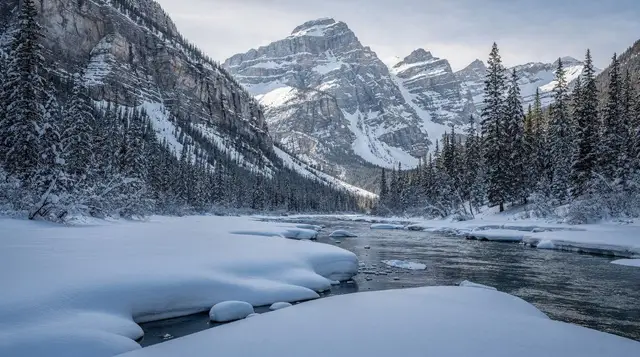
Canmore is a town of about 15,900 people at 1,309 m elevation, sitting in the Bow Valley just outside the boundary of Banff National Park. That last detail is the one people get wrong most often: because Canmore looks and feels like a mountain town cut from the same cloth as Banff, visitors sometimes assume the same rules apply. They don’t. Canmore is not inside a national park, so there’s no Parks Canada pass to buy, check or display, whether you’re staying a week or just driving through on your way somewhere else. For a lot of travellers, that single fact — plus what it usually does to the price of a hotel room — is reason enough to base here instead of in Banff itself.
Canmore vs Banff: the practical differences
The two towns sit 26 km apart along the Trans-Canada Highway, about a 20-minute drive, and a lot of visitors treat them as interchangeable. They aren’t quite. Here’s how they actually compare.
| Canmore | Banff townsite | |
|---|---|---|
| Location | Outside Banff National Park | Inside Banff National Park |
| Park pass needed to stay | No | No pass to stay, but one is required to enter the park at all |
| Typical accommodation cost | Generally lower, more supply | Higher, especially July–August |
| Population | ~15,900 | ~8,300 |
| Elevation | 1,309 m | 1,383 m |
| Crowds | Busy on weekends, calmer than Banff on weekdays | Consistently busy in summer |
| Distance to Lake Louise | ~84 km (via Banff) | 58 km |
| Distance to Calgary Airport (YYC) | ~105 km | 128 km |
Neither town is objectively “better” — they serve different needs. If your itinerary is built around the classic lakes and the Icefields Parkway, being inside the park in Banff itself saves you the daily 20-minute drive each way. If you’re watching your budget, want a base that also has its own worthwhile hiking and biking, or you’re arriving late and don’t want to deal with a park entry gate, Canmore is the more relaxed choice. The full breakdown, including where families and couples tend to land, is in the Banff vs. Canmore guide.
No park pass required — and why that matters
This is worth stating plainly, because it’s the detail most likely to cause confusion: Canmore is outside Banff National Park’s boundary, so staying in Canmore, eating in Canmore, or driving around Canmore itself requires no Parks Canada pass at all. You only need one the moment you cross into the park — heading toward Banff townsite, Lake Louise, Moraine Lake or the Icefields Parkway. See the Parks Canada pass guide for current rates and how the daily and annual passes work.
Don’t confuse this with Kananaskis Country, the provincial land south and west of Canmore, which has its own separate conservation pass unrelated to Parks Canada. That’s a different system, for a different piece of land, and it’s covered on its own page — nothing about staying in Canmore itself involves it.
In practice, this means a Canmore-based trip that never enters Banff National Park — a few days of hiking, biking and the Nordic Centre, say — costs nothing in park fees. The moment your plans include Banff, Lake Louise or the parkway, budget for the pass as you would from any other base.
The Three Sisters: Canmore’s skyline
The three jagged peaks visible from almost anywhere in town — Faith, Charity and Hope, known collectively as the Three Sisters — are Canmore’s defining backdrop, the way Cascade Mountain frames Banff Avenue. They’re most photogenic in early morning light or with alpenglow at dusk, and they show up in the reflection at several spots along the Bow River pathway that runs through town. For the full detail on the mountain itself, its individual peaks and named viewpoints, see the dedicated Three Sisters page; here, they’re simply the reason Canmore’s townscape photographs so well without you having to drive anywhere.
Canmore Nordic Centre: an Olympic legacy
The Canmore Nordic Centre was built for the 1988 Calgary Winter Olympics, hosting the cross-country skiing and biathlon events, and it has stayed in continuous use ever since as one of the best trail networks in the Bow Valley. In summer, its groomed and singletrack trails are open to hikers, trail runners and mountain bikers, with terrain ranging from flat, wide gravel loops to technical singletrack that draws riders from well beyond Canmore. In winter, it switches to one of the largest maintained cross-country ski trail systems in Canada, with lit night-skiing loops and a biathlon range still in operation.
A guided forest therapy walk near Canmore’s Cougar CreekThe Nordic Centre is a short drive from downtown Canmore, not something you need a full day to justify — a couple of hours on the trails fits easily around a night in town. It also anchors the paved, mostly flat Legacy Trail that runs between Canmore and Banff, a popular option for cyclists who’d rather ride the connection than drive it; the mountain biking guide has route details, distances and where to rent a bike locally.
Grotto Canyon: a short excursion from town
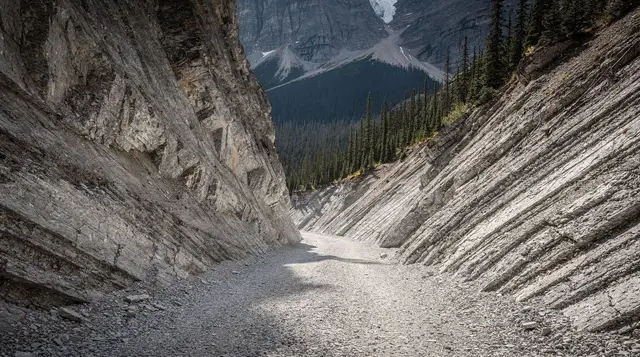
A short drive northeast of Canmore, Grotto Canyon is a narrow limestone gorge that’s become one of the area’s most popular short outings — an easy, mostly flat walk along a dry creek bed, with pictograph rock art in one section and a frozen-waterfall ice walk in winter. It doesn’t take a full day; most visitors are in and out in two to three hours, which makes it an easy add-on to a Canmore stay rather than a destination in its own right. The full trail description, distances and seasonal notes are on the dedicated page and in the Grotto Canyon hiking guide.
Canmore has its own short walks closer to downtown, too — Grassi Lakes, a pair of small turquoise ponds with an old quarry above them, and Ha Ling Peak, a steep but well-marked ascent with one of the better payoff views in the valley for the effort involved. Neither requires the drive time that Grotto Canyon does, and both are covered in the Ha Ling Peak hike guide if you’re deciding which short outing fits your day.
Getting there and getting around
Most visitors reach Canmore the same way they’d reach Banff: fly into Calgary International Airport (YYC), then drive or take a shared shuttle west along the Trans-Canada Highway. Canmore is closer to Calgary than Banff is — roughly 105 km versus 128 km — so a shuttle or transfer booked to Canmore is typically a few minutes shorter than the same trip to Banff. See the Calgary airport to Banff guide for shuttle options, most of which also serve Canmore along the same route.
Within town, Canmore is compact enough to walk for most day-to-day needs — downtown, the Bow River pathway and many hotels sit within a 10–15 minute walk of each other. Roam Transit’s Route 3 connects Canmore to Banff townsite on a regular schedule, a reasonable option if you don’t want to drive daily but still want to see Banff’s sights. A rental car gives more flexibility for reaching the Nordic Centre, Grotto Canyon or the trailheads scattered around the valley, none of which are within comfortable walking distance of downtown.
A guided day tour covering Canmore and Banff National Park’s scenic lakesWhere to stay and what it costs
Accommodation is the single biggest reason travellers choose Canmore over Banff. Hotel and condo supply is larger relative to demand, and rates for a comparable room routinely run lower than the equivalent in Banff townsite, especially at the July–August peak. Vacation rentals and condo-style units are more common here than in Banff, useful for families or longer stays who want a kitchen.
| Canmore | Banff townsite | |
|---|---|---|
| Mid-range hotel, peak summer | ~180–280 CAD/night | ~250–400 CAD/night |
| Budget/basic option | ~120–180 CAD/night | ~160–250 CAD/night |
| Condo or vacation rental | Widely available | Limited, pricier |
| Booking pressure | High on weekends, easier midweek | High most of the summer |
These are rough ranges, not quotes — rates swing hard with the calendar, and both towns sell out completely during long weekends and festival dates. For a side-by-side on where different traveller types tend to be happiest, see where to stay: Banff, Canmore or Lake Louise.
Restaurants and cafés along Main Street tend to run a notch cheaper than their Banff Avenue equivalents too, without much difference in quality — a byproduct of Canmore’s larger year-round resident population, which supports places that aren’t priced purely for peak-season tourist turnover. Grocery stores are also easier to find and less crowded than in Banff townsite, which matters if you’re self-catering during a longer stay or stocking up for a day of hiking. Parking is generally simpler as well: most hotels include it, and downtown street parking, while metered in places, doesn’t carry the same summer gridlock that central Banff does.
When to visit
Canmore has a genuine two-season identity, unlike some Bow Valley towns that lean almost entirely summer. June through September brings warm days for hiking, biking and the canyon walks, with July and August the busiest and priciest. December through March turns the Canmore Nordic Centre into one of the region’s better cross-country skiing bases, with groomed trails, night skiing under lights and a biathlon range still active from its Olympic days. Shoulder months — late spring and October — are quieter and cheaper in Canmore just as they are in Banff, though some trails and the Nordic Centre’s summer programming scale back.
A sunset and evening nature walk around CanmoreCombining Canmore with Banff and Lake Louise
Canmore works well as a hub precisely because it doesn’t require you to choose between its own attractions and the bigger names up the valley. A typical pattern: spend a morning or evening on Canmore’s own trails or at the Nordic Centre, then drive the 20 minutes into Banff National Park for a day trip to Lake Louise, Moraine Lake or Johnston Canyon, and drive back to a cheaper bed at night. The one day in Canmore guide lays out how to fill a single day here without feeling like you’re missing the bigger park attractions next door.
The one thing to plan around is the extra drive time this adds each day — 20 minutes each way to Banff, more again if you’re heading to Lake Louise or the Icefields Parkway. For a trip built mostly around the Icefields Parkway, Moraine Lake and the high-alpine lakes, staying inside the park in Banff itself trims that daily commute; for everything else, Canmore’s lower costs and quieter evenings are hard to beat.
Frequently asked questions about staying in Canmore
Do I need a Parks Canada pass to stay in Canmore?
No. Canmore sits outside the boundary of Banff National Park, so no park pass is required to stay, eat or drive around town. You only need a pass once you enter the national park itself — heading to Banff townsite, Lake Louise, Moraine Lake or the Icefields Parkway.
How far is Canmore from Banff?
About 26 km, roughly a 20-minute drive along the Trans-Canada Highway. Roam Transit’s Route 3 also connects the two towns on a regular schedule if you’d rather not drive.
Is Canmore cheaper than Banff for accommodation?
Generally yes. A comparable mid-range hotel room typically runs somewhat lower in Canmore than in Banff townsite, especially during the July–August peak, and there’s a larger supply of condo-style and vacation rental units.
What are the Three Sisters?
Faith, Charity and Hope — three jagged peaks that form Canmore’s most recognizable skyline backdrop, visible from much of the town and the Bow River pathway. See the dedicated Three Sisters page for viewpoints and detail on the mountain itself.
What is the Canmore Nordic Centre?
A trail facility built for the 1988 Calgary Winter Olympics’ cross-country skiing and biathlon events, still in active use today for hiking, trail running and mountain biking in summer, and groomed cross-country skiing, including lit night trails, in winter.
Is Grotto Canyon worth the drive from Canmore?
Yes, as a two-to-three-hour add-on rather than a full-day trip. It’s a short, mostly flat walk through a limestone gorge with pictograph rock art, and a popular frozen-waterfall ice walk in winter.
Does Canmore have its own hiking, or is it just a place to sleep?
It has genuine hiking of its own — Grassi Lakes and Ha Ling Peak are both within a short drive of downtown, and the Canmore Nordic Centre adds a large network of trails on top of that. It isn’t only a cheaper bed near Banff; it has its own worthwhile half- and full-day outings.
Is Canmore part of Kananaskis Country?
No. Canmore is its own town, separate from the provincial Kananaskis Country land to its south and west, which requires its own separate conservation pass. That pass has no bearing on staying in or visiting Canmore itself.