Kananaskis day trip from Banff and Canmore
Does my Banff National Park pass work in Kananaskis?
No. Kananaskis Country is provincial land, not part of the national park system, so your Parks Canada Discovery Pass or day pass has no value there. You need a separate Kananaskis Conservation Pass, roughly 15 CAD per day or 90 CAD per year per vehicle.
Why Kananaskis isn’t covered by your Banff pass
If you’ve already bought a Parks Canada pass for Banff National Park, it’s a reasonable assumption that it covers every mountain area within an hour’s drive. It doesn’t. Kananaskis is Alberta provincial land, administered by Alberta Parks and Alberta Environment and Parks, not by Parks Canada. It sits immediately south of the national park boundary, close enough that the two get mentally merged into one undifferentiated stretch of Rockies, but they are run, funded, and permitted separately.
That means a second pass, the Kananaskis Conservation Pass, at roughly 15 CAD per vehicle per day or about 90 CAD for an annual pass. It has nothing to do with the Parks Canada Discovery Pass or day pass you may already be carrying for Banff, Jasper, Yoho, or Kootenay. Bring one without the other and you’re not covered for either area. This mix-up is the single most common planning mistake for a Kananaskis day trip, and it’s worth stating plainly before anything else on this page: two different passes, two different agencies, no overlap.
The pass funds trail maintenance, search and rescue, and staffing across the recreation area, and it applies whether you’re stopping for twenty minutes at a roadside pullout or spending the whole day on a trail. Buy it online through the Alberta Parks website before you leave Banff or Canmore, or use one of the self-serve kiosks at major trailheads and day-use areas once you arrive. Having it sorted before you’re standing at a trailhead saves a scramble, especially on a summer Saturday when everyone else is doing the same last-minute purchase.
Getting there from Banff and Canmore
Kananaskis is about 70 kilometres from Banff, roughly an hour’s drive. The route runs east along the Trans-Canada Highway toward Calgary, then turns south onto Kananaskis Trail, also signed as Highway 40, which is the main road into the recreation area. Canmore sits closer to the turnoff, so if you’re already based there, the drive in is shorter and the day trip is more forgiving on time.
Canmore itself does not require the Kananaskis Conservation Pass. The town sits outside both the national park and the Kananaskis Country boundary, so you can fuel up, grab coffee, and browse the shops on Main Street without needing either pass. The pass only becomes relevant once you actually cross into the recreation area along Highway 40 or into Bow Valley Provincial Park, which flanks the highway closer to Canmore. For a fuller look at what Canmore itself offers, see the separate Canmore in one day guide rather than duplicating it here.
There’s no public transit into Kananaskis from Banff or Canmore. Roam Transit’s routes stop at Canmore and don’t continue south on Highway 40, so a day trip means a rental car, a guided tour with transportation included, or a private transfer. Winter driving on Highway 40 can be demanding, with sections that see heavy snow accumulation and limited plowing compared with the Trans-Canada, so check road conditions before setting out between November and April.
Kananaskis Lakes, valleys, and scenic drives
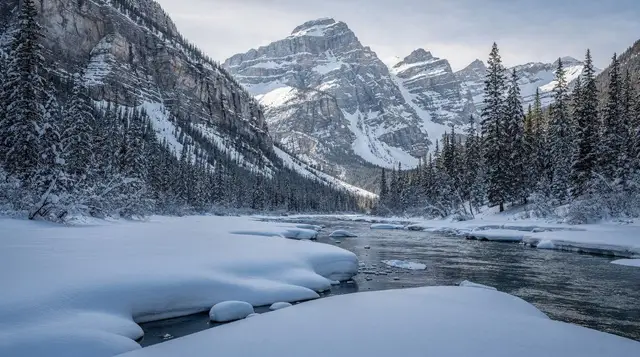
Kananaskis Country covers a large area, and a single day only allows a realistic look at one or two of its valleys rather than the whole territory. The Kananaskis Lakes, Upper and Lower, sit within Peter Lougheed Provincial Park at the southern end of Highway 40, roughly an hour and a half past the Trans-Canada turnoff. Both lakes carry the same glacial-fed colour that shows up throughout the Rockies, ringed by peaks with fewer people at the viewpoints than you’d find at Lake Louise or Moraine Lake in the same season.
Closer to the highway junction, Barrier Lake is the first major water feature drivers reach, with a dam, a picnic area, and trailheads for shorter hikes that don’t demand a full valley’s worth of driving. Kananaskis Village, a small cluster of hotels and a golf course, sits partway down the valley and is a reasonable stop for lunch or a coffee break without adding much detour. The village briefly hosted the G8 summit in 2002, one of the few times Kananaskis drew international attention rather than staying a locals’ and Albertans’ secret.
Highway 40 itself is the scenic drive most day-trippers end up doing whether they planned to or not, since it’s the main road through the valley and the views from the car are part of the point. Pullouts appear regularly along the route, and unlike the crowded viewpoints on the Icefields Parkway, most of them have space to park without circling. Nakiska, the ski area that hosted alpine events for the 1988 Calgary Winter Olympics, sits along this same corridor and is visible from the highway even outside ski season.
| Stop | Distance from Banff | What it offers |
|---|---|---|
| Barrier Lake | ~75 km, ~1 h 10 | Dam viewpoint, picnic area, shorter trailheads |
| Kananaskis Village | ~90 km, ~1 h 20 | Hotels, golf course, lunch stop |
| Kananaskis Lakes (Peter Lougheed) | ~105 km, ~1 h 30 | Upper and Lower Kananaskis Lake, quieter lake scenery |
| Highwood Pass | ~120 km, ~1 h 45 (seasonal) | Highest paved highway pass in Canada, closed winter into early summer |
Highwood Pass and seasonal closures
Highwood Pass, further south along the Kananaskis corridor, is commonly cited as the highest paved highway pass in Canada, at an elevation around 2,200 metres. It’s a genuine alpine environment reached entirely by car, which is unusual, but it comes with a firm seasonal catch: the road closes every year from December through mid-June to protect bighorn sheep during lambing season. If your day trip falls in that window, this route simply isn’t available, and no amount of determination gets you past the gate.
Outside the closure, the drive up to the pass adds meaningfully to a day’s itinerary, both in distance and in the elevation change itself, so factor it in honestly against how much daylight and driving stamina you have left after the Kananaskis Lakes. Trying to fit Barrier Lake, Kananaskis Village, the lakes, and Highwood Pass into one day from Banff is possible on paper but rushed in practice. Picking two of the four makes for a day that doesn’t feel like a checklist exercise.
a private guided day covering several of these valley stops without you having to plan the driving order yourself is a reasonable way to see more of the corridor in one day than a self-driven itinerary usually manages, since a guide already knows which pullouts and trailheads suit the day’s conditions.
Wildlife on the Kananaskis roads
Kananaskis Country carries the same wildlife as the national parks next door: grizzly and black bears, elk, bighorn sheep, and occasional moose, all sharing the road corridors with cars. The same distance rules apply as inside Banff National Park: stay at least 100 metres from bears and wolves, and at least 30 metres from other large animals. Highway 40 in particular sees regular bear activity in late summer and early fall, and pullouts near Barrier Lake and further south can produce sudden roadside wildlife jams, so slow down and expect stopped traffic ahead of a sighting.
Elk rut in September and October the same way it does around Banff and Jasper, and Kananaskis has its share of aggressive males during that window. Don’t approach an animal for a photo, and don’t feed anything, no matter how used to cars it looks. For general guidance that applies equally here, see bear safety and etiquette and the broader wildlife viewing map and times guide.
a wildlife-focused snowshoeing outing that crosses into both Kananaskis and Banff park terrain is a way to look for tracks and animal sign with someone who knows where to look, particularly in winter when self-guided wildlife spotting from a car is less productive.
Hiking, rafting, and other ways to spend the day
Kananaskis Country has an extensive trail network, generally quieter than the equivalent difficulty of trail inside Banff National Park in peak summer months. Trailheads around Barrier Lake and further into Peter Lougheed Provincial Park range from short interpretive loops to full-day routes, and unlike Lake Louise or Moraine Lake, you won’t be fighting for a parking spot at most of them even in July.
a full-day guided hike through Kananaskis Country is worth considering if you’d rather not spend the morning cross-referencing trail difficulty ratings against how much time you have left before the drive back.
The Kananaskis River, which runs alongside much of Highway 40 near Canmore, is a whitewater rafting destination in its own right, running from roughly May through September depending on water levels. a rafting trip on the Kananaskis River combines well with a Kananaskis day since the put-in points sit close to the highway corridor rather than requiring a separate detour.
For a different vantage point entirely, short scenic helicopter flights over the Kananaskis valleys are sold locally and cover ground that would otherwise take a full day of driving and hiking to see from below. They’re not a budget option, but for travellers with limited time and a fixed interest in seeing the terrain from above rather than on foot, a brief flight is a legitimate way to spend part of a Kananaskis day.
Planning a Kananaskis day: timing and logistics
Leave Banff by mid-morning to make the most of a Kananaskis day trip, since the drive itself eats close to two hours round trip before you’ve stopped anywhere. Fuel up before leaving Banff or Canmore, since Kananaskis Village has limited services and prices reflect a captive market. Cell coverage along Highway 40 is patchy in stretches, so download offline maps and let someone know your rough plan if you’re heading toward Highwood Pass or a longer trail.
Summer weekends draw Calgary day-trippers in large numbers, since Kananaskis sits far closer to the city than Banff does, so trailhead parking at popular stops can fill by mid-morning even though the area overall feels less crowded than the national park. Weekday visits, or an early start on weekends, make a real difference here. Winter visits need winter tires and caution on Highway 40’s less-plowed sections, and Highwood Pass simply isn’t part of the plan between December and mid-June regardless of conditions elsewhere.
If your trip already includes a national park pass and you’re trying to decide whether Kananaskis is worth the extra cost and driving, see Kananaskis pass vs Parks Canada and the broader Parks Canada pass explained for how the two systems actually compare.
And if you’re still weighing whether a self-driven day or a guided tour suits your group better, that comparison holds just as true for Kananaskis as it does for the national park side of the Rockies. For a wider view of which destinations do and don’t work as a single day from Banff, what is not a day trip from Banff is worth reading before you commit to an itinerary.
Kananaskis pairs reasonably with a Calgary day trip logistics-wise, since both routes run along the same stretch of the Trans-Canada Highway out of Banff, though trying to combine both destinations in one day is more than most travellers want to drive. Treat Kananaskis as its own day, with its own pass, its own pace, and its own valley to explore, and it holds up well against the crowds you’d otherwise be fighting at the more famous stops inside the national park.
Frequently asked questions about a Kananaskis day trip
Does the Parks Canada pass cover Kananaskis?
No. The Parks Canada pass is valid in Banff, Jasper, Yoho, and Kootenay national parks only. Kananaskis Country is Alberta provincial land and runs its own separate permit system.
How much does the Kananaskis Conservation Pass cost?
Around 15 CAD per vehicle per day, or about 90 CAD for an annual pass. Check the current Alberta Parks rate before you go, since fees are adjusted periodically.
Where do I buy the Kananaskis Conservation Pass?
Online in advance through the Alberta Parks website, or at self-serve kiosks at trailheads and day-use areas once you’re in Kananaskis Country. Buying ahead saves time if you’re arriving early for a popular trailhead.
Does Canmore require the Kananaskis pass?
No. Canmore is a town outside both the national park and Kananaskis Country boundaries, so no pass is needed to be there. The pass only applies once you drive into the Kananaskis recreation area itself, typically along Kananaskis Trail (Highway 40).
How long is the drive from Banff or Canmore to Kananaskis?
From Banff it’s about 70 kilometres, roughly an hour, mostly along the Trans-Canada Highway to the Kananaskis Trail junction. From Canmore it’s shorter, since Canmore sits right at the edge of Kananaskis Country.
Can I combine a Kananaskis day trip with Banff National Park the same day?
It’s possible but rushed, since you’d be carrying two separate passes and covering more driving than a relaxed day allows. Most visitors do better treating Kananaskis as its own day and saving national park stops for another day.
Is Kananaskis worth visiting if I already have a Parks Canada pass?
Yes, if you want quieter valleys and lakes than the crowded national park in July and August. The extra 15 CAD or so buys noticeably thinner crowds at trailheads and viewpoints.
Is Highwood Pass open when I visit?
Not always. The road over Highwood Pass closes annually from December through mid-June to protect bighorn sheep during lambing season, so check current conditions before planning a route that depends on it.
Best day trips from Banff on GetYourGuide
Verified deep-linked GetYourGuide tours. Book through these links and we earn a small commission at no cost to you.
GetYourGuide does not provide a product photo for this activity — the image shows the meeting point, photographed by us.