The Moraine Lake shuttle: booking, timing and your backup plan
How do I get to Moraine Lake since the road closed to cars?
You book a seat on the Parks Canada shuttle, ride Roam Transit's connector from Lake Louise, join a commercial coach or guided tour, or cycle in on your own. There is no parking at Moraine Lake and no walk-up option, so every visitor needs one of those four bookings or a bike.
If you are planning to drive yourself to Moraine Lake, stop and rework the plan now. Moraine Lake Road has had no personal vehicle access, at any hour and in any season, since 2023, and that closure is permanent rather than seasonal or occasional. There is no lakeside parking lot to gamble on, no early-morning window when a spot might open up, and no attendant who will wave a car through because the shuttle line looked short.
Every visitor gets to Moraine Lake the same four ways: the Parks Canada shuttle, the Roam Transit connector from Lake Louise, a commercial coach or guided tour, or a bicycle. This page is about making one of those four actually work for your dates, particularly the reservation mechanics behind the Parks Canada shuttle, which is where most of the confusion and most of the disappointment happens.
No cars, no exceptions, since 2023
Before the closure, Moraine Lake Road had a small parking area that filled by sunrise most summer mornings, and Parks Canada spent years managing overflow, turnarounds and safety problems on a narrow mountain road never built for that volume of traffic. The fix, made permanent in 2023, was to remove personal vehicles from the equation entirely rather than continue expanding parking that the site could never physically support.
That means the closure is not a peak-season restriction you can dodge by visiting in the shoulder season, and it is not a daytime-only rule you can beat by driving up before dawn. It applies every day the road is open for the year, to every vehicle, with the sole exception of bicycles, which remain allowed on the road under normal traffic conditions.
The practical result is that Moraine Lake sits alongside Lake Louise as one of the two lakes in the park where your own vehicle is simply not part of the plan, which is a different situation from most other stops covered in the visitor guide to Lake Louise and from the parking realities at Lake Louise itself, which are handled separately on the parking guide for Banff and Lake Louise. If you take away one thing from this page, take away this: book the ride before you book anything else about your Moraine Lake day.
The four ways in, compared
| Option | Booked through | Best for | Main limitation |
|---|---|---|---|
| Parks Canada shuttle | Parks Canada reservation system | Independent visitors wanting the cheapest direct option | Seats are limited and disappear fast in summer |
| Roam Transit connector | Roam Transit’s own booking system | A second option once Parks Canada seats are gone | Separate schedule and separate fare from the shuttle |
| Commercial coach or guided tour | The tour operator directly | Travellers who want the reservation risk handled for them | Costs more than a shuttle or transit seat |
| Bicycle | No booking, ride the open road | Visitors comfortable cycling a steady climb | Shares a narrow road with shuttle and tour buses |
Each of these runs on its own allocation, which is worth remembering when the Parks Canada shuttle shows nothing available for your date. Roam Transit’s connector, which also serves other stops along its route network, does not draw from the same pool of seats, so it is genuinely worth checking as a separate attempt rather than assuming a sellout on one system means a sellout everywhere.
A guided day trip such as a guided day tour that handles the ride to both lakes for you works the same way: the operator holds its own transport allocation, so its availability is unrelated to whether Parks Canada or Roam Transit still has open seats.
How the reservation window actually works
The Parks Canada shuttle reservation system runs on two distinct release patterns, and mixing them up is the single most common planning mistake.
Spring release blocks. Not long after the road reopens for the season, Parks Canada opens a first block of reservations covering a stretch of the coming high season. This is when the calendar for the busiest July and August dates fills in, often within the first day or two of the block going live. If you already know your travel dates months ahead, this spring release is the moment to book, not something to circle back to later in the summer.
The rolling 48-hour window. Once the spring block is exhausted, a second and smaller set of seats becomes available on a rolling basis, released roughly 48 hours ahead of each departure. This window exists specifically so that travellers who did not plan far enough ahead, or whose dates shifted, still have a real shot at a seat. It is not a loophole and it is not a secret: plenty of other visitors are refreshing the same booking page at the same time, so seats released this way can still disappear within hours for the most popular midday and early-afternoon departures.
The two systems do not overlap in a way that lets you game one against the other. What they do give you is two separate chances: a long-range chance in spring for planned trips, and a short-range chance closer to your date if the first one did not work out or if your trip came together later.
Why July and August sell out so fast
Moraine Lake sits at the intersection of two pressures that do not exist to the same degree anywhere else in the park: it is one of the two most photographed lakes in the Canadian Rockies, and it has had zero personal vehicle capacity since 2023. Every visitor who wants to see it during peak season is funnelled through the same limited pool of shuttle, transit and tour seats, at the same time that overall park visitation is highest. Parks Canada’s own visitation figures for Banff National Park run past four million visits a year, and a meaningful share of that traffic wants a look at Moraine Lake specifically, which is why the shuttle sells out well before the lake itself becomes crowded.
The practical consequence is that “I’ll figure it out when I get there” does not work here the way it might for a less bottlenecked stop. A same-day walk-up at the Lake Louise park-and-ride, hoping a shuttle has space, is not a realistic strategy in July or August; staff do not hold back seats for people without reservations, and a shuttle that is already full does not wait for a second wave of hopeful arrivals.
A booking strategy that actually works
A few habits meaningfully improve your odds against a system that is genuinely competitive rather than just perceived as competitive:
- Book in the spring release if your dates are already fixed. This is the single biggest lever you control, and it is the only chance at guaranteeing a seat for a specific July or August date rather than hoping the 48-hour window comes through.
- Check the rolling window early in the morning. New availability in the 48-hour window tends to open at a set time, and demand for the most convenient departures clears quickly once that happens. Checking right when it opens, rather than mid-afternoon once the popular slots are gone, matters more than which specific day of the week you try.
- Take an early or late departure over a midday one. Midday and early-afternoon shuttle times are the first to disappear because they fit neatly into a single day’s plans. An early-morning or later-afternoon seat is more likely to still be open, and an early departure has the added benefit of reaching the lake before the crowds that arrive later in the morning.
- Decide your backup before you need it, not after. If nothing opens up for your date, Lake Louise, an easy same-morning add via Roam Transit’s route network, is the natural substitute rather than a consolation prize; it has no comparable shuttle-availability bottleneck and delivers its own glacier-lake view worth the detour on its own terms.
- Consider a guided tour if the reservation stress itself is the problem. A tour such as the full-day guided tour that pairs the gondola with both lakes or the guided outing that combines both lakes with a canoe experience removes the booking gamble entirely, since the operator manages its own transport allocation rather than competing with you for the same shuttle seats.
Check the season before you book anything
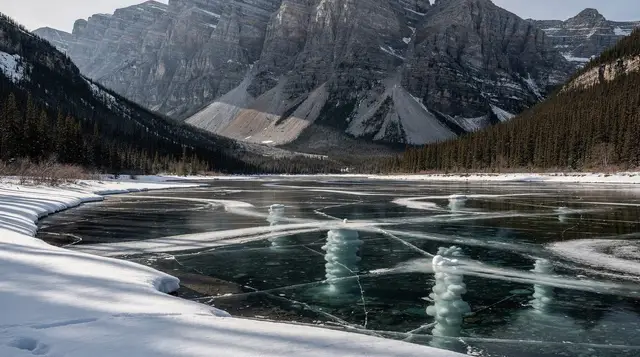
Moraine Lake typically stays ice-covered into mid-June, later than Lake Louise, which usually clears a little earlier in the same month. The shuttle service itself does not run on a fixed calendar date either; it starts once the road is cleared and safe for the season and winds down again in the fall, and both endpoints shift somewhat year to year depending on snowpack and weather.
Booking a shuttle seat for a date before the road has historically opened, on the assumption that the famous turquoise water will be waiting, is a real and avoidable mistake. If your trip falls in May or very early June, check current seasonal opening information before locking in dates, and read when the lakes actually thaw for the broader pattern across the park’s glacial lakes, since Moraine and Lake Louise do not clear on identical schedules.
What this page does not cover
This page is deliberately narrow. It does not cover parking at Lake Louise, which works differently and is paid, limited and reservation-based in its own right — that lives on the Banff and Lake Louise parking guide.
It also does not cover the hiking once you arrive, including the popular Larch Valley and Sentinel Pass route that starts near the lakeshore, or a canoe outing on the water itself, which has its own guide. Sunrise timing and photography strategy at the lake are covered separately too. Treat this page as the piece that gets you there and back; the rest of your day at Moraine Lake is planned elsewhere.
Budgeting the day around the shuttle
The shuttle or transit fare is separate from your required Parks Canada park pass, which every visitor to Banff National Park needs regardless of how they arrive, so build both costs into your plan rather than assuming the shuttle ticket covers park entry.
Full pricing details and current rates for the pass itself are covered on the Parks Canada pass guide; the shuttle and transit fares are modest by comparison, and a guided tour that bundles transport, park access logistics and a second stop such as a guided tour covering both Moraine Lake and Lake Louise in one outing often costs less, in time and stress, than it looks on paper once you account for what a failed reservation attempt would cost you instead. If you are mapping out spending for the wider trip, the daily budget guide puts shuttle and transit costs into that bigger picture.
If a Moraine Lake visit does not fit your dates
Sometimes the reservation windows genuinely do not line up with a trip, especially one booked on short notice in peak summer. If that happens, it is worth reframing rather than treating it as a failure of planning. Lake Louise remains reachable without the same shuttle-availability bottleneck, and travellers building a car-free trip more broadly, say one that starts with getting from Calgary without a car, can lean on Roam Transit and tours for the rest of the itinerary while treating Moraine Lake as a maybe rather than a fixed stop.
For a wider view of which lakes are realistic to combine in a single trip, the iconic lakes itinerary lays out a sequence that does not hinge on one specific shuttle reservation working out.
Moraine Lake shuttle: common questions
When do Moraine Lake shuttle reservations open?
Parks Canada releases an initial block of bookings for the season in spring, usually not long before the road itself reopens, and that block covers the highest-demand summer dates. After those blocks are gone, remaining seats are released on a rolling window roughly 48 hours before each departure.
How quickly do July and August shuttle seats sell out?
Fast, often within hours of a release for peak summer weekend dates. The rolling 48-hour window gives you a second chance if you missed the spring block, but those seats also go quickly once travellers realize the window exists, so treat any release as a narrow one.
What time of day should I try to book?
Early morning, right when a new day’s 48-hour window opens, tends to have the best odds, since demand is highest for the popular midday and early-afternoon departures that get booked out first. Checking again right after midnight or first thing when you wake up beats checking mid-afternoon once seats for that day are already gone.
What should I do if every shuttle time is booked?
Treat Lake Louise as your plan B for that day rather than waiting around at the Lake Louise park-and-ride hoping for a cancellation. Roam Transit’s connector and commercial coach tours run on separate allocations from the Parks Canada shuttle, so it is also worth checking those before giving up on Moraine Lake entirely for your trip.
Is Moraine Lake open and worth a shuttle ride in May?
Usually not yet. The lake typically stays ice-covered into mid-June, later than Lake Louise, and the shuttle service itself does not start running until the road opens for the season, which depends on snow clearing and varies year to year.
Can I drive to Moraine Lake and just look for parking?
No. Moraine Lake Road has had no personal vehicle access, at any hour or any season, since 2023, and there is no lakeside parking lot left to check. Arriving by car with the intention of finding a spot wastes a trip; every visitor needs a shuttle, transit, coach or bicycle booking arranged in advance.
Does the shuttle fare include my park entry pass?
No. The shuttle or transit fare is charged separately from the Parks Canada park pass, which every visitor to Banff National Park needs regardless of how they arrive at Moraine Lake.
Lake Louise & Moraine Lake tours on GetYourGuide
Verified deep-linked GetYourGuide tours. Book through these links and we earn a small commission at no cost to you.
GetYourGuide does not provide a product photo for this activity — the image shows the meeting point, photographed by us.