The Lake Minnewanka boat cruise: what it actually includes
What is the Lake Minnewanka boat cruise, and when does it run?
It's a roughly one-hour, narrated motorboat tour on Lake Minnewanka, the largest lake in Banff National Park, covering the lake's history — including the flooded village of Minnewanka Landing — and pointing out bighorn sheep and eagles along the shoreline when they're around. It's seasonal, running from spring to fall, not year-round, and it's a scheduled tour, not a canoe or kayak rental.
What the Lake Minnewanka cruise actually is
Lake Minnewanka is the largest lake in Banff National Park, stretching 21 kilometres east from the dam near its outlet, and it’s the one lake in the immediate Banff area you can tour by scheduled motorboat rather than by paddling yourself. The cruise is a fixed-route, narrated outing: a covered motor vessel carries a boatload of passengers out along part of the lake’s length and back, with a guide describing the lake’s history and pointing out wildlife when it’s around. You buy a ticket for a set departure time, board at the dock near the parking area, and sit for the ride — there’s no steering, no paddling, and no choice of route once you’re aboard.
That’s worth being clear about up front, because the name “Lake Minnewanka boat tour” gets used loosely online for anything involving a boat on this lake, including canoe and kayak rentals launched from the same shoreline. This page covers the motorized, guided cruise only. If what you actually want is to paddle at your own pace — on Minnewanka or elsewhere in the Banff area — the canoeing and kayaking guide covers rentals and put-in points instead, and fishing access is its own separate topic entirely.
a roughly one-hour narrated cruise on Lake Minnewanka is the straightforward version of this outing, departing directly from the lake with no add-ons.
Season: this is not a year-round tour
The single most common mix-up with this cruise is assuming it runs whenever Banff is open. It doesn’t. The cruise is seasonal, operating from spring through fall, and it stops for the winter months entirely — there’s no ice-season version of this tour the way there is for, say, the Johnston Canyon ice walk. If you’re planning a winter trip to Banff, drop this from your itinerary and look instead at winter activities near Banff or the ice walks at Johnston Canyon and Maligne Canyon.
Within the season, sailing frequency is higher in July and August than at the shoulders of the season in May, September, and October, when the operator typically runs fewer departures per day. If you’re visiting in a shoulder month, check the schedule and book ahead rather than assuming you can walk up and catch the next boat.
| Period | Typical cruise availability |
|---|---|
| May | Season begins; fewer daily departures |
| June–August | Full schedule, most frequent departures |
| September–October | Season winding down; check final sailing date |
| November–April | Closed for the season |
What you’ll see and hear on board
The core of the cruise’s narration is the story of Minnewanka Landing, the small resort village that once stood on the original, much smaller lake before a hydroelectric dam raised the water level — first in 1912, then again more substantially in 1941 — and put the townsite underwater for good. It’s a genuinely interesting piece of Banff history: building foundations, a bridge, and other structures still sit on the lake bed today.
Divers do descend to see them, and Minnewanka is a known cold-water dive site for that reason. From the boat, though, you’re not going to spot ruins through the water — the guide tells the story rather than pointing at anything visible from the deck. Don’t book the cruise expecting to see a sunken village; book it for the history and the ride.
Wildlife is the other draw, and it’s honestly a maybe rather than a guarantee. Bighorn sheep are sometimes visible on the rocky slopes along the shoreline, grazing or moving along the rock faces, and eagles turn up over the lake often enough that guides watch for them. Neither shows up on every sailing — this is a wild lake in a national park, not a managed wildlife circuit, so treat any animal sighting as a bonus rather than the reason you booked.
For a broader sense of what’s realistic to see and when across the park, the wildlife viewing guide is a useful companion read, and the general bear safety and etiquette guide is worth knowing even on a boat tour, since you’ll still be walking around the dock and parking area on shore.
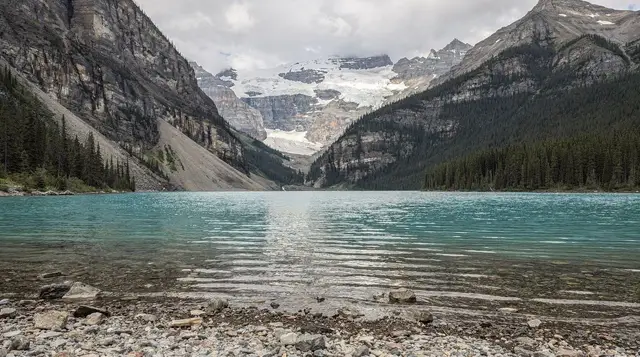
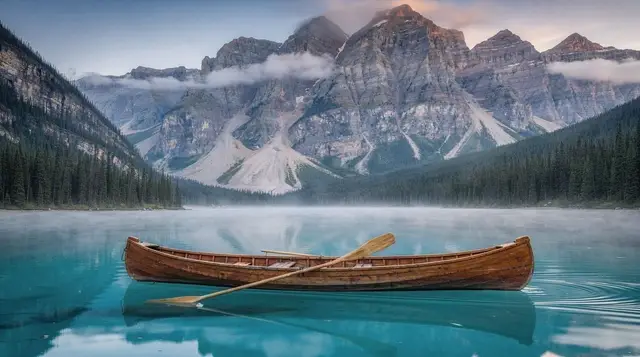
Scenically, the appeal is straightforward: Minnewanka is flanked by mountains on both sides, the water carries the pale turquoise-green colour typical of glacially fed lakes in the park, and being out on the water gives a different vantage than the shoreline path most visitors stick to.
Cost and what’s included
Cruise pricing is set by the operator and changes from year to year, so treat the figures below as an order of magnitude rather than a quote, and check current pricing before you book. As a rough guide, adult tickets for the standard cruise have run somewhere in the CAD 60–80 range in recent seasons, with lower rates for children and family pricing sometimes available. That price covers the boat ride and narration only — it does not include your Parks Canada park pass, which is a separate requirement.
| Item | Approximate cost (CAD) | Notes |
|---|---|---|
| Standard cruise, adult | ~60–80 | Confirm current rate when booking |
| Standard cruise, child | Reduced rate | Age brackets vary by operator |
| Parks Canada day pass, adult | ~11/day | Required to enter the park at all |
| Parks Canada day pass, per vehicle | ~22/day | Alternative to per-person pricing |
| Parks Canada Discovery Pass, adult (annual) | ~75 | Worth it past roughly a week in the parks |
The Parks Canada pass is genuinely separate from the cruise ticket and gets missed by visitors who assume the boat ticket covers park entry — it doesn’t. See the Parks Canada pass guide for how the day pass and annual Discovery Pass compare, and note that Kananaskis, a short drive southeast, runs on an entirely different provincial pass that has nothing to do with this one.
Getting to Lake Minnewanka
Lake Minnewanka sits off the Trans-Canada Highway on the eastern edge of the townsite, a short drive from downtown Banff via Minnewanka Loop Road — close enough that it’s a common half-day add-on rather than a destination requiring an overnight stay elsewhere. If you’re driving, there’s a parking lot near the dock, though it fills up on peak summer days, so arriving with some buffer before your booked departure is worth it.
Without a car, Roam Transit’s Route 6 runs from downtown Banff out to Lake Minnewanka during the summer operating season, dropping passengers within walking distance of the cruise dock. Outside Roam’s operating window, or if you’d rather not manage transit connections and ticket timing yourself, a taxi, rideshare, or an organized tour that bundles transportation with the cruise ticket are the practical alternatives — see getting around Banff without a car for the fuller picture of what’s available.
If you’re staying further out — say, in Canmore — factor the extra drive time or transit connection into your morning before a booked departure; missing a scheduled sailing generally means waiting for the next one rather than a refund.
Combining the cruise with the rest of the area
Because Lake Minnewanka sits so close to the townsite, it pairs easily with other short outings on the same day rather than needing to anchor an entire itinerary. Two Jack Lake, a few minutes further along the same road, is a quieter, smaller companion stop with a similar mountain backdrop and none of the crowds or tickets — worth the short detour if you want a calmer lakeside pause after the cruise. See the Two Jack Lake guide for what’s there.
Several tour operators also bundle the Lake Minnewanka cruise with other Banff activities into a single booked day, which can simplify logistics if you’re not driving yourself. pairing the cruise with a same-day ride up the Banff Gondola is one option that covers both a lake outing and a high-altitude viewpoint in one booking.
For visitors based further out or without a rental car, a guided day trip from Calgary that bundles Lake Louise and Lake Minnewanka covers transportation and both stops in one outing, and a similar Calgary-departure tour combining the gondola and the lake cruise is a comparable alternative if you’d rather not self-drive from the city.
If you’re building out a fuller day around the townsite rather than a single add-on, the one day in Banff itinerary shows how a Minnewanka stop fits alongside the gondola, Banff Avenue, and the hot springs without overloading the schedule. And if you’re coming from Calgary specifically and deciding how much of the day to spend on the lake versus elsewhere, the Calgary to Banff day trip guide lays out realistic timing.
Is it worth booking?
For what it is — a low-effort, seated way to see more of a large lake than a shoreline walk allows, with a genuinely interesting piece of local history along the way — the cruise delivers reasonably on expectations, provided you go in without expecting to see the sunken village itself or guaranteed wildlife. It suits families, visitors who aren’t up for a hike that day, or anyone who wants a change of pace from walking trails.
It’s a middling value if your main goal is either photography of the lake’s colour (a shoreline viewpoint does that just as well, for free) or wildlife spotting (a dedicated wildlife-focused outing gives better odds). It’s the wrong choice entirely if you actually want to paddle — book a canoe or kayak rental instead, since the cruise won’t get you that experience at any price.
Compare that against the broader menu of things to do at Lake Minnewanka and the wider boat, canoe, and rafting options around Banff before deciding whether the guided cruise or a self-directed paddle better matches what you’re after.
Practical tips before you book
- Dress for the water, not just the town. It’s noticeably cooler on the lake than on Banff Avenue, even on a warm July afternoon — bring a layer.
- Book ahead in peak season. July and August sailings can sell out, particularly midday departures; shoulder-season sailings are more forgiving but run less frequently.
- Arrive early. Ticket check-in and the walk to the dock take time that’s easy to underestimate; give yourself 20 minutes of buffer before your scheduled departure.
- Bring your park pass, not just your cruise ticket. You’ll need a valid Parks Canada pass to be in the park at all, checked separately from your boat ticket.
- Don’t expect to see the sunken village. It’s underwater history told by narration, not a visible attraction from the deck.
- Check the wind forecast if you’re prone to seasickness. Minnewanka is large enough to develop a chop on gusty afternoons; an early sailing tends to be calmer than a late-afternoon one.
- Bring cash or a card for the on-site kiosk, but don’t count on it. Snack and gift kiosks near the dock are seasonal and don’t always keep consistent hours; eating beforehand in town is the safer plan.
How the cruise compares to other Banff-area boat outings
Banff has more than one lake with a boat option, and it’s easy to conflate them if you’re planning quickly. Lake Minnewanka’s cruise is the only scheduled, narrated motorboat tour of its kind close to the townsite. Elsewhere in the park, boating options look different:
| Lake | Boat option | Season | Notes |
|---|---|---|---|
| Lake Minnewanka | Narrated motorboat cruise | Spring–fall | Largest lake in the park; the option covered on this page |
| Two Jack Lake | No commercial boat tour | Year-round access to shore | Quiet alternative a few minutes past Minnewanka |
| Lake Louise | Canoe rental only | Summer | No motorboat tour; paddling is self-directed |
| Moraine Lake | Canoe rental only (when open) | Summer | Access itself requires the shuttle; no cruise |
| Maligne Lake (Jasper) | Narrated boat cruise to Spirit Island | Spring–fall | The Jasper equivalent of this cruise, further afield |
If you’re deciding between Minnewanka’s cruise and canoeing at Lake Louise or Moraine Lake, the difference isn’t really about the boats — it’s about effort and distance. A canoe gets you a short paddle near the shore of a smaller lake at your own pace; the Minnewanka cruise covers considerably more distance on a much longer lake without any physical effort, but on someone else’s schedule. Neither replaces the other, and this page only covers the Minnewanka side of that comparison — see the canoeing and kayaking guide for the paddling side.
Visitors continuing on to Jasper sometimes ask whether the Minnewanka cruise makes the Maligne Lake cruise redundant, or the reverse. They don’t overlap much in practice: Maligne Lake’s cruise is built around the run out to Spirit Island, a specific and well-known photo stop that requires the boat to reach at all, while Minnewanka’s cruise is more about the lake’s own history and the chance of wildlife along the shore. Doing both on the same trip is reasonable if you have time for the drive to Jasper; picking one over the other mostly comes down to which story — the sunken village or Spirit Island — interests you more.
Who this cruise is a poor fit for
It’s worth being direct about who shouldn’t bother. If you’re chasing wildlife photography specifically, the cruise’s sightings are too inconsistent to plan around — a dedicated wildlife-focused route or an early-morning drive along a known corridor gives better odds than a scheduled boat that can’t linger or change course for an animal on shore.
If your goal is simply to photograph the lake’s colour, you can do that for free from the shoreline near the dock or from Two Jack Lake without buying a ticket at all. And if you’re set on getting out on the water yourself — paddling, steering, setting your own pace — the cruise won’t scratch that itch regardless of how good the guide’s narration is; a canoe or kayak rental is the outing you actually want.
Where the cruise does earn its ticket price is for visitors who want a relaxed, guided introduction to the lake’s history and setting without walking a trail or handling a paddle — a genuinely different kind of outing from most of what fills a typical Banff itinerary, and one that works well as a half-day add-on rather than the centrepiece of a trip.
Questions about the Lake Minnewanka boat cruise
How long is the Lake Minnewanka boat cruise?
The cruise itself runs about an hour on the water, but plan for closer to 90 minutes total once boarding, ticket check-in, and the walk down to the dock are factored in. Arrive at least 20 minutes before your scheduled departure.
Is the Lake Minnewanka cruise open in winter?
No. The cruise operates seasonally, from spring to fall, and does not run in winter. Lake Minnewanka itself stays accessible for a lakeside walk year-round, but the boat dock closes for the cold months.
Do I need a Parks Canada pass in addition to the cruise ticket?
Yes. Lake Minnewanka is inside Banff National Park, so a Parks Canada day pass or annual Discovery Pass is required to enter the park, separate from and in addition to the cruise ticket. Check the current per-adult and per-vehicle rates before you go.
Can I see the sunken village of Minnewanka Landing from the boat?
Not really. The old townsite’s foundations sit underwater and are visible mainly to certified divers, not to cruise passengers looking down from the deck. The onboard guide narrates the history — the town, the dam, the flooding — rather than pointing at visible ruins.
What wildlife might I see on the cruise?
Bighorn sheep are sometimes visible on the rocky slopes near the shoreline, and eagles are occasionally spotted along the lake. Neither is guaranteed on any given sailing, since this is a wild lake, not a wildlife park.
How do I get to Lake Minnewanka without a car?
Roam Transit’s Route 6 runs from downtown Banff out to Lake Minnewanka in summer, dropping passengers close to the dock and cruise ticket office. It’s the simplest car-free option; outside of Roam’s operating season, a taxi, rideshare, or organized tour is the alternative.
Is the cruise suitable for kids, or for someone who doesn’t want to hike?
Yes, that’s a big part of its appeal — it’s a seated, guided outing with no walking beyond the dock, which makes it an easy add for families or anyone skipping a hiking day. Boarding involves a short ramp or set of steps, so check with the operator ahead of time if mobility is a specific concern.
Should I book the boat cruise or just rent a canoe instead?
They’re different experiences for different goals. The cruise is a guided, narrated, seated tour aimed at seeing more of the lake’s 21 kilometres with minimal effort; renting a canoe or kayak is self-directed, physical, and covers far less distance but lets you set your own pace. See the dedicated canoeing and kayaking guide if paddling is what you’re after.
Lake cruises, canoeing & rafting on GetYourGuide
Verified deep-linked GetYourGuide tours. Book through these links and we earn a small commission at no cost to you.
GetYourGuide does not provide a product photo for this activity — the image shows the meeting point, photographed by us.