Fly fishing permits and spots in Banff National Park
Do I need a special permit to fish in Banff National Park?
Yes. A Parks Canada national park fishing permit is required in addition to your park entry pass, and it only covers waters inside national park boundaries, such as the Bow River, Vermilion Lakes and some alpine lakes. Catch limits, closed sections and catch-and-release rules change from year to year, so check the current Parks Canada fishing regulations before you go.
A separate permit, not part of your park pass
Fishing in Banff National Park is legal, popular, and more tightly regulated than most visitors expect. The single biggest thing to understand before you rig up a rod is that your Parks Canada entry pass, the one that lets your vehicle into the park, does nothing for fishing. A national park fishing permit is a separate product, sold separately, and it is required for anyone fishing in park waters. Skipping it is not a grey area — wardens do check rods and permits along the Bow Valley Parkway and around popular lakes.
The permit covers fishing inside national park boundaries only: Banff, and the same system extends to Jasper, Yoho and Kootenay. It does not double as an Alberta provincial fishing licence, because national park waters sit under federal rather than provincial jurisdiction. If your Banff trip also includes a side trip to Kananaskis, which is provincial land with its own conservation pass, you need the separate Alberta provincial licence for fishing there — the two permit systems do not overlap, much like the Parks Canada pass itself does not cover Kananaskis.
Permits are sold at Parks Canada visitor centres in Banff and Lake Louise, through the Parks Canada website, and at a handful of outdoor and fishing shops in town that are set up to issue them. Buy it before you start fishing rather than planning to pick one up on the way — hours at visitor centres are limited outside peak season, and online purchase in advance avoids the problem entirely. We are deliberately not quoting a dollar figure here: permit fees are reviewed and adjusted, sometimes annually, and a number printed on a travel page goes stale fast. Check the current fee on the Parks Canada website when you are ready to buy.
Where fishing actually happens around Banff
The most accessible fishing near the townsite is the Bow River itself, which runs through Banff and past Bow Falls before continuing down the valley. It is a moving-water fishery, fished from the bank or by wading, and the stretch through and downstream of town is popular precisely because it needs no vehicle beyond a short walk from Banff Avenue.
Vermilion Lakes, just west of the townsite along the parkway, are a quieter, slower-water alternative — shallow, reedy, and easy to reach by bike or on foot, with the Vermilion Lakes road running alongside them. They are also a well-known spot for elk and waterfowl, so keep an eye on your surroundings rather than only on your line.
Lake Minnewanka, the largest lake in the park at 21 kilometres long, is a different kind of fishery altogether — deep, cold, and best fished from a boat rather than the shoreline. That is one of the reasons a guided boat trip makes sense here in a way it does not on the Bow River: reaching fish holding in deeper water from shore is a slow, often frustrating exercise. A private charter puts you on the water with someone who already knows where fish are sitting that week.
a private fishing charter on Lake Minnewanka takes care of the boat, the local knowledge and usually the gear, which matters on a lake this size where guessing wrong means an afternoon of casting into empty water.
Beyond these three, the park holds a scatter of backcountry alpine lakes that hold fish, some naturally, many because they were stocked decades ago before that practice was phased out. Reaching most of them means a genuine hike, sometimes a long one, and current regulations vary lake by lake — some are open, some catch-and-release only, some closed outright to protect native fish populations. This is exactly the kind of detail that changes from one regulations cycle to the next, so treat any specific alpine lake recommendation you read online, including this one, as a starting point for checking the current rules rather than a guarantee.
| Water | Type | Typical access | Notes |
|---|---|---|---|
| Bow River (Banff townsite and downstream) | Moving water | Walk from town, wading or bank | Most accessible option, no vehicle needed |
| Vermilion Lakes | Shallow lakes | Short drive or bike from town | Slow water, good for beginners, shared with wildlife viewing |
| Lake Minnewanka | Large, deep lake | Boat recommended | Awkward from shore, better suited to a guided or chartered trip |
| Backcountry alpine lakes | Small alpine lakes | Hike required, varies by lake | Rules vary lake by lake, some closed to protect native fish |
Where fishing is not allowed
Not every metre of water in the park is open. Parks Canada closes specific stretches and shorelines to fishing to protect spawning runs, sensitive habitat, or wildlife corridors, and which sections are closed can shift from one year to the next as conditions and conservation priorities change. Some closures are seasonal, tied to spawning windows; others are permanent because the habitat is too sensitive to allow any fishing pressure at all. The only reliable source for current closures is the Parks Canada fishing regulations for the year you are travelling, published as a map and booklet alongside the permit system — not a list carried over from an old blog post or a previous season’s signage.
Season: roughly late May to late October, but it varies
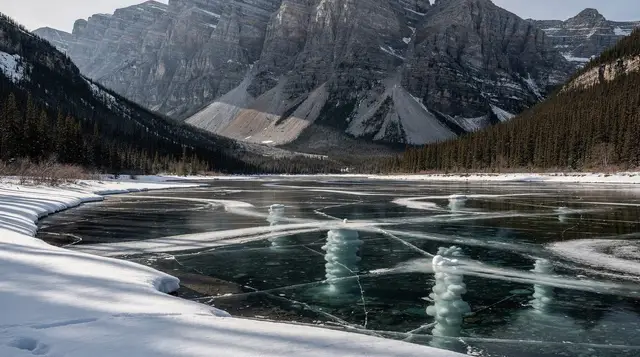
The general fishing season in Banff National Park runs from around late May through late October, but treat that as a rough window rather than a fixed date. Exact opening and closing dates are set annually and vary by water body: rivers and lower lakes typically open earlier, while higher alpine lakes can stay frozen or difficult to access well into summer, similar to how the classic lakes around Banff do not clear of ice until mid-June or later.
Some stretches also close early or open late around spawning periods for specific species. If your trip falls right at the edges of the season, in late May or in October, confirm the dates for your specific water before you plan around it — do not assume the whole park opens and closes on the same day.
Species and catch rules: check the current regulations, not an old list
This is the second place where it is tempting to hand you a tidy list, and the second place where doing so would be actively misleading. Banff’s waters hold a mix of native and introduced species — native cutthroat trout and bull trout among them, along with introduced species such as rainbow and brook trout in various waters. Bull trout in particular are a species of conservation concern in much of their range, and catch rules for them tend to be conservative, often catch-and-release only, sometimes with additional restrictions on gear.
What you cannot keep, what you must release, what the daily limits are, and which methods are allowed on which water — all of this is set out in the annual Parks Canada fishing regulations, and it changes. A species list or a keep-limit printed on a travel page today can be wrong by the time you read it next season. Read the current regulations booklet or the online version before you fish, not a summary of it from a previous year.
Gear, guides and getting it right
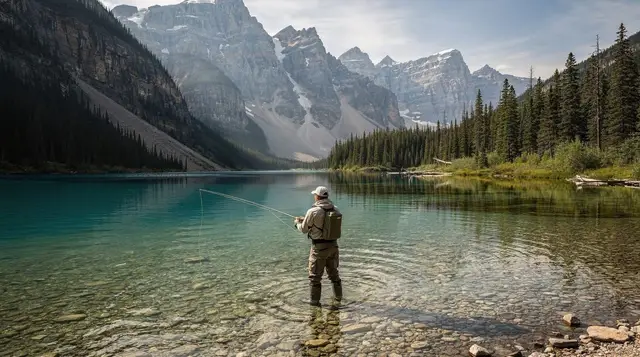
Basic gear works for the Bow River and Vermilion Lakes: waders if you plan to get in the water, a rod suited to trout, and standard fly or spin gear depending on what the current regulations allow for the water you have chosen. Some park waters restrict tackle type, another reason to read the rules for your specific spot rather than assuming anything goes.
Hiring a guide removes a lot of the guesswork, particularly if you are new to the area or have a single day to make count.
a guided fly fishing trip through southern Alberta pairs local knowledge of where fish are holding with someone who already carries a current permit and knows this season’s closures, which matters more here than on a river you fish every year at home.
Fishing also means spending long, quiet stretches of time near moving or open water, often the same water elk, moose and bears use to drink and travel. Standard bear safety rules apply in full: carry bear spray, make noise, and stay alert, particularly along brushy stretches of the Bow River and around Vermilion Lakes where sightlines are short. It is also worth checking a wildlife viewing guide for the areas you plan to fish, both for safety and because early morning and evening, prime wildlife activity times, also tend to be good fishing hours.
What this page does not cover
This page is specifically about angling — permits, seasons, rules and where to cast a line. It does not cover rafting or canoeing, which are different activities with their own logistics, seasons and safety rules. If whitewater is what you are after, the Kicking Horse and Bow rafting guide covers that separately. For paddling a canoe or kayak on the calmer lakes around Banff, see the dedicated canoeing and kayaking guide. None of the fishing rules above apply to those activities, and none of their rules apply to fishing either — treat them as separate trips with separate planning.
If you are building fishing into a broader day, it pairs naturally with a slower morning around Lake Minnewanka or an early start on the Bow Valley Parkway before wildlife activity drops off for the day. For visitors who want to see more of the park’s classic stops on the same trip, tours like
a day tour covering nine of Banff’s classic spots or
a private, customizable tour toward the Icefield work well as a non-fishing day either before or after a morning on the water, without the two needing to compete for the same block of time.
Practical checklist before you go
- Buy your national park fishing permit before you fish, either online or at a Banff or Lake Louise visitor centre — it is separate from your park entry pass and from any Alberta provincial licence.
- Check the current Parks Canada fishing regulations for closures, catch limits and allowed methods on the specific water you plan to fish; none of these are fixed from year to year.
- Confirm the season dates for your specific water if you are travelling in late May or October, since higher lakes open later than the Bow River.
- Carry bear spray and stay alert near brushy riverbanks and lake edges.
- Remember that a national park permit does not cover Kananaskis or other provincial waters, which require Alberta’s own licence.
- If you are short on time or new to the area, a guided trip or charter removes most of the guesswork around current conditions and closures.
Fishing around Banff rewards a bit of homework more than most activities in the park, mostly because the rules genuinely change year to year and the consequences of guessing wrong, a closed stretch, a species you cannot keep, a missing permit, are more serious than showing up to a viewpoint at the wrong time of day. Fifteen minutes with the current regulations before you buy your permit saves the whole trip from an avoidable problem.
Fly fishing permits and rules in Banff National Park
Does my Parks Canada entry pass let me fish for free?
No. The park entry pass and the fishing permit are two separate products sold by Parks Canada. The entry pass covers vehicle or per-person access to the park; the fishing permit is an additional purchase required for anyone fishing in national park waters, including children above a minimum age set out in the annual regulations.
Do I also need an Alberta provincial fishing licence?
No, not inside the national park. Waters within Banff National Park fall under federal rather than provincial jurisdiction, so a Parks Canada national park fishing permit is what applies there, not the Alberta provincial licence. If you plan to fish outside the park, for example in Kananaskis, that is provincial land and a separate Alberta licence applies instead.
Where can I buy a fishing permit in Banff?
Parks Canada sells national park fishing permits online and at park visitor centres, and some fishing and outdoor shops in Banff and Lake Louise are set up to issue them as well. Buy it before you start fishing, since Parks Canada staff and wardens do check, and carry it with you on the water.
Can I keep the fish I catch?
It depends entirely on the water and the species, and it changes with the current regulations. Many waters in the park are catch-and-release only, particularly for native species such as bull trout, which are a species of conservation concern. Always check the current year’s Parks Canada fishing regulations for the specific water you plan to fish rather than relying on what worked last season.
When is the fishing season in Banff National Park?
The general season runs from roughly late May to late October, though exact opening and closing dates vary by water body and by year, and some higher alpine lakes stay iced over well into summer. Certain stretches close earlier or later for spawning protection, so check the current regulations for the specific water rather than assuming a fixed calendar.
Is fishing allowed everywhere in the park?
No. Some stretches of river and some lake shorelines are closed to fishing to protect spawning fish, sensitive habitat or wildlife corridors, and closures can change from year to year. Always check the current Parks Canada fishing regulations map or booklet for closed sections before you head out.
Do I need a guide, or can I fish on my own?
Both are possible. Fishing on your own only requires the correct permit and knowledge of the current rules for the water you choose, while a guided trip adds local knowledge of where fish are holding, gear, and often a boat for water like Lake Minnewanka that is awkward to fish from shore.
Fishing trips on GetYourGuide
Verified deep-linked GetYourGuide tours. Book through these links and we earn a small commission at no cost to you.
GetYourGuide does not provide a product photo for this activity — the image shows the meeting point, photographed by us.