A cold, fast river that changes by the week
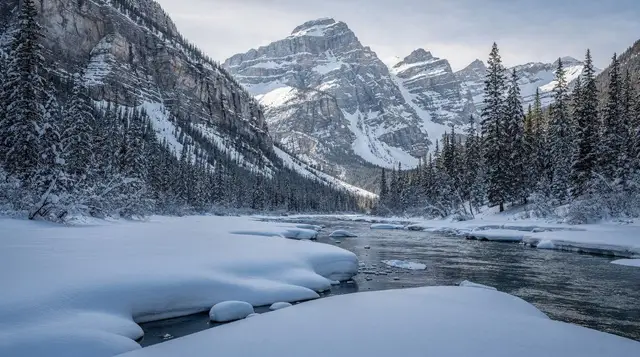
The Kicking Horse River is one of the most rafted stretches of whitewater in the Canadian Rockies, and it earns that reputation honestly: this isn’t a gentle drift past scenery, it’s genuine class III to IV+ water fed directly by glacier and snowmelt in Yoho National Park. The river gathers its volume from the high country around Emerald Lake and the Takakkaw Falls drainage before dropping through a series of canyons near Golden, British Columbia, where the commercial rafting industry has built up around it.
What makes the Kicking Horse worth a dedicated page, rather than a line item on a Golden itinerary, is how much the river itself changes through a single season. The same stretch that throws a raft around in genuine class IV water in June can be a comparatively tame class II-III float by September. Booking a trip without understanding that seasonal swing is the single most common way people end up either underwhelmed or, less often, in over their heads.
This page covers the river as a rafting destination: the rapids, the seasons, the gear, and who a trip is actually suited for. For the town of Golden itself, its bridge and its restaurants, see the separate Golden guide; for the suspended walkways above the valley, see the Golden Skybridge day trip guide. Neither of those is duplicated here.
Rapid classes, by stretch and by month
Commercial outfitters on the Kicking Horse generally run two or three stretches, graded differently depending on the time of year. The numbers below are typical ranges, not a guarantee for any specific date; a wet spring or a hot week can shift water levels earlier or later than usual.
| Month | Typical water level | Rapid class | What it feels like |
|---|---|---|---|
| May | Rising, still cold | III-IV | Strong but building; some operators haven’t started full season yet |
| June | Peak snowmelt, highest and fastest | III-IV+ | The biggest water of the year; genuine whitewater, cold and forceful |
| July | High, still strong | III-IV | Close to June conditions, slightly more settled |
| August | Dropping, warmer | II-III | The most common month for first-timers and older kids |
| September | Lowest, calmest | II-III | Gentlest conditions of the commercial season, still real rapids |
Two things are worth taking from that table. First, June is not automatically the “best” month just because it’s the biggest water — it’s the best month if you specifically want the most intense whitewater and are comfortable with cold, powerful conditions. Second, “class III-IV” is not one experience: within a single trip, a section can include long flat stretches, technical rock gardens and a handful of genuinely big drops, and different operators define their trip boundaries differently. A short pre-trip call or email to the outfitter, asking exactly which stretch and grade applies to your date, is worth the five minutes it takes.
a four-hour guided whitewater run on the Kicking Horse is the most common format: enough time on the water to cover a full stretch with a safety briefing on either end, without turning into a full-day commitment.
Booking a trip: season, transport and what’s included
Commercial rafting on the Kicking Horse runs from May to September. Outside that window, either the water is too low to run safely, or the outfitters simply aren’t staffing trips. Within the season, most companies sell trips in two formats:
- Half-day trips (around 3 to 4 hours including briefing and transport): the more common option, usually covering one graded stretch of river.
- Full-day trips: longer stretches, sometimes combined with a second river or a lunch stop, aimed at people who want more time on the water or are combining rafting with another activity that day.
Almost every trip is organized out of the Golden area, since that’s where the put-in and take-out points sit along the river and where the outfitters are based. Expect the package to include:
- Transport from a Golden meeting point (and sometimes from Banff or Lake Louise, for an added fee) to the river and back
- A wetsuit, splash jacket, helmet and personal flotation device
- A guide in each raft, plus a pre-trip safety briefing and paddling instruction
- Photos, in some packages, though this is often an add-on rather than included
What isn’t included, and what you should plan for yourself: a swimsuit to wear under the wetsuit, a towel, dry clothes and shoes for afterward, and footwear that stays on your feet in the water — river sandals or old runners work, flip-flops do not.
another whitewater rafting outing on the same river, run at a different time slot or with a different outfitter is worth comparing against the first if your dates are flexible, since departure times and exact river sections vary between operators even within the same week.
Rafting the Kicking Horse is one of the few genuinely adrenaline-focused activities within reach of a Banff-based trip, alongside a short list of other high-output half-days; if you’re weighing it against, say, a via ferrata or canyoning day near Mount Norquay, the honest difference is that rafting requires no technical skill going in, while those activities involve more instruction on ropes and harnesses before you start.
Who this is actually for, and who it isn’t
This is the part worth reading carefully before you book, because marketing photos for river rafting tend to show wide smiles and calm water, which doesn’t represent every stretch or every month.
Good fit:
- Adults and older teens comfortable with cold water, being thrown around a bit, and following a guide’s paddling commands under some time pressure
- Anyone specifically chasing bigger whitewater, who should target June or early July rather than the calmer end of the season
- Families with kids in the young-teen range and up, booked onto a lower-water, later-season trip and confirmed against the operator’s minimum age policy
- Groups looking for one concentrated adventure activity to anchor a Golden-area day, rather than a scenic add-on
Poor fit, or needs a specific booking to work:
- Toddlers and young children, on essentially any stretch in any month — this is not a baby-and-parent float, and most operators set a minimum age well above early childhood for good reason
- Anyone with a genuine fear of cold water, being submerged briefly, or losing footing, since even a well-run trip includes moments of real turbulence
- Visitors expecting a gentle scenic drift similar to a canoe outing on Lake Louise or Moraine Lake — this is a different category of activity entirely
- Anyone booking a June trip without checking the operator’s stated minimum age and experience expectations first, since the peak-water stretches are the most demanding of the season
If you’re travelling with a mixed group — some members wanting serious whitewater, others wanting something calmer — it’s worth asking the outfitter directly whether they run separate trips at different grades on the same day, rather than assuming one booking will satisfy everyone.
Getting there from Banff
The Kicking Horse River sits near Golden, British Columbia, about 135 km from Banff and roughly 1 hour 30 minutes by car along the Trans-Canada Highway. The drive passes through Yoho National Park, so a valid Parks Canada pass covers that portion of the route; once you cross into British Columbia near Golden, provincial highway rules apply rather than park rules. See the Parks Canada pass guide if you haven’t already sorted a pass for the trip.
There’s no scheduled public transit link between Banff and the Golden area, so your options are a rental car, a booked tour that includes transport, or joining a trip that offers pickup from Banff or Lake Louise hotels directly. Given the driving distance, most visitors either treat rafting as the anchor of a full day trip from Banff, or base themselves in Golden for a night if they’re pairing it with other activities like the Golden Skybridge or a stop at Radium Hot Springs in Kootenay National Park, covered in more detail below.
Winter tires are mandatory on British Columbia’s mountain highways, including the approach through Yoho and Kootenay, from October 1 through April 30 — largely irrelevant for a May-to-September rafting trip, but worth knowing if you’re combining the visit with shoulder-season travel. Whatever the season, check road conditions before setting out; the route climbs and drops repeatedly and weather can shift quickly in the mountains.
What to pair the day with
Because the drive out to Golden takes a chunk of the day on its own, most visitors build the rafting trip into a longer loop rather than a there-and-back errand. Reasonable pairings include:
- A stop in Yoho National Park on the way, for Emerald Lake or the Natural Bridge
- The Golden Skybridge, if your rafting trip is a half-day and leaves the afternoon open
- Radium Hot Springs in Kootenay National Park, a reasonable add-on if you’re staying overnight in the Golden area
- A guided hike such as the Stanley Glacier hike in Kootenay National Park on a different day of the same trip, for a calmer contrast to the river
If you’re planning several days around Yoho and Kootenay rather than a single rafting day trip, the five-day Banff, Yoho and Kootenay itinerary lays out a workable order for combining the parks without excessive backtracking. A guided option covering several stops in one day, such as a day trip through Canmore, Banff and into Yoho National Park, is worth considering if you’d rather not self-drive the whole loop, though it won’t include the rafting itself, which is booked separately.
For general trip planning around what to bring for a day that starts on dry land and ends soaked and cold, the packing list tool and the what to pack guide both cover layering for a Rockies day that swings from a warm drive to a genuinely cold river.
Rafting isn’t the only way to get a look at moving water in this part of the Rockies; for a side-by-side comparison of the Kicking Horse against the gentler Bow River, see the Kicking Horse and Bow whitewater rafting guide. And if you’d rather have someone else handle transport and logistics for the whole Golden day, comparing a self-drive against one of the guided day trips above is a reasonable next step before booking anything.
Frequently asked questions about rafting the Kicking Horse River
How difficult is rafting on the Kicking Horse River?
It depends on the stretch and the month. The lower canyon sections run class III to IV+ in June, when snowmelt pushes the river to its highest and fastest, dropping to a more moderate class II-III by late August and September. This is genuine whitewater, not a scenic float, and operators grade trips by section and water level rather than selling one fixed experience all season.
When is the best time to raft the Kicking Horse River?
June has the biggest, coldest water and the most intense rapids, which suits experienced rafters chasing bigger whitewater. July is still strong but a little more settled. August and September bring lower, warmer, calmer flows that are more forgiving for first-timers and families with older kids. Commercial trips generally run May through September; outside that window, flows are either too low or the operators aren’t running.
Is Kicking Horse River rafting suitable for young children?
Not on every section, and this is the main thing to check before booking. Most operators set minimum ages in the range of 12 to 16 for the harder canyon runs, and some restrict the biggest June water to adults or experienced groups only. Calmer, lower-water trips later in the season are more workable for older kids, but a toddler or young child should not be booked onto a class III-IV run regardless of what a listing photo suggests.
What gear is provided, and what should I bring myself?
Operators supply a wetsuit, splash jacket, helmet and personal flotation device as standard, along with the raft, paddle and a guide. Bring a swimsuit to wear underneath, a towel and dry clothes for afterward, and shoes that can get wet and stay on your feet; sandals that slip off are a common complaint. The water is glacier-fed and cold even in August, so the wetsuit isn’t optional.
Where do rafting trips actually depart from?
Almost all commercial Kicking Horse rafting is organized out of the Golden area, since that’s where the outfitters, put-in points and take-out points sit along the river. Trips are typically sold as a half-day or full-day package that includes transport from a Golden meeting point to the river and back; some operators also offer pickup from Banff or Lake Louise hotels for an extra fee.
How far is the Kicking Horse River from Banff, and is it a long drive?
It’s about 135 km from Banff to the Golden area, roughly 1 hour 30 minutes by car along the Trans-Canada Highway, mostly through Yoho National Park. That’s a manageable drive for a day trip, though most visitors either book a tour that includes transport or plan to stay overnight in Golden if they’re combining rafting with other activities.
Do I need previous rafting experience to book a trip?
No, most half-day and full-day trips are designed for first-timers and include a safety briefing and paddling instruction before you’re on the water. What matters more than prior experience is matching the trip to your comfort level: a June class IV run is a different proposition from a late-August float, and it’s worth asking the operator directly which section and water level your specific date and departure time will cover.
Is there a calmer, family-friendly section of the river?
Yes, but it isn’t automatic. Lower stretches of the Kicking Horse run gentler than the canyon sections, and by August and September, reduced flow makes even some of the canyon runs more moderate. The safest approach is to ask the operator which specific section and difficulty rating applies to the trip and date you’re booking, rather than assuming any Kicking Horse trip is suitable for a family with young kids.